After 33 months of continuous decline, the shanghai second house market experienced a critical turn in march 2026, with an increase of 1 per cent in the price index and a five-year increase in the turnover of 31,000 sets. This “v-type” rebound was not driven by a single factor, but rather by a resonance of policy, supply and demand with the triple power of regional values。

In terms of policy dimensions, it's a precise combination of boxing. Bottom
The “article 7” introduced in february 2026 is a direct trigger point. At its core is a significant reduction in the threshold and cost of housing purchase: the length of social security for non-residents to purchase housing in the outer ring has been reduced from three years to one year, and the maximum loan line of the provident fund has increased from 1. 6 million yuan to 2. 4 million yuan. The policy accurately releases immediate needs for eligibility and funding constraints。
According to the data, the new deal had a full-month second-hand suite of 26,000 units, an increase of 10 per cent over the same period, and the institute's monitoring showed that the increase in the provident fund loan line had contributed as much as 77 per cent to client outreach。
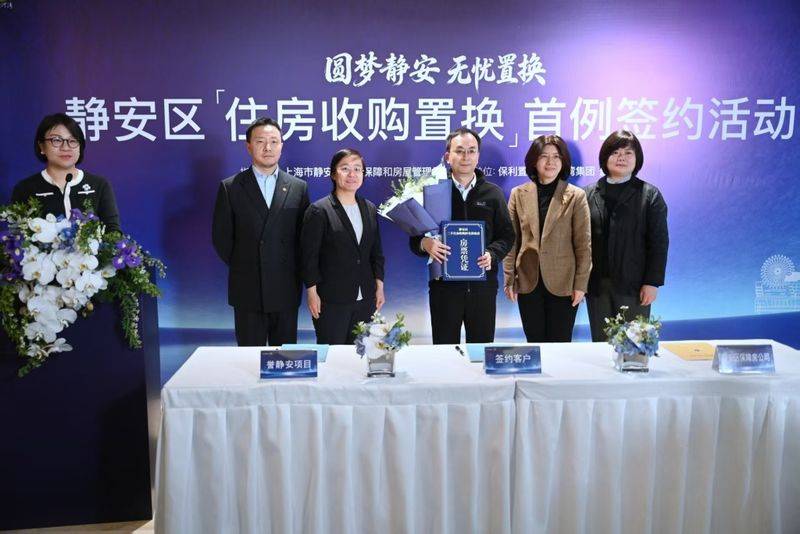
More innovative is the pilot acquisition of second-hand houses initiated in pudong, jian an and xu jie districts. The government has led state enterprises to acquire small, old and small housing units in the centre of the city for the purpose of guaranteeing rental housing, and has made available to sellers a special “house ticket” for the purpose of replacing new houses in the district. This amounts to providing the market with an “official price anchor” and a defined exit channel。
In the first contract in the jingan zone, the owner, mr. Shih, sold 40 square metres of old housing at a cost of $2. 2 million, replaced the new house directly in the zing zone and completed the “sold and bought old” one hour. By the end of march, the pilot had involved more than 300 housing units, effectively breaking the replacement chain of long-term silt and stabilizing market expectations。
There has been a fundamental change in the mindset of supply and demand for home buyers and sellers
From the seller's point of view, the behaviour shifted from “a panic sale” to “a rational contraction”. At the height of the market, the number of second-hand houses in shanghai had reached 150,000, while by march 2026 the number had fallen back to around 130,000, with a significant 34 per cent decrease in the number of new registered rooms. This means that landlords are no longer in a hurry to sell at low prices, either to withdraw their cards or to sell sub-leases。
This was followed by a sharp contraction of bargaining space from 5 to 8 per cent in 2025 to 2 to 3 per cent, with a shift in market ownership。
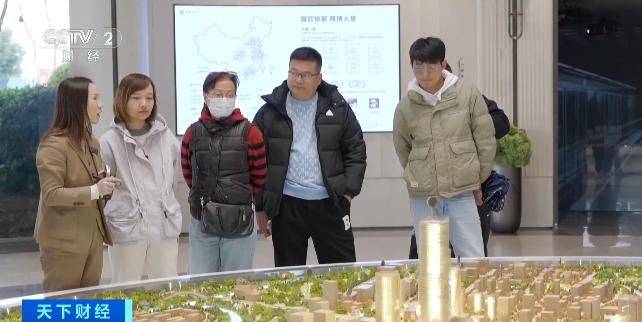
From the buyer's point of view, the structure presents a clear path of “newly bottom-up, improved relay”. In march, the absolute market was dominated by budgetaryly sensitive demand-generating groups: up to 87 per cent of the total of $5 million was sold, and up to $3 million was the fastest to disappear。
These buyers are mainly new shanghaiers, who, in the words of a manager of an intermediary shop, “nearly 80 per cent of their clients are new shanghaiers”. In april, improved demand began to improve, with a marked increase in transactions between 8 and 10 million yuan, resulting in a wave of “sold for big”。
As a result, the efficiency of market transactions increased significantly, with the buyer's average transactional cycle reduced from 49 days in june 2025 to 39 days in march 2026. The buyers and sellers are expected to converge, trade frictions are reduced and market liquidity is activated。
In terms of regional market performance, stopping the decline is structural and value logic is being rewritten
The recovery in this round is not generalized, but profoundly polarized, with two main types of lead block:
The other category, such as ning xinxia, benefited from the “no night sunxia” urban renewal plan, expected improvements in the business interface and living environment, leading to a reversal of housing prices。
This fragmentation reveals future trends: the assets of the core zone remain resilient because of their scarcity, the peri-urban blocks are valued for transport and ancillary repairs and the peri-urban blocks have to rely on absolute low prices in exchange for turnover. Urban renewal planning and the adjustment of land values (base price) are reshaping the shanghai site values。
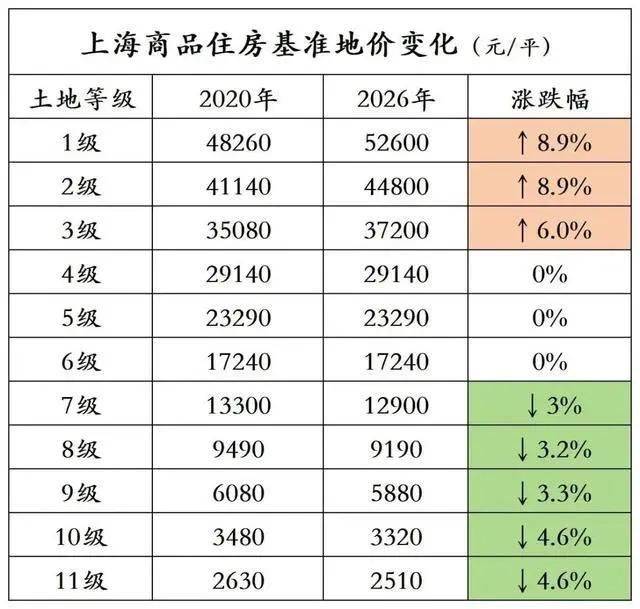
Taken together, the second-hand room in shanghai ended its fall cycle as a “soft landing” by a combination of policy precision ignition, supply and demand rehabilitation and regional valuation. It is not a return to a boom, but a rebalancing of markets driven by real residential demand after squeezing bubbles。
Policy combinations have effectively stopped panic, but market follow-up will depend on whether the immediate release can be sustained to improve the chain, and whether urban renewal can actually increase the long-term residential value of the zone. A new phase of “weak recovery and fragmentation” has begun。