
Shanghai city breakout: 5 years of new high transaction data figure
Statement: photo ai generation, original article
I. Stunning data: 1632 sets! Shanghai used room is closed and broken in 5 years
On saturday, 11 april, 1632 sets of single-day nets were signed in used rooms in shanghai, which not only broke the peak of the year but also reached a new high of nearly five years. This heat is not an accident, but a logical consequence of the constant rise in the temperature of the market: the cumulative stock of 9037 units, with an average of 821 units per day, 11 days before april, is well above the same level last year; the 285,000 rings, with an increase of 178. 79 per cent in march and an increase of 6. 00 per cent in the same year, have reached a high of 60 months per month; and the market has been broken by 900 units for four consecutive days, 10 by 1,000 units and 11 by 1,600 plus. More critically, there has been a qualitative change in the composition of the transactional structure: the proportion of high-end housing sources of more than 9 million over two weeks, improved housing sources of more than 90 m2, has increased significantly, and the market has shifted from "just in need" to "just in need + improved two-wheel drive", and the rise of high-end markets has become a defining feature of the current cycle, despite the fact that the supply of low-cost housing within 3. 6 million is still dominant。
Ii. Policy package boxing: "article 7" + "house-in pilot"
Behind the outbreak in shanghai is the fine policy combination of "selling old and buying new."
1. The new deal "article 7" (published on 25 february): the untying of the purchase order reduced the non-citizen social security period from 3 years to 1 year, with five years of residence permit being exempted from social security and more than 90,000 house tickets being released; the first set of public funds was raised to 2. 4 million and families with many children were mortgaged to a maximum of 3. 24 million; the first set of homes for adult children was temporarily exempted from property tax and no loan was accepted to activate the replacement chain。
2. The second-hand house acquisition pilot (started in early february): the first pilot in pudong, xuxio and jian an, which focused on less than 4 million people and less than 70 m2, was converted into a secure rental, providing clear exit channels for the owners, and the first case was for the contracted residents to upgrade their homes through the replacement of their old houses。
Iii. Market quality changes: price reversals, high demand concentration releases
1. Prices rebound: the average price of second-hand dwellings in march was $55075/m2, with a slight increase of 0. 3 per cent in ring-to-ring ratio, ending a decline of 33 months since june 2023, with high-quality housing in the core zone increasing by nearly 10 per cent, with high-lying, old and small prices almost flat or low。
2. High-end market rise: the ratio of second-hand house deals of more than 10 million rose from 2. 35 per cent in 2019 to 4. 67 per cent in the first quarter of 2025, almost double; the "triple nuclear assets" of the core blocks, such as luk-shui xii-hai-ian river " + scarce resources + iterative products " , became the preferred of high-end buyers and improved demand formed a "just-first-in-time, improved relay" logic。
3. Stock pressure persists: the number of second-hand rooms registered throughout the city remains at 355,000, with a evaporation cycle of approximately 302 days (nearly 10 months) limiting price increases, but a 70-day reduction from the previous month and a significant increase in market digestive capacity。
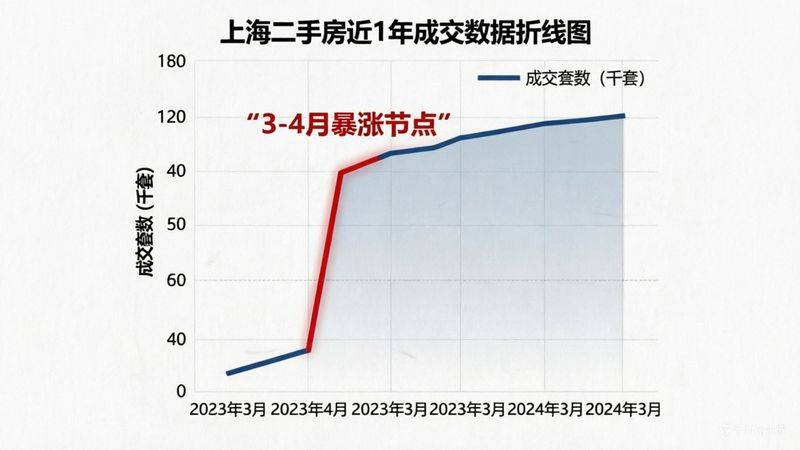
The second-hand room in shanghai is closed
Iv. Core issues: should we buy a house? Three key judgments help you make decisions
1. It is the "ying spring" rather than the "big bull market": the current market heat is mainly due to policy stimulus and the centralized release of the backlog of demand in the preceding period, rather than to the overall positiveness of the economic fundamentals. Despite the close to 60 months of a deal in march, there is still a marked gap from the 2021 market peak and a marked fragmentation of the country's buildings, with only a few hotspot cities showing remarkable performance。
2. Different groups, different opportunities:
People buying houses
Market opportunities
Risk tip
Gondor
Policy window period, reduced social security years and increased amount
High risk of high prices in the outer suburbs, with limited appreciation of mature regions
Improvement of the family
The golden period, the "old and small" period, can be replaced by the acquisition pilot
Avoiding blind pursuit of large areas, taking into account cost and mobility
Investors
Core zone three nuclear assets
Faraways, poor quality, little room for appreciation and possibly even devaluation
3. Increased regional fragmentation: high-quality sub-news in the nucleus, active in the zone, price increases of 1 to 2 per cent in the ring, stable in the suburbs, slight price adjustments, and valuable support in the zone only。
V. Analysis of future trends: projections and key impact factors for the three cycles
(i) short-term trends (one to three months): increased prices are stable and the heat continues to be released. The turnover is expected to maintain a monthly high of 2. 5 to 3 million sets, with an increase of 0. 5 to 1 per cent in price relative to the ring and a more pronounced increase in the core area; policy dividends and backlogs will continue to support market heat while stock pressure and declining policy margins will constrain excessive market warming。
(ii) medium-term trends (6-12 months): structural fragmentation, stable prices. The turnover has fallen back to a reasonable monthly level of 1. 8 to 22,000 units, the annual increase of 3 to 5 per cent in the quality housing supply in the core area, flat or small fluctuations in non-core areas, accelerated de-dibilization of stocks, replacement of relays, property tax optimization, etc. Or landing。
(iii) long-term trends (1 - 3 years): rational health with a king at its core. Markets entered the "stable price and structural optimization " track, with annualized returns of 5-8 per cent for quality assets in the core zone and 2-3 per cent for non-core areas; brain inflow, housing consumption upgrades, and improved rental markets as core support。
(iv) three major influencing factors: a neutral bias in economic fundamentals, policy regulation and precision to stimulate reasonable demand, and population inflow to support demand in the core areas。
Vi. Precise recommendations: how should different populations respond to this wave
1. The neediest: take advantage of the social security dividend and get in the car as soon as possible, with a well-established pension, with priority given to areas along the subway, with the corresponding maturity areas, and 70-90 m2 rooms。
2. Improvement of ethnicity: pilot replacement of quality sub-rooms in the core area, using the "sell first" model, avoiding financial pressures and time mismatch risks。
3. Investors: focus on three nuclear assets in the core zone, giving priority to high-rent return properties, distance from remote suburbs and poor quality, and leverage control。
Extreme scenarios: two possibilities and coping strategies
(i) optimistic scenario: central bank interest rate reduction, acquisition pilot expansion to city-wide, economy recovery, continued high turnover, steady price rises, just as soon as possible, investors need to get in the car and leverage modestly。
(ii) pessimistic scenarios: tight policies, economic downturns, upswings in stocks, drops in trade, small price declines, immediate waits, investors waiting for the bottom line。
Conclusion: rationalizing the market and seizing structural opportunities
A single-day high of 1632 sets of used rooms in shanghai did send a positive signal for the market to warm up, but it was not the return of the real estate "big bull" but the "ying chun" that the policy accurately stimulated. In terms of trends, the market heat will continue to be released over the next 1-3 months, with 6-12 months gradually returning to rationality and, in the long run, to healthy development. For home buyers, rational decision-making needs to be combined with their own needs and economic strength to avoid blindness; for investors, focus on core assets, guard against market volatility and control leverage ratios. After all, buying a house is a matter of life, and rational judgment is the key。
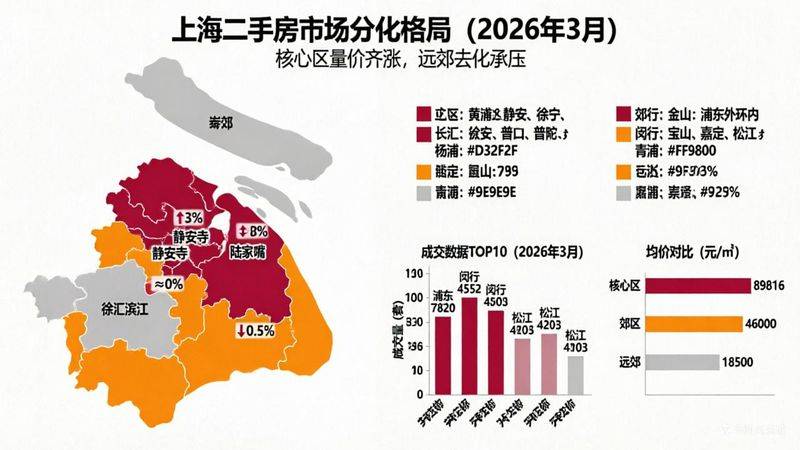
Data on the division of used rooms in shanghai