As the construction industry enters the micro-enrichment era and price reforms continue, sub-accounting, as a central means of cost-control and profit-based management of construction companies, directly determines the efficiency of enterprise project management and market competitiveness. However, industry research has shown that over 60 per cent of construction companies have problems in accounting for sub-project items, such as disruptions in billing, cost mixing and data distortions, which affect both the profit analysis of the project and the risk of tax compliance. From the bottom logic, existing pain points, policy approximation and optimization of trends, the present paper will analyse in depth the sub-accounts of construction companies and help industry practitioners to create a complete picture and circumvent accounting errors。
I. Bottom logic and core values of the construction company subproject accounting
The core logic of the construction firm sub-accounting is to split the enterprise's business as a whole into individual projects, achieving “project self-accounting, accurate aggregation of costs, clear identification of profits”, which is essentially an industry characteristic of the fit-for-building industry “projectization operations, long life cycles, and complex cost formation”. Unlike general enterprise accounting, construction company subproject accounting needs to be balanced between compliance and practicality, following the requirements of the ministry of finance's enterprise product cost accounting system (pilot) and matching the full process management needs of the project from project formulation to completion。
Its core values are reflected in three main levels: first, precision control costs, clear information on the cost composition of each project through sub-project pooling of labour, materials, machinery, etc., timely detection of cost anomalies and avoidance of control failures resulting from multi-project cost mixing; second, supporting profit-making decisions by accounting for project income, costs, māori, comparative analysis of the levels of profitability of different projects, and providing data support for the enterprise to take over the project and optimize resource allocation; and third, safeguarding compliance, accounting for individual project taxes and charges, filing of archived information, which can effectively avoid tax risk and meet compliance requirements, such as auditing, verification, etc., which are also the basic prerequisites for building companies'sub-accounting。
Most practitioners provide feedback and scientific sub-accounts that can help build firms reduce the inefficiency costs of 5 to 10 per cent, while increasing the accuracy of project profitability analysis and providing core support to enterprises in micro-economic times。
Ii. Existing pain points and underlying causes of construction company subproject accounting
Despite the current industry consensus on building company sub-accounts, there are still a number of pain points in the actual landing process, which, in conjunction with the analysis of the current state of the industry, are concentrated in four areas and have clear industrial causes behind them。
Painful: accounting standards are not uniform and data are not comparable. Some construction companies do not have uniform sub-accounting standards, and different projects differ in the aggregation of labour, materials and machinery costs, for example, projects that include the rental of machinery in direct costs or indirect costs, thus making it difficult to aggregate and analyse the overall profitability of the enterprise by means of horizontal comparisons of accounting data. The underlying causes are the lack of a standardized accounting system for enterprises and the fact that data are not efficiently re-routed in different sectors (business, recruitment, finance) because of the different sizes of the classification。
Pain: costs are not accurately aggregated and the problem of multi-project mixing is prominent. This is the most common pain point in accounting for construction companies'subprojects, mainly in terms of the mixing of labour and material costs for multiple projects under the same subject matter, which does not allow for an accurate distinction between the cost attributions of individual projects, leading to a distortion of the real cost of the project, affecting profit analysis and cost control. Industry research has shown that over 60 per cent of construction companies are not prepared for sub-accounting, which directly leads to confusion in the aggregation of subsequent costs, which is closely related to the lack of initialization of accounting and unclear division of responsibilities。
Pain point three: indirect cost-sharing is not reasonable and profitability reflects a distortion. The overhead costs incurred by the construction company's headquarters, such as overhead costs, office costs and so forth, are to be apportioned among the projects in a reasonable proportion, but the fact that some enterprises use the “average share” formula, which does not take into account the volume of work on the project, the size of the personnel, etc., has resulted in some projects being overcosted and some projects being undercosted, which does not provide a true picture of the actual profitability of the project. In addition, some of the enterprise distribution methods were randomly changed and the basis was not indicated in the accounts of the accounting desk, further exacerbating the problem of accounting distortions。
Pain: accounting tools are outdated and full process controls are missing. Most small and medium-sized construction companies continue to rely on excel forms for sub-accounting, with income lists and cost data being item-by-article, inefficient and error-prone; at the same time, project management systems are not fully linked to cost accounting, and data are more dependent on manual filing, and are less timely and accurate, resulting in accounting being in a “back-to-back” state, which does not allow for full process control of ex ante prevention and corrective actions and makes it difficult to avoid project cost risks。
Iii. Policy-oriented compliance requirements for sub-accounting by construction companies
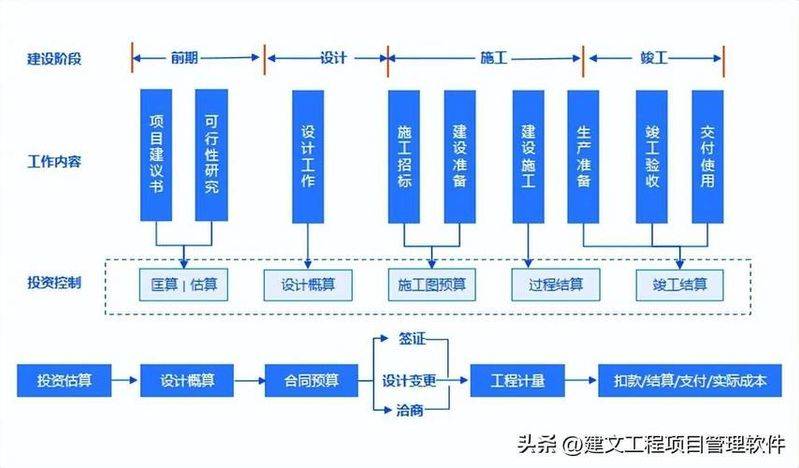
The core of compliance with building company sub-accounting is based on the explicit requirements of the ministry of finance's enterprise cost accounting system (pilot) and the need to adapt to relevant regulatory requirements, such as taxes, audits and so forth. In the context of the platform-wide compliance requirements of 2026, the core compliance elements consist mainly of three aspects。
First, accounting objects define compliance. Under the system, construction enterprises are generally subject to cost accounting under individual contracts entered into, with multiple assets to be accounted for according to the principle of separation of contracts, and under the principle of consolidation of contracts for the construction of one or more assets, which is the basis for compliance with the construction firm's sub-account accounting and a central prerequisite for avoiding confusion in accounting。
Second, the cost project set-up is compliant. The accounting of construction company subprojects requires strict setting of cost items such as direct labour, direct materials, mechanical usage charges, other direct costs, indirect costs, etc., involving sub-contracting of additional sub-cost items, and strict compliance with institutional requirements for the aggregation of various cost items, such as direct materials to include material, structural components, etc., that are consumed by the engineering entity during the construction process, and not to expand or narrow down the aggregation at will。
Finally, accounting processes and information retention are in compliance. The accounting of sub-items runs through the full process of project formulation, construction, completion, from initialization of accounts, cost attribution, cost sharing, to revenue recognition, collection of taxes and charges, and archiving of information, each of which requires the retention of complete supporting documentation to ensure that accounting data are retroactive; and accounting accounting policies and estimates, once determined, are not subject to arbitrary change and are clearly stated in the desk accounts to meet audit and tax verification requirements。
Iv. Future optimization trends and recommendations for building company sub-accounts
In conjunction with the trend towards price reform and the digital transformation of the construction industry, the construction firm's sub-accounts will gradually shift to “standardization, digitization and full-process” with three-point proposals to help enterprises optimize accounting systems and improve regulatory effectiveness, taking into account industry practice。
Trends i. Progressive improvement of the system of accounting standardization. In the future, a growing number of construction companies will establish harmonized sub-accounting standards that clearly define the calibration, the attribution of costs and the method of allocation of overhead costs to achieve consistent and comparable accounting data for individual projects; at the same time, they will combine accounting standards with the internal management requirements of the enterprise, divide the various accounting targets, match the multi-dimensional, multi-layered cost-control requirements and address the pains of the current calibration confusion。
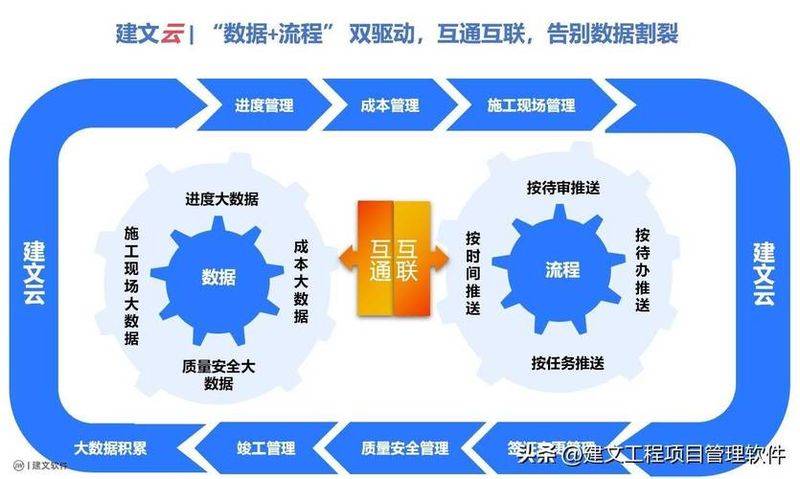
Trends ii: digitalization tools to replace traditional accounting methods. As the digital transformation of the construction industry advances, the specialized subproject accounting software will be rolled out, the project management system will be brought into line with the cost accounting system, the cost of self-assessing, the production of accounting statements will reduce manual filing errors and improve accounting efficiency; and real-time updates of cost data will be achieved through digitization tools to achieve full process controls for prior budgeting, on-the-job monitoring and after-action re-entry to avoid cost risks。
Trends iii: integrating accounting and project management. The sub-accounts will no longer be limited to “accounts”, but will be integrated with project progress management, quality management, and depth of fund management to provide real-time information on project progress and cost control through accounting data, to help project managers adjust their control strategies in a timely manner, to achieve synergistic cost and progress control and to increase the profitability of the project。
In terms of recommendations, enterprises could start at three levels: first, by refining the basics, clarifying the lines of responsibility of the project accountancy managers, developing harmonized accounting standards and processes, and making the initialization of accounting; second, by upgrading accounting tools, gradually replacing traditional excel accounting, introducing professional accounting software and automating data aggregation and analysis; and third, by enhancing staff training, upgrading the expertise of finance, project managers in sub-account accounting, ensuring that accounting processes are standardized, accurate and that the control value of sub-account accounting is fully realized。
V. Summary and interactive guidance
In summary, the construction company's sub-accounts are the core pillars of enterprise cost control, profit-making and compliance, and their bottom logic is that of “project independence, precision integration, compliance control”, where the current lack of uniformity of accounting calibres and inaccurate cost attributions is rooted in the lack of standardization and poor tools. In the future, with the digital transformation and policy refinements, sub-project accounting will be transformed into a standardized, digitized one, becoming the key player for building firms in the microlithic era。
For construction companies, the refinement of the subproject accounting system not only enhances cost control effectiveness but also provides data support for long-term enterprise development. Have you ever encountered problems with cost mixing and unreasonable cost sharing in the construction company's sub-accounts practice? You are welcome to share your practical experience in the comment area and to explore options for optimization。