For more than 20 years, his cousin had planted in the village, who had called on purpose, saying that a new land policy had been announced in may. Some said that the land had to be divided again, others said that the land had to be taken from the town, others said that new documents would be needed from the land, asking me if it was true. In fact, more than cousins, many rural relatives and friends have been asking questions about the land, which, after all, is the root of farmers, and every piece of land, every policy, is directly related to a year's harvest and half-life security. On 1 may 2026, a new 30-year extension of the second round of land contracts was formally implemented throughout the country. This was not an empty situation. It was a clear policy issued by the ministry of the interior and the state to cover all rural land-holders, each of which is linked to everyone's land rights and interests. Today, in the most tangible words, the core elements of the new regulations, the rights that farmers can enjoy, the formalities involved and the issues to be addressed are clearly defined, so that the land-holders can have a sound heart, without panic or loss。
Core solid: 30 more years of contract, no more weighting, or yours
This new land code, implemented on 1 may, centred on the extension of the second round of land contracts for another 30 years after the expiration of the contract, which is the country's biggest “concertative pill” for farmers throughout the country, and is also the most critical one, completely removing the concern that everyone should be “repossessed and redivided”。
The timeline is clear. Most of the second round of land contracting in the country began in 1997 and 1998, with a 30-year contract, which originally expired in 2027 and 2028. According to the new regulations, with effect from 1 may 2026, all expired land contracts will be extended directly for a period of 30 years, the contractual relationship will stabilize until 2057 and 2058, and from the first round of land contracting, the rural land contract will remain stable for 75 years, with a real “permanent fix”。
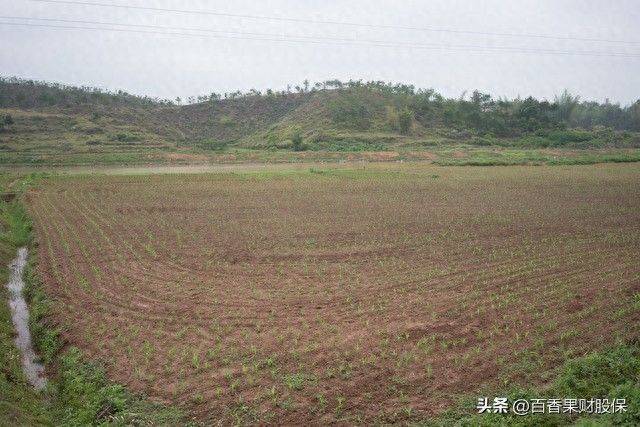
The policy clearly states that the extension is based on the principle of “great stability, small adjustments”, the core of which is “three nos”: no reversal, no distortion of weight, no unlawful adjustment of land or the recovery of the contract. On the sole basis of the results of the national registration of contractual land rights from 2016 to 2020, the former plots of land, sizes and boundaries of the farmers were extended in full, without re-quantification or redistribution. That is to say, which of your land is now planted, how big is it, where is the border, and after extension, there will be no change, and it will be yours。
Only in a few exceptional cases will small-scale adjustments be made in the context of “great stability” – for example, contracts that have been severely damaged by natural disasters, taken over by legal appropriation, and village groups that have generally requested relocations from the village as a whole – be fine-tuned among individual farmers, subject to the agreement of more than two thirds of the members of the assembly of members of the collective economic organizations of the village, in accordance with the law and in no way randomly adjusted or collected。
Again, the new rules continue to strictly apply the principle of “no increase, no decrease” which is of greatest concern to all. The new family members, such as daughters-in-law and children, will not be divided; the old family members will die, their daughters will be married and they will not take back their land, and the land will always be contracted in a household and the right to contract will remain as long as the family members remain. Many farmers fear that their families will not have enough land to grow, and the policy has long taken into account that the follow-up will be addressed through land migration, the development of a modest scale of operations, and the creation of idle land, which will not affect existing contracts。
There are farmers who have entered the city. The new regulations make it clear that withdrawal from land contracting rights is not a condition for farmers to enter the city. The right to contract is retained for a period of 30 years as long as the family is unwilling to give up the land, whether it is the family that buys a house in the city or some of the family who settles in the town, so that they can grow their own land and transfer rents, and no one can be forced to give up the land. To take the example of the wuming area in guangxi and south-west china, many local farmers entered the city early in the year to do business and moved their accounts to the city, but their home country's land contracts were kept, and since the start of the extension work in 2026, these farmers have successfully processed the extension procedures, without any impact on their land rights and enjoy the same policies as the farmers in the villages。
According to the most recent data of the ministry of agriculture and rural development in april 2026, the total area under contract in rural areas nationwide is over 1. 5 billion acres, involving 230 million farmers. Following the implementation of the new regulations on 1 may, all eligible farmers have been able to extend their contracts successfully。
Three fundamental rights and interests are guaranteed: the right to contract, the right to move and the right to land, each of which protects farmers
The new regulations of 1 may not only extend the term of the contract, but also provide farmers with a “wall of protection” of their land rights in terms of the right to contract, the right to operate and the protection of their land, each of which clearly stipulates that no one can infringe and that farmers can enjoy their rights without fear。
First, the right to contract land is guaranteed for life without any violation. In addition to the 30-year extension mentioned earlier, the lack of duplication and the lack of recovery of the city, there are a number of key interests to be enshrined. The first is that the right to contract may be inherited and that members of the family of the farmer may, in accordance with the law, inherit the right to operate the land under contract and continue to enjoy the right to land as long as they are members of the collective economic organization. The second is that the original certificate of ownership of the contract remains valid without the issuance of a new certificate, and that it requires a uniform change of contract duration, which is handled by the rural and rural sectors of the townships, and that the farmers do not have to travel or spend any money. Thirdly, village groups are not allowed to pay fees for the delay, or for the ride, and no sector or individual can charge farmers on the grounds of extension, authority or change of certificate, which is explicitly prohibited。
The second is the free flow of land ownership rights, with the full proceeds to farmers. The new regulations further regulate land migration, uphold the principles of legality, voluntariness and remuneration and fully respect the wishes of farmers. Farmers can decide for themselves whether or not to move, to whom, for how long, at what price, and no organization or individual can force, block or block the flow. It is also more flexible to rent, subcontract, share, host, and work with new types of agricultural operators, such as cooperatives, family farms and agribusinesses, which can receive land rents as well as dividends。
The entire flow process is regulated by the requirement to enter into a written transfer contract, using a model contract drawn up by the ministry of agriculture and rural affairs to specify the duration, purpose, price, rights and obligations of both parties, and to file the contract in the village collectives and in the rural and rural sectors of the townships. The flow price is determined by mutual agreement and the land flow price index is regularly published to inform farmers and to prevent the price from falling. For example, in 2026, farmers at the henan junctuary transferred 8 acres of land to local grow cooperatives, renting $1,200 per acre per year, entering into a standard contract, obtaining a certificate of right to move, paying an annual rent on time, working in cooperatives and earning an extra wage, earning nearly $20,000 more a year than their own land。
At the same time, the new regulations strictly regulate the migration of business capital to rural areas, prevent “non-food” “non-farming” and protect the rights and interests of cultivated land and farmers. Business enterprises are required to undergo qualification, project approval, to change the use of cultivated land without permission, to settle the land for long periods of time, and not to harm the interests of farmers. Towns and county departments will monitor all aspects of the process and find violations to be immediately stopped and seriously addressed。
Thirdly, the red line of cultivated land is firmly in place, and the destruction of arable land is to be blamed. Food security was a national priority, and the new regulations placed a high priority on the protection of cultivated land, explicitly prohibiting any destruction of agricultural land or its occupation. The first is the strict prohibition of the occupation of arable land for the construction of houses, the building of graves, the digging of sand, the extraction of soil and the construction of large sheds, and the firm fight against the “de-farming” of cultivated land. Second, the planting of trees, fruit trees and ponds on arable land is strictly prohibited in order to prevent the “non-food” of arable land, which must be given priority for food. Thirdly, the illegal occupation and destruction of arable land is severely combated and, if found, not only the restoration of arable land to its original condition within a time limit, but also the punishment prescribed by law, which constitutes criminal liability。
In addition, the new regulations encourage the rehabilitation of wasteland and, in the case of long-term land contracts, village groups will ensure that farmers who do not have the capacity to recultivate them can direct the flow to others and avoid land waste. However, the land contracted by farmers must not be taken away at will on the grounds of abandonment and must be followed up and followed by the law。
2026 practical exercise guide: what to do, what to bring, local attention
Following the implementation of the new regulations on 1 may, the work of the extension will be launched in villages throughout the country. Many farmers do not know what to do, what to prepare and where to do it. The process is simple, the materials are not complex, and there is general agreement between the various localities, and it can be done successfully if steps are taken。
The first step is to identify its own conditions by checking itself in advance. First, whether or not they are full members of the village's collective economic organization, whether they have a legal certificate of tenure, a second round of land contracts; then whether they have the right to register the land and whether the plot, size and boundary are clear; and finally, if they are satisfied that there has been no illegal and irregular use of the agricultural land, they can normally process the extension。
The second step is the preparation of materials (nationally available, local notice is the standard). (c) basic materials: original identity card and copies thereof, original household registration and copies thereof, original certificate of ownership of rural land contract, original second-round land contract. Supplementary material: preparation of land-flow contracts and documentation in the event of a transfer of land; preparation of account book changes, supporting documentation in the event of a change in family members; preparation of letters of attorney and trustee identity cards in the event of a change in family members. All materials need to be authentic, cannot be forged or altered, and the original documents must be taken forward to the rural and rural subsectors of the countryside。
Step 3, processes (national unity 2026) 1. Village collective notification: the village will issue a single extension notice specifying the time, place, process and the time at which the farmer will travel to the village council or village collective economic organization. 2. Submission of applications: agricultural households complete the rural land contract extension application form, submit all materials and staff check them on site. 3. Audit of announcements: following a first trial of the village group, the rural and rural sector of the village reported to the village for review and approval, which was issued in the village for seven days, under the supervision of the villagers, with no objection to the confirmation. 4. Changes in filing: no objection is raised to change the duration of the contract on the original certificate of entitlement to operate, or to record the original certificate in a single register, which will remain valid and will not be replaced. 5. Receipt of vouchers: upon completion of the process, the farmer receives a confirmation of the extension, keeps the file, and the entire process is free of charge and free of charge。
Special attention should be paid here to avoid farmers stepping on pits. One is the timing of the extension, which varies from village to village in may to village in the second half of the year, subject to the village's official notice, without delay, and without misbehaviour. Second, there are regional differences in which each province or municipality, taking into account local realities, will draw up specific implementing rules, such as details of materials, time of publicity, special circumstances, which may vary slightly, either by consulting the rural and rural offices of the township, or by calling the government hotline 12345 for confirmation. Thirdly, important documents such as certificates of authority for contracting operations, renewal of contracts and transfer contracts must be kept in safe custody and not be lost or damaged. The fourth is to guard against fraud, in which any person who requests a transfer or a fee for reasons of extension, change of licence or processing is a fraud, and the farmers do not believe that they report it directly to the village or town。
In the village of hunan changsha, for example, the extension was launched on 8 may 2026, three days before the notice was posted, the farmer's identity card was brought to the village council, submitted on the same day, at first instance on the same day, three days after completion of the commune's review, 7 days after the announcement was issued, and all 326 farm households in the village were completed only 10 days later, and none of them had a problem, and the farm household had not paid a cent for the entire trip, and the extension was successfully confirmed。
The new rural land code, which was implemented on 1 may, is centred on the word “stable”, which stabilizes contractual relations, safeguards farmers' rights and interests and regulates land management so that every land farmer can grow securely and securely. Land rights and interests are secure, and there will be no change, whether they be cultivated at home or in urban areas. The 30-year-old land rights and interests can be enjoyed in a stable manner without misbelief or anxiety, and through the extension of the village's notice and the preservation of the relevant documents。
Has the village started notifying the land extension? Are there any questions or problems in the process? We would like to share our situation and discuss it together in the comment area. Thanks to your reading and your support, tomorrow we will continue to talk about policies related to rural land migration and compensation for expropriation