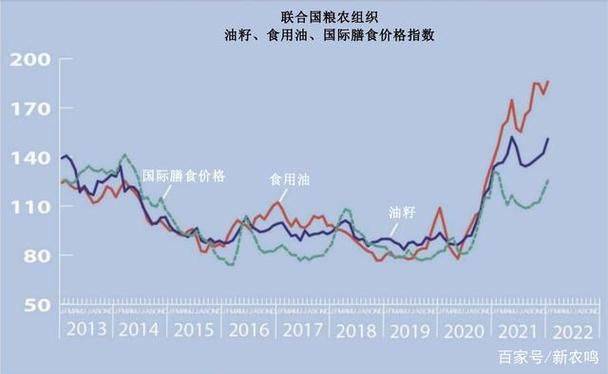
Since this year, international prices for feed raw materials, mainly soybeans, soybeans and maize, have continued to increase, with some impact on the production operations of domestic feed raw materials enterprises. According to the latest statistics, as at 10 june, the future prices of the three feeds of the chicago commodity exchange (cbot) had increased to varying degrees, up to a maximum of over 30 per cent。
A number of practitioners told journalists that, since this year, international prices for feed raw materials have continued to increase as a result of geopolitical risks and climatic factors in the food-producing countries. While domestic and foreign markets are associated with strong price shocks for incisive feed raw materials, the associated feed futures varieties are operating smoothly and functioning effectively, with the role of derivative “pressure rock” being highlighted, with active and sustained wind control measures in futures markets。
Market analysts have suggested that, based on uncertainty about the production of new feed raw materials this year and the expectation that demand will rise, prices of feed raw materials may not increase or fall after three quarters, and have suggested that industrial enterprises actively use derivative instruments such as futures, options and so forth to avoid price volatility risks。
Domestic price increases for feed raw materials
Less than international markets
Statistics show that, as at 10 june, the 2207 cbot soybean main force contract had increased from 1371 cents/breath at the beginning of the year to the current 1766. 75 cents/breath, an increase of 28. 87 per cent; (a) the 2207 cbot maize main power contract rose from 585. 25 cents to 771. 75 cents/blank, an increase of 31. 87 per cent; the 2207 cbot soybean main power contract rose from 407. 7 cents to 428 cents/blank, an increase of 4. 98 per cent. Overall, the international prices of feed raw materials show strong trends of varying degrees during the year。
Wang liang, a researcher in the interim, told journalists that the increase in the international price of feed raw materials since the beginning of the year was due to a number of factors: first, public health events and extreme weather events affecting many food-producing countries, resulting in a significant reduction in production and resulting in adjustments in global food supply and demand patterns; secondly, the rise in international oil prices has led to higher transport costs; and thirdly, higher international agricultural prices, including fertilizers, pesticides, etc. Moreover, the geopolitical risk outbreak in the home countries is one of the main causes。
The conductive effects of high international prices of feed raw materials also affect domestic markets. The data show that the dalian primary force of 2207 contracts increased from $5813 per ton at the beginning of the year to $625 per ton, an increase of 7. 59 per cent; (a) the contract for maize main strength of 2209 increased from $2688 to $2865 per ton, an increase of 6. 58 per cent; the soybean main strength contract increased from $3291 to $4262 per ton, an increase of 29. 5 per cent。
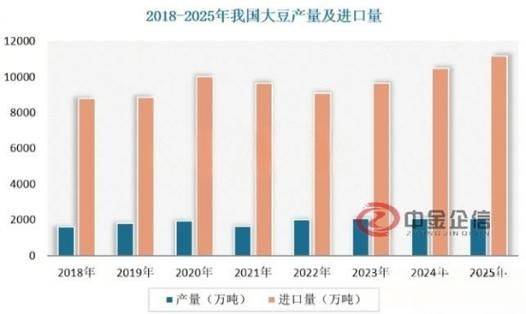
Jabborg, a researcher in medium-food futures, told journalists that south american soybean production had declined significantly this year due to the effects of drought, while new soybean cultivation in north america, although higher than market expectations, remained at a high level of soybean prices, which was the reason for the tightening of domestic and external soybean prices. In addition, maize prices showed strong momentum during the year as a result of geopolitical risks in the countries where they are produced. In retrospect of the domestic market, the overall trend in the price of feed raw materials has been relatively weak, mainly due to the relatively loose domestic supply and demand patterns, such as the increase in soybean arrivals in april and the stock auction, which saw a marked increase in soybeans and soybean stocks。
According to jabborg, in the short term, the trend in prices in the three quarters will depend on base spreads, substitution and trade patterns, as well as on the profits of downstream industries。
It's a big deal
The price of services guaranteed
In order to ensure the safe and smooth operation and efficient functioning of the market, as the main listed institution for domestic futures of feed material, large firms have been strengthening their market regulation and risk prevention efforts from an early stage. Over the course of the year, 51 such controls have been adopted over priority varieties, such as tight trading and holding limits, higher handling fees and bonds, and the issuance of risk alerts, alerting market subjects to the need for increased risk prevention, rational compliance and effective service coverage。
In recent years, journalists have been informed that the “one-size-fits-all” approach adopted by large firms has been constantly improving contractual rules, improving the quality of market operations and promoting the effective functioning of the relevant varieties. At the same time, in order to better serve the stable operation of the feed-farming industry, last year, through the agricultural insurance scheme and the enterprise plan, the entity enterprises were guided in risk management through insurance + futures, in-situ options, off-street options, spread trade, etc., by providing escorts to 35,000 farm farmers and 28 feed-business enterprises。
“in the course of the year, prices of domestic and international varieties of feed-related raw materials increased owing to multiple factors, such as geopolitical risks, which have had an impact on feed and farming enterprises. In the face of the challenges, the main players in the feed farming industry are actively promoting the substitution of maize and soybeans, expanding the diversified feed formulation structure and reducing the consumption of feed resources.” the school of economics and management of the north-west university of agroforestry stated to journalists that, for industry-related enterprises, they should actively study and participate in futures markets, continuously improve their risk management capabilities and enhance their resilience to market risks, thereby increasing business stability throughout the industry。
New hope six and the futures project manager of the shares company laughed at journalists, saying that the diversity of the design of outside businesses in terms of the variety of trades, tools, trading and delivery patterns is currently effectively meeting the individual needs of enterprises in the face of spot trade and risk management; the resulting industry, finance and service institution ecology further expands the business channels of the entities and facilitates the optimal allocation of market resources。
In addition to insisting on early prevention of market risks, the senior officials of the major business establishment will continue to increase product innovation and optimization, promote the marketing of soybeans 1, soybeans 2 and soybean oil options, and study soybeans 1, soybeans 2, soybeans, soybeans, soybeans, soybeans and soybeans; at the same time, it has continued to deepen its `one-size-fits-all' approach to improving the rules governing contracts for varieties such as maize and soy oil and the layout of delivery warehouses。