“in 2025, per capita consumption of pork in households was 53. 2 pounds, a cumulative decline of 12. 79 per cent over two years, the lowest level in almost four years.”
It's the best thing to do with a bad second-brother。
Since late march, the average price of many pigs (i. E., unkilled pigs) has fallen by $5 per pound, and in most provinces the average price has been set at $5 per pound, standing on the edge of a cliff and shaking。
Five years ago, people were discussing whether it would fall by $10. Three years ago, they were discussing whether it would fall by $6-7。
The pig price went down, the feed went up
“it's been so low for more than a decade.” the vice-president of anhui province's pork industry association and the chief editor of the new pork network, wu yee, said to ba。
In march and april, it was a light season for pork, but it is now called “defeating”。
The price that hovered at $5 per pound fell into the cost line for common pig farming enterprises。
To take the example of several head-listed companies, the average cost of pig farming in the month of january-february was approximately $6 per pound for the ranger shares, around $6 per pound for the month of january-february for the wynn shares, and about $6. 15 per pound for the full cost of mid-field pig fats in february for the new hope。
Six dollars per pound is the result of a decline of about 30 per cent over the past five years in the level of in-house skills and efficiency gains experienced by front-line firms。
Other firms do not reach this level. “the average cost of the industry today is generally more than six dollars, and few of the best firms can get six or five dollars.” the u. S. S. T. Added。
At the same time, the price of feed has risen at an inappropriate time。
Feeding accounts for the bulk of the total cost of farming, at 60-70 per cent. The main raw materials are maize and soybeans (by-products of soybeans extracted by pressure). The soybeans depend on imports of 100 million tons per year, mainly from brazil, the united states and argentina, and almost 40 per cent of the pork industry is consumed。
Owing to the obstruction of shipping as a result of the middle east war, since march, domestic feed companies have issued price increases ranging from 50 per cent to 100 per cent for some products, and a number of companies have explicitly refused advance payments and advance booking plans and introduced cash spot sales。
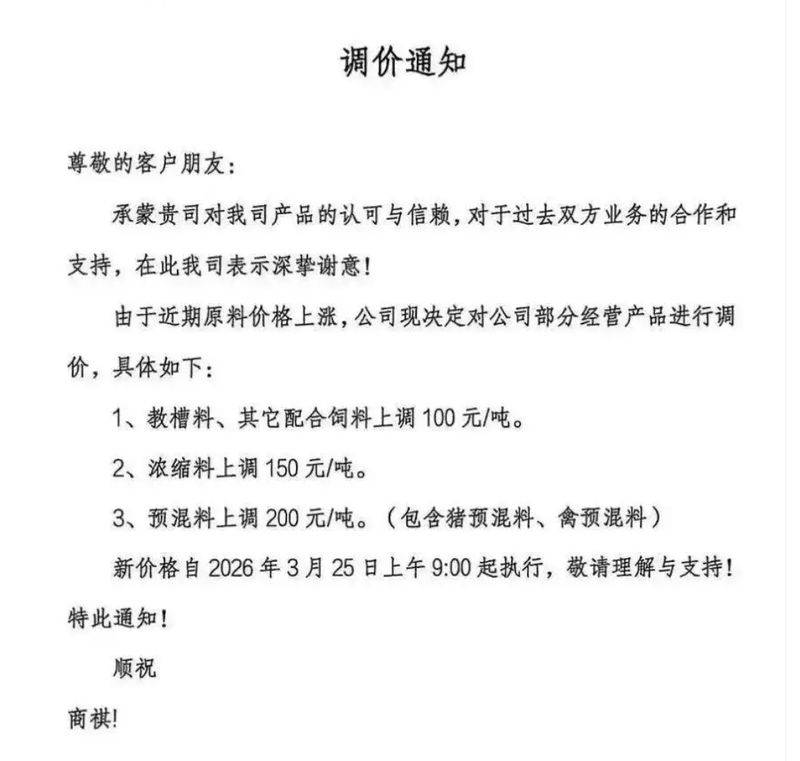
One brand of feed announced an increase in prices
The business society monitored that the soybeans price reached its recent peak in mid-march, rising by about 8 per cent over 10 days. In the same period, maize rose by over 3 per cent。
“the industry as a whole is more pessimistic and cautious, continuing to lose in the months of march-june, and there may be financial chain tensions or disruptions in part of the scale and group.” another senior practitioner, the editor-in-chief of the ino media, said to bao。
On 23 march, ndc monitoring revealed an expected loss of 415. 15 yuan per head for pig farming。
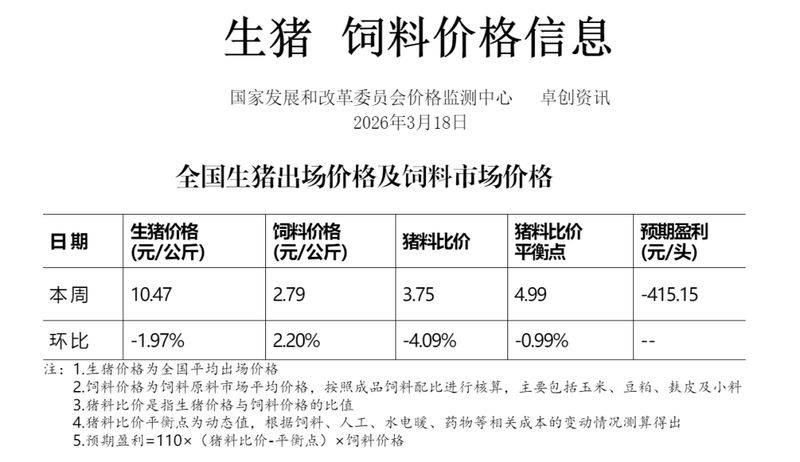
Figure: national development and reform commission of the people's republic of china
This is not the case
I can't stop the pig factory from expanding its capacity
Piggy farming has become less profitable, but the market still has more than demand. It's because it's hard to control。
The development of the pig farming industry in our country has so far undergone six “pig cycles”. Among them, the severe losses and fallout of industrial enterprises, particularly small and medium-sized households, caused by the epidemic, insufficient demand and tighter environmental policies, are often the key to a new cycle of production。
This logic now seems to have lapsed。
At present, in terms of supply and demand in the industry, in 2025, the number of pigs produced in the country stood at 7173, an increase of 2. 4 per cent, surpassing 700 million in three consecutive years; the national production of pork was 5. 93 million tons, an increase of 4. 1 per cent。
At an industry summit in september 2025, the former president of the chinese livestock association, li hi-yun, stated: “there are currently more than 700 million head of chinese pig production in the near future, and one billion head of pig production in the field would be fine if there were idle bars”
The core indicator of the production capacity of pigs, which is generally measured by the “reproductive age of the pig”, usually determines the availability of food for the next 10 to 12 months. If this data is within normal holdings, it is a green reasonable area。
The so-called “normal tenure” is the production capacity planned by the ministry of agriculture and rural development in the light of current developments. The programme for the implementation of pig production management (revised in 2024) was planned at 39 million in early 2024 and has been maintained since then, with the green reasonable area set at 92 to 105 per cent。
At the end of 2025, there were 3,961 female pigs in the country, and at the end of january, there were 3,958 in the stock of female pigs, 101. 4 per cent - 101. 6 per cent of normal holdings, all of which were in green and reasonable areas。
However, in february, the most recent document, central i, began with the following title: “creating the integrated management of the productive capacity of pigs, consolidating the benefits of the meat and dairy industries and promoting the balance between supply and demand and healthy development”
On 4 march, the ministry of agriculture and rural affairs urgently convened a meeting of pigs, which allowed for the normal retention of pigs or a further reduction to 36. 5 million。
These signals mean that reality may already be beyond control。
If the latest “normal holdings” are used, the number of capable pigs in the column at the end of 2025 and at the end of january 2026 is 108. 4-108. 5 per cent of the normal holdings, which is above the green reasonable area。
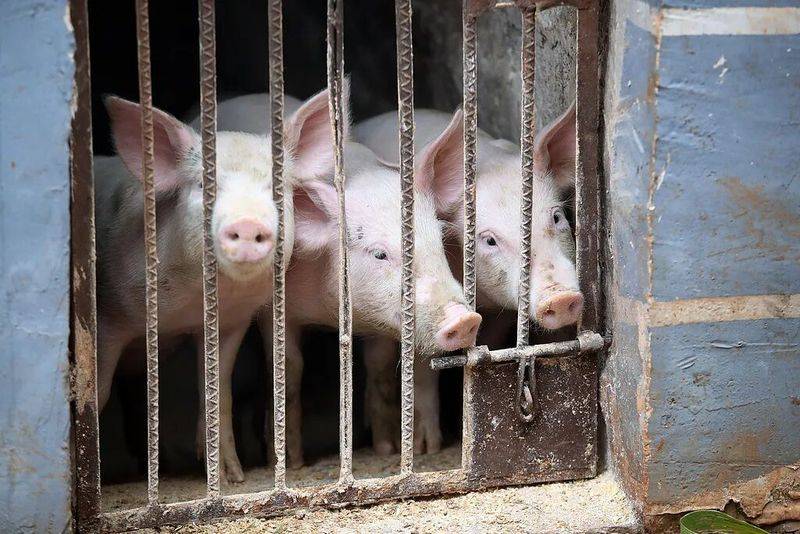
Pig farming
Supply surged, but demand weakened。
For more than a decade, pork consumption in chinese has continued to weaken, from 65 per cent to 54. 2 per cent today, down by more than 10 per cent。
According to data published jointly by the ministry of agriculture and rural development, the national development commission, the ministry of commerce, the general customs administration and the national statistical office:
In 2025, per capita consumption of pork fell by 12. 79 per cent in two years, the lowest in almost four years。
“macroeconomically, the shift from people to rational consumption over the years has also somewhat constrained pork consumption.” one industrialist added。
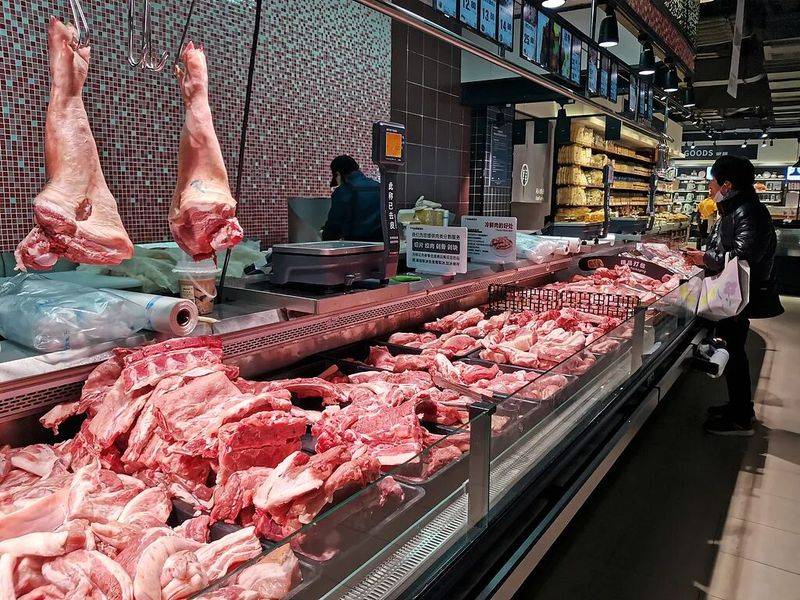
Pork in the supermarket
The intensity of competition
The resilience of small and medium-sized farmers has been underestimated
A rare phenomenon in other sectors is that small and medium-sized farmers, both in the head and in the market, have demonstrated their great adaptability to the industry situation。
“the current farming structure is dominated by groups, size fields and, behind them, substantial financial investment, not through short-term losses of capacity or exit from the market, but through more borrowing.” the silent book says。
According to china's annual list of pigs produced in 2025, the number of pigs produced in more than 1 million groups rose to 6 in 2025, an increase of 20 per cent over the previous year, and production capacity has accounted for 25. 8 per cent of the total number of pigs produced in the country; the number of pigs in more than 1 million stands at 39, an increase of 5 per cent over the previous year. Thirty-nine head enterprises contributed more than 40 per cent of the country's raw pig supply, an increase of 21 per cent over the same period。
Fia reported that, at the 2025 congress on the development of the boar industry, the regulatory bodies that participated in the conference made strong reference to two types of expansionary enterprises:
The first category is: reduced production in other enterprises, which do not reduce their own production and want to “take a ride”
The other category is: trying to expand to capture market shares。
“the asset-liability ratio of existing large farming enterprises is significantly high, partly above 70 per cent or higher. If blind expansion is implemented, there is a risk of financial chain tension and even fragmentation.” this authority has publicly warned。
In support of this, it can be argued that at the end of the third quarter of 2025, 22 listed pigs had total liabilities of 380 billion, with an average asset-liability ratio of 55. 92 per cent, of which eight had asset-liability ratios of 60 to 73 per cent。
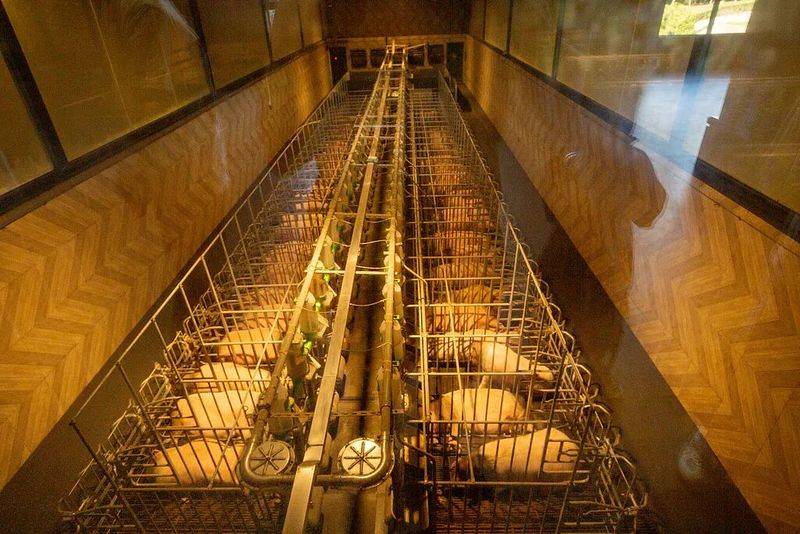
Piggy factory water line
On the other hand, according to monitoring data from the ministry of agriculture and rural development, the number of pig-breeding households in the country has declined significantly in recent years. For example, at the end of 2025, the number of pig-breeding households nationwide was approximately 1. 67 million, a decline of only 3. 2 per cent over the same period。
Some small and medium-sized farmers are also entering the market simultaneously, with considerable flexibility。
A typical example is the senior pigkeeper, wu yi. He had been out of the pig field for 150,000 years, until 2018, when he was hit by the african swine plague, and since then, he had managed to get back into the old business. However, in the second half of 2024, he embarked on the path of pig farming。
Now he's putting risk control at the heart of the pig farming model. In particular, pig breeds avoid the most mainstream and competitive three foreign dollars, and instead feed black local pigs at relatively high prices; have strict sizes, with only about 600 pigs; and have been used in close collaboration with a local slaughtering enterprise to ensure stability of long-term recovery prices through order farming。
He is active in promoting small and medium-sized pig farms. In conjunction with his physical experience, he made four recommendations for small and medium-sized pig farms:
First, moderate size to avoid blind expansion; second, group development to promote scale procurement and marketing, or embedding industrial chains, to facilitate marketing channels; third, diversity selection for farming of local pig species; and fourth, emphasis on fermentation techniques and utilization of geo-grain resources. For example, fermentation using sugar cane dregs from juice plants, bottoms from food plants, etc. Reduces feed costs。
“as a result of poor and well-nourished diets and the use of cheap feed materials in the surrounding areas, the pig herds are to be grown at a maximum cost, and a certain amount of cash is to be kept until dawn. A similar point was made in the silence。
Last year, the cpi got tired of the pig price. What about this year
It is well known that the weight of pork in the cpi is not low, and that even once the cpi had the title of the chinese pork index, it also raises the question: can the cpi this year still rely on pork
The cpi levels are determined in eight main categories, namely, food, tobacco and alcohol, as well as external meals, clothing, shelter, household goods and services, transport and communications, educational and cultural recreation, medical care, other supplies and services。
Cpi grew by 0 per cent in 2025. Cpi, on the other hand, grew by 2-3 per cent over the same period and is generally considered to be a more healthy area of moderate inflation. Among them, the large decline in food and energy prices is a major factor in lowering the cpi。
Among food products, the price of pork declined from 7. 7 per cent in 2024 to 6. 1 per cent in 2025, affecting cpi by about 0. 08 percentage points。
It is known that every five years, the national statistical office adjusts the weights of these broad and medium categories (e. G. Pork, etc.) to objectively and honestly reflect the consumption structure of the population. As the price of pigs continues to decline, its weight in the cpi also falls。
In the five years since the beginning of 2026, the price of pork has a weight of 1. 9 per cent in cpi, a decrease of 0. 41 percentage points compared to 2021。
“reflecting that the impact of pork on the cpi has been reduced to a low level, thanks to a shift in the consumption structure, the effect of the pig cycle on the cpi and the real impact on the economy are diminishing.” guo xianxian, expert in the whale platform's think tank and financial critic, said。
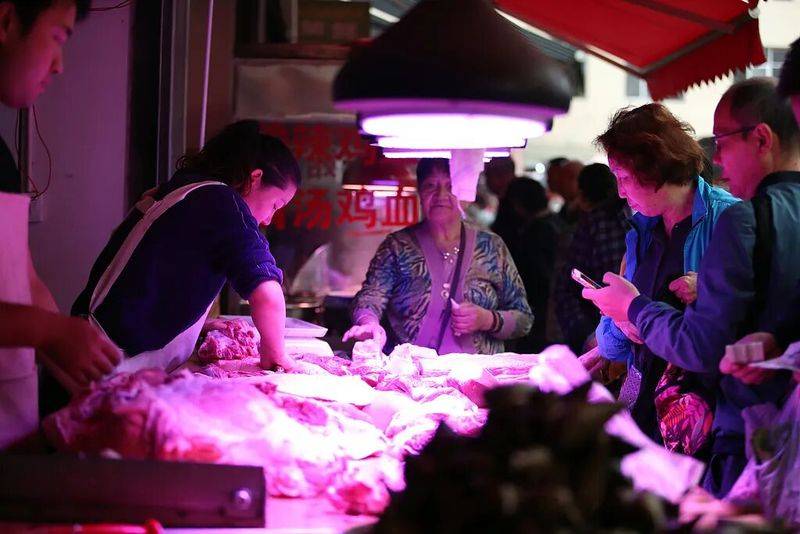
Residents buy pork
However, it is widely recognized in industry that pig prices remain the key variable for cpi performance this year。
According to macro, the price of pigs increased by about 0. 17 percentage points in the second half of 2026。
As a result of the good economics of spring festival consumption, cpi increased by 0. 8 per cent from january to february this year, by 0. 2 per cent in january and 1. 3 per cent in february。
According to china mail, the price of pork declined by 8. 6 per cent in february of this year, with a direct impact of about -0. 17 percentage points on the same month's cpi。
A synthesis of several studies and industry views concluded that during the first half of the year, the price of pigs was still not encouraging, while in the second half of the year, the likelihood changed。
“the may-july supply pressure on the raw pig market is expected to ease somewhat, with the possibility of a small rebound. However, it is expected to be by the fourth quarter of 2026. If it can be implemented, the price of pigs in 2027 or the micro-benefit phase (without taking into account the large-scale epidemic)” says。
I'm sorry
Chief editor