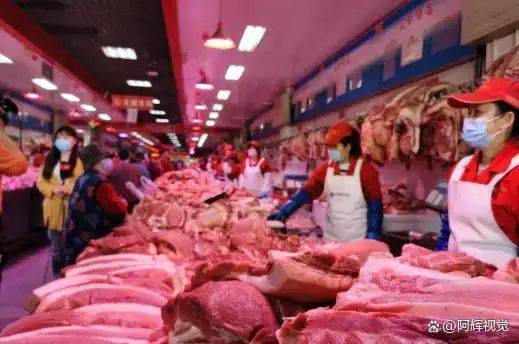
In march 2026, the average price of pigs fell by $10 per kilogram in the country, in parts of the country even to $9. 19 per kilogram, and the retail price of pork was generally below $10 per pound, and the consumer achieved “freedom of pork”, but it was a dark moment for the breeder to “sell a loss”. The farmer king of henan tsai, who raised 200 fat pigs, each pig from a pig to a bar, at a cost of $14/kg for feed, vaccines, and manual labor, is now selling at only $9. 8/kg, at a cost of $280 per head, 200 for a pig and $56,000 for a pig, who looks at the pig in the hog coop every day, both looking to stop the damage and fear the loss. Mr. Li, the largest pig farm owner in shandong, has five pig farms under his flag, with 10,000 pigs in storage, lost every day after the spring festival, the financial chain has been tightened, bank loans have expired, and the feed plant has been forced to tear out the fatty pigs, “now it's not over, it's more to lose, but he'll have to be hard-headed to produce energy.”。
The falling price of pork is not the result of a single factor, but of a combination of supply, demand, cost and market sentiment. The supply side, with its long-term high levels of sow reserves, is a source of price decline. At the end of 2025, the capacity of the country's mother and pig population stood at 3961 million, far above the 36. 5 million reasonable zones set by the ministry of agriculture and rural development. These pigs continue to produce babies, together with technological advances in farming, and the annual number of weaning pigs per pig increases by more than 40 per cent over a few years ago, the number of births of pigs remains high, and the number of pigs produced continues to increase dramatically. In january-february 2026, the number of pigs produced in the country increased by 5 per cent over the same period and the number of pigs in the market increased, creating a “hong peak”. More critically, in order to reduce losses, many farmers raise pigs to 123-125 kg, which is 5-10 kg more than the standard, which is equivalent to an implicit increase of millions of head, further exacerbating supply pressures。
Demand-side, post-consumer cliffs fall, making it more difficult to digest excess pork. Prior to the spring festival, households had hoarded pork, and food, schools and factories had been pre-positioned, with consumption demand reaching its peak today. After the spring festival, the household stock was sufficient, the consumption of food and food fell, the slaughtering business order fell by more than 50 per cent, and the market was in a “no-market” impasse. In a consistent pattern, pork consumption declined by 15-20 per cent after the festival, and in 2026 it was due to changes in the population's meat consumption structure. The share of pork fell from 62. 1 per cent in 2018 to 57. 8 per cent in 2025. Low-cost alternatives, such as chicken, duck and goat, are in high demand today. Zhang, a citizen of shenzhen in guangdong, who used to buy pork three times a week, has now changed to one per week: “chicken and beef are good and cheap, and there is no need to eat pork all the time”, a change in consumption habits that perpetuates the current headline of pork demand。
At the cost end, the price of feed has risen rigidly, resulting in a "scissor price drops and costs rises" that exacerbates farmers' losses. Corn, bean, which is the main feed for raw pig feed, is influenced by the international situation and the area under domestic cultivation, with maize prices rising by 8 per cent in 2026, soybean prices rising by 12 per cent, feed costs accounting for 68 per cent of total farm costs, and feed costs per pig increasing by $150 over last year. The price of pigs fell by $10/kg, the entire industry lost cash, lost more than $280 for self-supporting, and lost more than $350 for pork farming. Many small and medium-sized farmers have broken their financial chains and have had to sell their pigs at low prices, accelerating the fall in the price of pigs; large enterprises, though financially supported, are also under great pressure, with the number of pigs on the market, such as herds, wendice, new hope and others, growing in january-february 2026, but their incomes are falling so sharply that they find themselves in a position to “sell their losses”。
Low market sentiment also exacerbates the price of pigs. Farmers generally fail to appreciate short-term pig prices, fearing that prices will continue to fall, hastening the pace of the fences, and even leading to the early release of unsatisfied raw pigs, resulting in a short-term surge in pork supplies on the market and a further fall in prices today's headlines. At the same time, as high as 920,000 tons of historical high frozen meat stocks, like a “lake of barclays” on the market, the slaughtering businesses continue to sell frozen meat for the return of cages, further reducing the price of fresh pork. Although the state has launched a central freezer, the collection is limited, making it difficult to reverse the fundamentals of supply over demand, and the effects of policy regulation are slow。
The price of pork continues to fall, essentially the natural pattern of the cycle of pig production. The cycle of raw pigs is “high prices that stimulate the expansion of production capacity in excess of production capacity and the fall in the price of production capacity by reducing the price of production capacity by the loss” – from the super cycle following the african swine plague in 2019 to the fall of prices in 2021, to the new expansion that began in 2023 – and is now at the bottom of the cycle, with excess capacity, weak demand and constant price undermining。
So, when does the next round turn around? This is of concern to all farmers and consumers. From the production cycle of the pig, it takes about 10 months to transmit changes in the cortex to produce the pig, that is to say, it takes 10 months to decapitate it. Starting in the third quarter of 2025, the state led the production of energy, and the corrosive stock of pigs began to decline, and in march 2026 the capacity of the corrosive stock fell to around 390 million, but still exceeds a reasonable range of 36. 5 million, and the capacity to leave is still continuing。
In the short term, during the second quarter of 2026 (april-june), the price of pigs will remain low and the trend rebound is difficult. At this stage, the amount of raw pigs associated with the high-prevalence, high-prevalence pigs is still being released centrally, consumption is still in the off-season, the effect of de-manufacturing has not yet materialized, and the price of pigs is estimated at 9-10. 5 yuan/kg shock, and farmers will still face losses. There will be short-term consumer supplies for the holidays, which may lead to a small rebound, but it will be difficult to break the cost line and will soon be back on the decline path。
In the medium term, the third quarter of 2026 (july-september) was the key window for stable, reverse confirmation of pig prices. Starting in july, the summer consumption, the start of the school season led to a warmer demand for pork and a gradual increase in pork purchases in restaurants, schools and factories. More importantly, the fertilizers, which began in the third quarter of 2025, were decomposed, and after 10 months of transmission, by the third quarter of 2026, the volume of raw pigs began to contract substantially and supply pressures were reduced. Around september, mid-autumn and national day double supply demand began, consumption entered the boom and supply-demand relations gradually improved. The price of pigs was expected to rise from $11 to $13/kg, gradually rising and the industry began to lose。
In the long run, in the fourth quarter of 2026 (october-december), the price of pigs was on the upward trend and the season was high. The price of pigs is expected to rise back to 14-16 yuan/kg, as the volume of fished pigs continues to fall below 370 million head. The demand for pickles and enemas before new year's day, spring festival, will further boost pork consumption, which may reach an annual high. By 2027, as the capacity to decompile has been fully completed, the capacity to keep the load of pigs has stabilized at around 36. 5 million, the pig cycle will enter the upper stages, the price of pigs is expected to stabilize at $15-16/kg, and the industry will return to full profit margins。
The inverted price of pork needs to be focused on three key signals: first, the continuous decline in the volume of femininous pig stocks to less than 370 million head, which is a core indicator of capacity; second, the monthly run-off of raw piglets, which means that the supply is starting to decrease; and third, the return of pork grains to more than 5. 5:1, the beginning of a profitable industry and the increased willingness of farmers to supplement them. At present, none of the three signals have yet appeared, and the inversion of pig prices is still pending。
It is the most difficult time for farmers, not to be blindly scared to sell, not to be forced to stand on their feet, to be able to rationalize the elimination of inefficient pigs, optimize the farming structure, reduce costs and wait for the cycle to reverse the headlines of today. For consumers, the “freezing of pork” can also last until the end of the second quarter, after which the price of pigs will gradually rise, allowing for appropriate hoarding at low prices。
The rise and fall in the price of pork is responsible for the livelihood of millions of farmers and for the food table of the population. From falling to turning back, it is a painful process of loss of capacity and the inevitable return of the pig cycle. The next round will come only after the winter, when excess capacity and supply-demand relations improve. It is expected that around september 2026, the price of pigs will reach a steady tipping point at the bottom, and 2027 will enter the upper stages of the cycle, with farmers expecting a profitable spring。