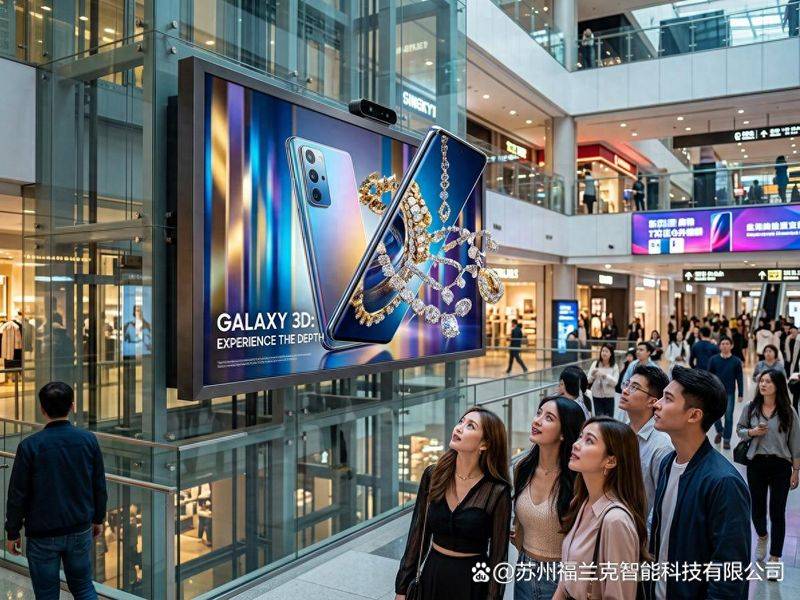
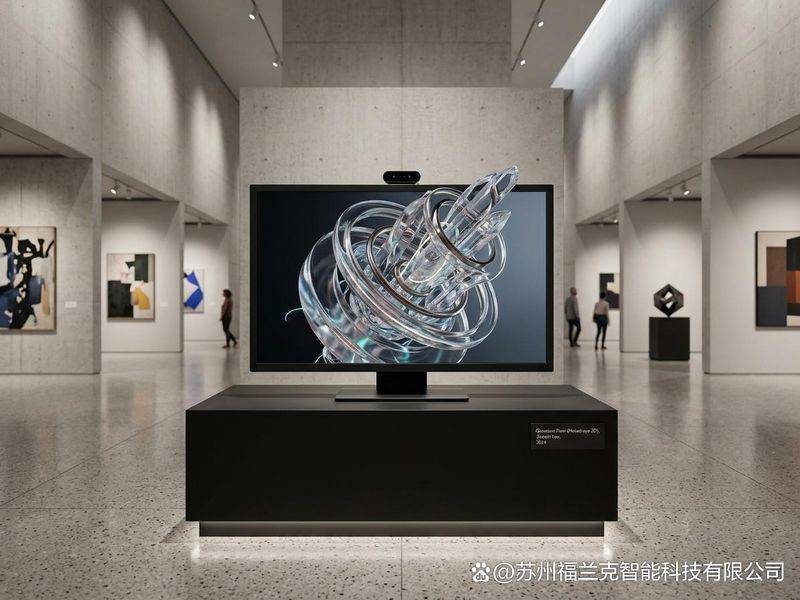
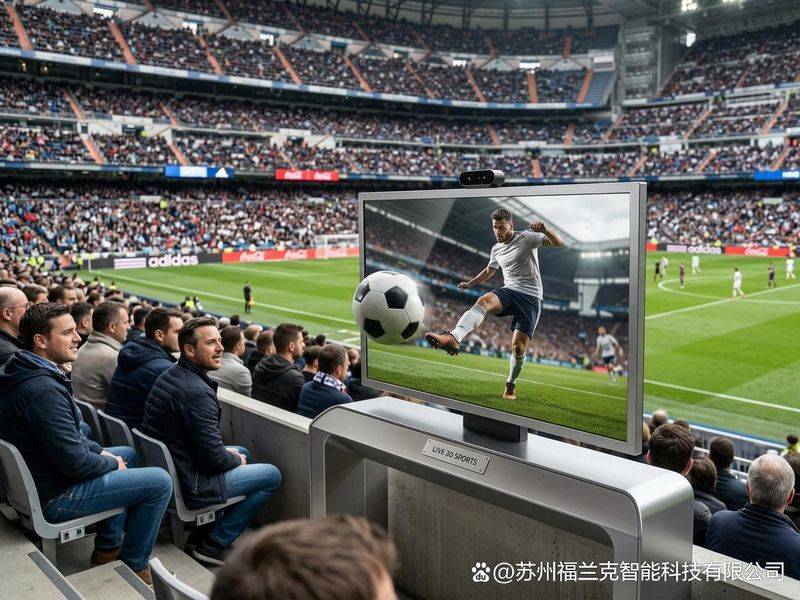
If you've been at a big show recently, it's likely that you'll see a big screen full of people, and the object in the picture is as if it's going out of the screen, and the viewers don't have to wear any glasses, so they can feel the 3d effect of their desire. That's the naked eye 3d display technique。
For a long time now, the technology has been labelled as “concepts cool and distant”. However, recent research by the author has shown that naked eye 3d is penetrating professional scenes such as the exhibition's “plug-in-the-morning” and is quietly penetrating into business outreach, medical training, and the exhibition of science and technology libraries. It is not red overnight, but step by step, step by step, on technically mature steps。
Sioux frank smart 3d
Three pains, one by one
Naked eye 3d used to be “good or not,” with three symptoms: narrow vision, lack of content, too high price. What happened in 2026? Let's see one by one。
Let's start with visual angles. In the early years of naked eye 3d screens, the best view position was around 15 degrees straight ahead, and a little bit of the image was "flower". Now, the product of human-eye tracking has expanded to 65 degrees. But here's the easily overlooked difference:
The 32-inch small-sized nudity 3d monitor is relatively concentrated and more suitable for single-person use because the screen itself is small. Thirty-two inches of scenes requiring personal scrutiny, such as medical training and design evaluation, are practical options。
Large-sized products of 65 inches and above have a wider range of views that can support multiple viewers at the same time. The advantages of large sizes are evident in scenes that need to be experienced by groups such as exhibitions, technology fairs and business halls。
Simply put: the pursuit of “a man sees clearly”, the selection of 32 inches; the pursuit of “a group of people sees shock”, the selection of 65 inches。
Tell me more about it. That's the problem with early users' headaches -- buying back and finding out there's nothing to see except a few presentations. The situation is now changing, and a 2d real-time 3d converter has been introduced. Common business promotional films, teaching videos, processed in real time through hardware, can produce a 3d signal in both left and right formats. Although not as exaggerated as “one-key-all”, it did significantly lower the threshold for content preparation。
Finally, price. This may be the most practical obstacle. A 32-inch professional nudity 3d monitor with real-time converters at a start-up price of around $20,000; and 65-inch large-sized products with prices ranging from $50,000 to $200,000 depending on configuration. This is certainly not cheap for household users; however, for business clients whose budget is set at hundreds of thousands of dollars for an exhibition, the price is often the right one and the right one。
Sioux frank smart 3d
Real landing: “use instructions” for three typical scenarios
Scene one: large fairs and technology halls
At the 2025 conference, a 3d card screen with naked eyes in the “beijing grand audio-visual” exhibition area served as a traffic centre for the entire cultural tour area, during which crowds were received. This is not an example. At the long triangle monument, naked-eye 3d technology brought the legend of "kandu-chou" onto the screen, and the audience responded “a feeling of naked-eye 3d is real”。
Technical principles are not complicated: human beings are visual animals. At the exhibition site where the information is overloaded, a naked eye 3d screen above 65 inches is itself a natural attention magnet. At the heart of its solution is the issue of “getting people to stop”, a step that is a prerequisite for any subsequent communication and transformation。

Sioux frank smart 3d
Scenario 2: medical education and clinical training
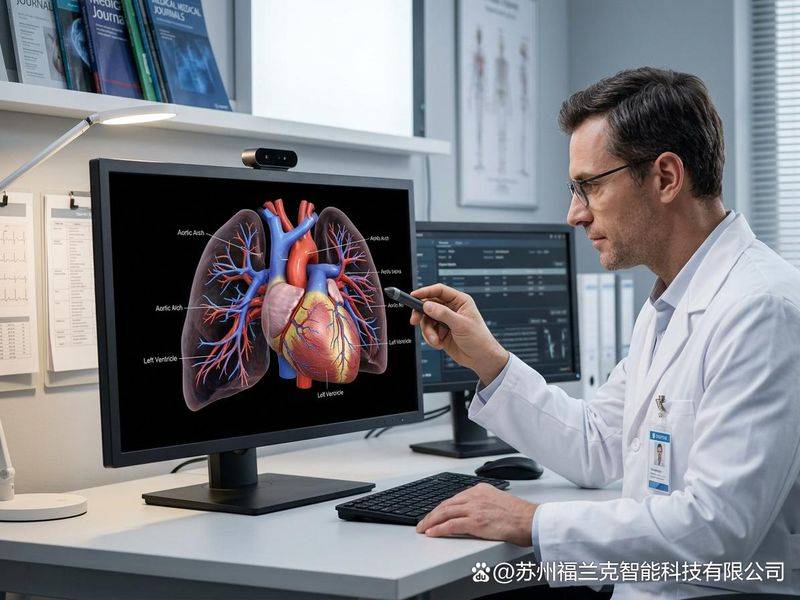
If the exhibition is about “sniffing”, the medical scene is about “accuracy”. In the teaching of medical anatomy, the graphics are not visible enough and real specimens are increasingly scarce. The tzu chi hospital in taipei, in collaboration with lixel, has developed a “pedagogic and decision-making platform for naked 3d radiation treatment” using light field nudity 3d technology, which allows multiple layers of images, target area dosage distribution and organ structure to be presented in an empty neutral manner. The technology has acquired over 70 international patents and has been applied in practice in a number of medical centres。
In 2025, the hangzhou school of medicine also introduced a “messics” teaching system, which includes a variety of technical forms, such as naked-eyed 3d immersion space and ar glasses. The 3d model in the system is derived from the reconstruction of the ct scan of the “general teacher”. When a single vein is magnified dozens of times, students can see clearly its relationship with the surrounding tissue in microstates — something that 2d screens cannot do. In this scenario, the 32-inch single-person viewing programme is preferred, as teaching requires that each student see a fine anatomical structure。
Sioux frank smart 3d
Scenario iii: business fair and high-end retail
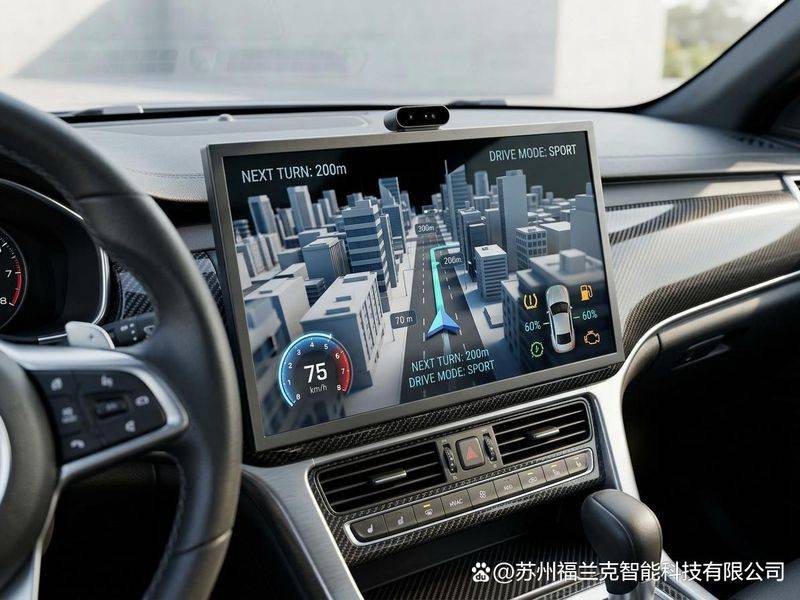
At the b-end market, the naked 3d screen acts as a “product description plus”. The internal structure of a medical device, the workflow of an industrial device, is presented to the client in a three-dimensional manner, with a solid understanding of cost and communication efficiency gains. Many corporate clients responded, with such a large 65-inch screen in the exhibition hall, a marked longer stay and a more accurate understanding of the product。
Sioux frank smart 3d
Markets are growing, but buyers still need to do their job. Classes
From market data, naked eye 3d is actually warming. The size of the global naked 3d market remained growing in 2025, with the acceleration of the chinese market particularly evident. Many institutions forecast that, around 2030, 3d, including holograms, light fields, will show a further increase in the overall market size。
But as a buyer, there are a few questions that are worth asking before the next order:
Question one: are your core scenes single or multiple? 32 inches suitable for medical teaching, personal design evaluation, precision operation training; more than 65 inches suitable for displays, exhibition halls, science and technology fairs, and multiple experiences. The wrong size, the effect is compromised。
Second question: where does the package come from? The biggest difference between naked 3d and ordinary screens is not hardware, but content ecology. It would be better to confirm that many of the manufacturers are now starting to provide content production services or 2d to 3d options before procurement。
Question number three: how fast is the human eye tracking response? This is the key indicator of the decision to “do you feel dizzy”? The current tracking of mainstream products is delayed by approximately 7 ms, which is associated with a capture frequency of 170 frames/s and above, largely eliminating dizziness。
At the end
Naked-eyed 3d is not a “magic technique”, which does not suddenly surprise the mediocre content, nor does it turn ordinary displays into explosives. But when you have elaborate 3d content that needs to be displayed, or you need to send stereo messages in complex scenes, it's a solution that is currently expensive。
The 3d naked eye is proving its worth in a real scene, from the service fair to the long triangle fair, from taipei hospital to hangzhou medical school. Its spread is not a revolution, but a step-by-step technological trajectories and scene validation. It is time to look at this option carefully for business decision makers who are looking for differentiated displays。
Small size solves precision, big size solves shock -- not so much technology, but you pick the right size, you use the right place。
After all, in the age of the explosion of information, it is a scarcity of capacity to “see more” itself。
Sioux frank smart 3d