Mineral carrying capacity, i. E. The ability of mineral crystals or surface loads of “object components” under certain physical and chemical conditions, is a front-line issue in surface mineralology and low-temperature geochemicals. The classic mineral surface carrying capacity model suggests that the mineral surface has a relatively fixed sorbent-point capacity that makes it difficult to continue to hold metal ions once saturated. It is interesting to note that the magnesium chain-like clay-coated clay plumbstone displays a unique “carrier leap” phenomenon: under conditions far below initial cobalt concentrations (0. 1 mm vs. ≥0. 6 mm) and surface cover (0. 15 μmol/m2 vs. ≥1. 2 μmol/m2) of common minerals such as alpine rock, gamma-al2o3, convection stones can induce surface deposition, thus breaking the capacity limits of traditional sorption points [figure 1]. This shift from surface adsorption to sedimentary crystals is key to achieving the carrying capacity leap, but the microregulation mechanism behind it has been a challenge。
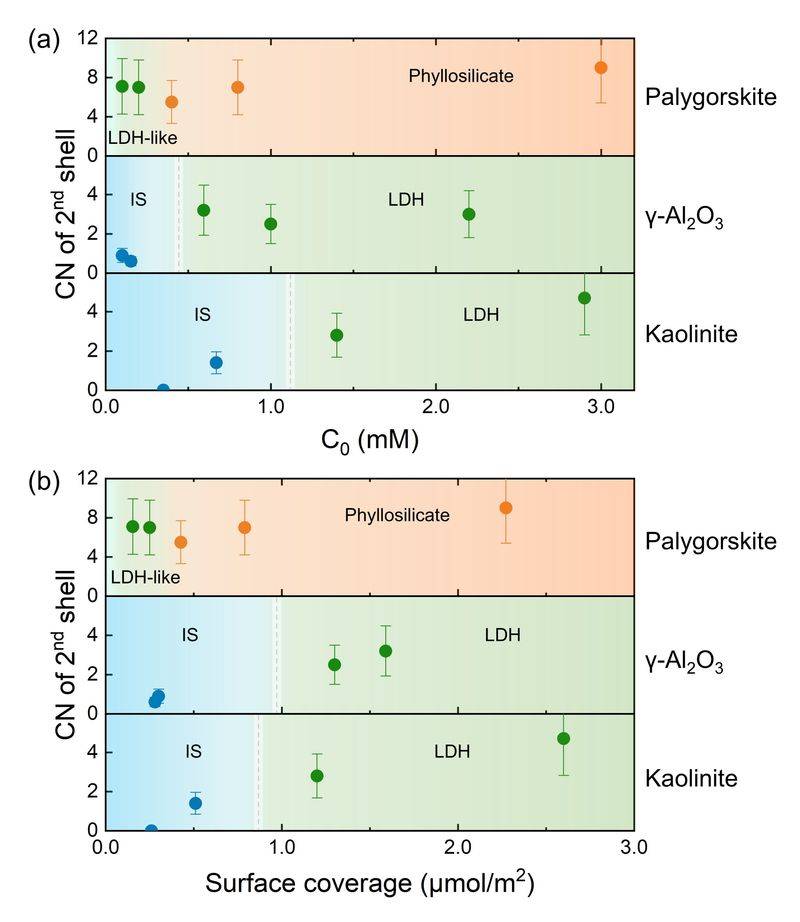
[figure 1 concentration of metals and surface load compared to sedimentation on the surface of gamma-al2o3
In recent days, our team of professor lee wei has published an updated study on geochimica et cosmochimica acta, which is aimed at magnesium chain-forming clay cavities, a combination of sorbent experiments, scanned lenses (stem-eds) and extended x-ray absorption fine structures (exafs) spectrometry and density general correspondence theory (dft) calculations, which reveal the molecular mass mechanisms of ph, metal concentrations and mineral templates coordinated to induce cobalt deposition on the surface of the ph, cascading rock, and to achieve carrying lift-up。
Ph - "switch" to open load lifts: the study found that ph is a key "switch" to regulate cobalt sequestration mechanisms and trigger load lifts. Under the acidic conditions of ph 6. 0, cobalt is held mainly in surface-coated form, active only to 9. 3 kj ∙mol-1, meeting the energy characteristics of physical adsorption and weak chemical adsorption, at which point the load follows traditional adsorption patterns. When ph rises to 7. 5 in a weak alkaline condition, the sequestration of cobalt is converted to surface-induced sedimentation, which can jump to 102. 6 kj ∙mol-1, consistent with the typical process of chemical deposition for nuclear control. This shift in mechanism has enabled mineral surfaces to accommodate cobalt that is far above the capacity of the sorbent point, resulting in a significant leap in carrying capacity。
Concentrations of metals - regulation of sediment type, influence lifts: under conditions of ph 7. 5, the team found that, with the increase in cobalt concentrations from 0. 1 mm to 3 mm, the dihydroxide (ldh) and cobalt silicate formations of cobalt-aluminium at the same time as the condensed rock surfaces formed two sediment phases, and the relative proportions of the two evolved in a regular way: ldh deposition dominated at low cobalt concentrations, with the sedimentation of high cobalt concentrations in silicates gradually becoming the dominant phase [figure 2]. The evolution of the formation and ratio of different sediments reflects the gradual changes in the surface micro-environment, further affecting the leap forward in carrying capacity。
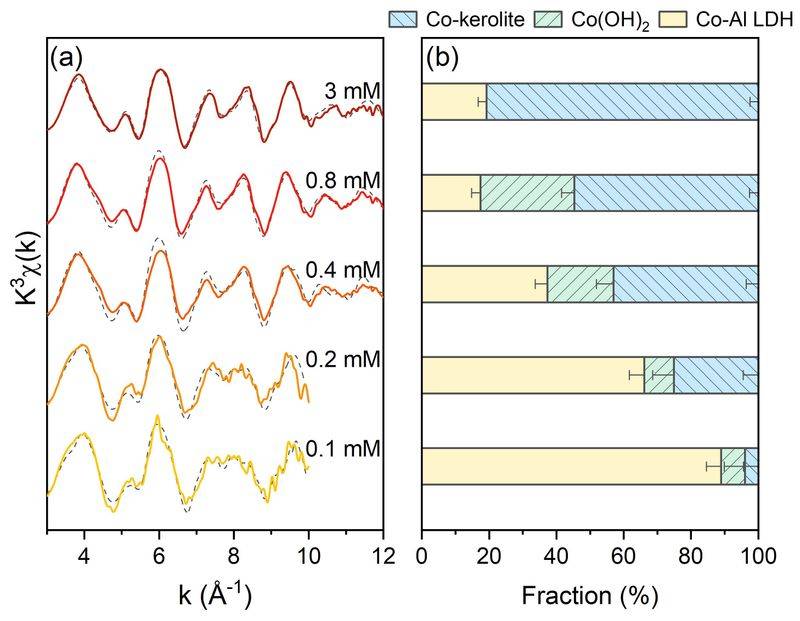
[figure 2 exafs spectrographs and lcf analysis at different cobalt concentrations reveal a regular evolution of dominant sediment types with cobalt concentrations]
Mineral template - determines sediment type and jump path: studies have further shown that the chemical composition of the minerals themselves is decisive for the carrying lift path. The magnesium/aluminium ratio of minerals affects the type of secondary metal deposition phase: magnesium-rich clay (combusts, sea boulders, soapstones) is more likely to induce layered silicate-type deposition, while aluminium-rich minerals (highland rock, gamma-al2o3) give priority to ldh-type deposition [figure 3]. This “mineral template effect” means that different minerals, due to their crystal-chemical properties, have a substantial difference in the lift path and the capacity ultimately achieved。
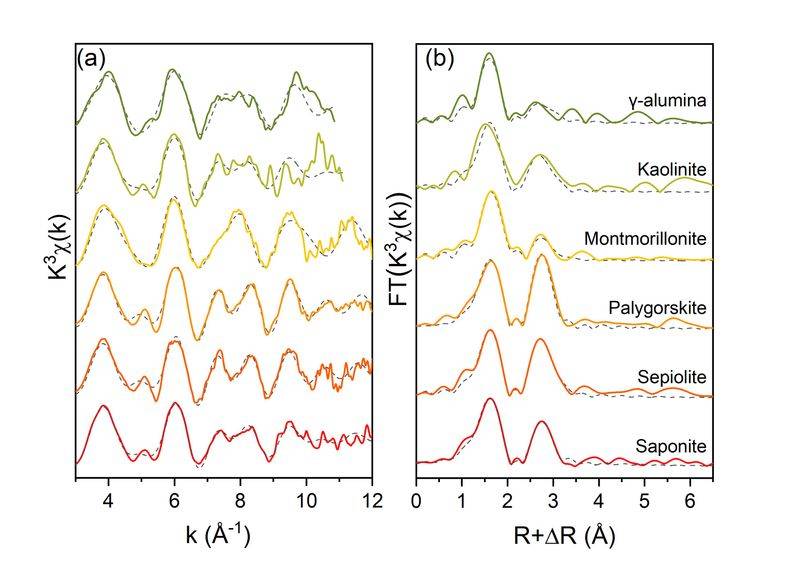
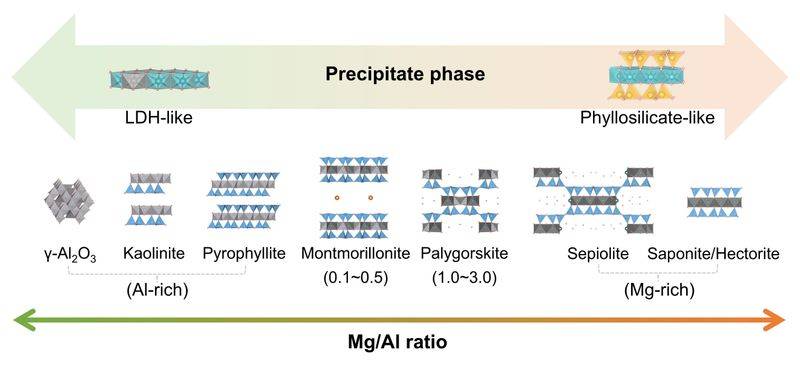
[figure 3 exafs spectra (up), mineral template effect regulation (down) for mineral aluminum relative to mineral sedimentation)
Breaking through traditional perceptions - from micro-mechanisms to resource environment applications: in summary, the study found for the first time that specific mineral structures can significantly reduce the trigger conditions for surface deposition: peaked barstones can induce cobalt deposition at metal concentrations or surface loads well below those of common aluminium-rich minerals, leading to a significant leap in mineral surface carrying capacity. Under environmentally relevant conditions, ph, cobalt concentration and mineral magnesium/aluminium ratio are central factors in regulating the process. This result not only provides precise theoretical guidance for the green restoration of cobalt-contaminated soils, water bodies, but also provides molecular scales for the understanding of the mineralization mechanisms of the red earth nickel cobalt mine and the process of concentration of key metal resources, both of scientific importance for the environmental risk assessment of cobalt and the management of strategic metal resources。
The results of the study, recently published in the nature index journal geochimica et cosmochimica acta, were the third gca paper of the team on a series of studies on cascading stones interface response (mo et al., 2021, 2023). Professor li wei is the author of the newsletter, and the first author of the paper is moo xin (now associate professor at the china geology university (wuhan)) who graduated from the group, including zhang xuan, associate professor at the northwestern university of agroforestry and technology, professor gohbashi, university of tokyo, dr. Matthew g. Siebecker, texas university of technology, united states, and do, university of delaware, united states of americaProf. Nald l. Sparks, prof. Xuewon guo, prof. Choi yuanfung and prof. Rui moo. The study is funded by the national fund for natural sciences, the minerals innovation group fund (42,41002), the youth fund (4247305) and the china postdoctoral science fund (2024 m753021, gzc 20232466)。
Thesis information:
Mo, x., li, w., zhang, c., takahashi, y., gu, x., siebecker, m. G., cai, y., sparks, d. L., lu, x., molecular-scale intruded cooperation on paperwork:General, we're going to have to take a look at this.
Relevant studies:
Mo, x., takahashi, y., siebecker, m. G., gou, w., wang, z., lu, x., li, w., in situ/perando xafs input of the protocol/prescription of zn (ii) on paperwork security at the molecular scale: implifications for zn stalable space operation, geochimica et cosmochimica acta (2023), 349: 64-80.
Mo, x., siebecker, m. G., gou, w., l., w., exafs investment of ni (ii) support at the palygorskite-socialization interface: new insights into surface-induced regulation phenomena, geochimica et cosmochimica acta (2021), 314: 85-107.