At the heart of the diagnosis of male infertility is the “step-by-step screening of the causes of the disease”, first identifying the abnormal types of sperm quality and then retroactivity of the reproductive system, endocrine or whole body problems; treatment requires “targeted treatment of the causes”, combining lifestyle adjustments, medications or assistive reproduction techniques, and most patients can improve their fertility by regulating treatment。
I. Diagnosis of male infertility (three-step screening)
Diagnosis is to be carried out around “sperm mass” and the factors affecting sperm generation, transport or fertilization are to be examined in three stages:
1. Basic check-ups: to determine whether sperm quality is abnormal (prescriptive)
- core project: regular analysis of semen (2-7 days, 2 reviews at least) focusing on three indicators:
- sperm concentration: normal thallium 15 million/ml, less than 10 million/ml to be “minimal”。
- sperm vibrancy: 32 per cent of the forward motion sperm ratio is normal and less than 20 per cent is “weak”。
- sperm form: the normal form ratio of 4 per cent is normal and less than 3 per cent is “abergenic”。
- if all of the above indicators are abnormal, they are referred to as “weakly degenerative” and, if there is no sperm in the semen, as “infection”。
- other basic examinations:
- medical examination: the size of the testicle (normal volume 15-25 ml with a small hint of poor precision), whether the testosterone has no knots (possibly clogged vasectomy), whether the semen has a vein。
- medical history inquiries: knowledge of the frequency of sexual life, the history of mumps (possibly damaging testicles), the history of surgery (e. G. Diarrhea can affect vasectomy), the history of long-term medication or exposure to harmful substances。
2. Epidemiological screening: identifying the root causes of sperm abnormalities (for basic screening abnormalities)
- endocrine examination: blood-scruising hormones (testone, osteoporosis fsh, yolklogen lh) to determine whether endocrine anomalies cause:
- low testosterone, low lh: hinting of hypothalamic-prietal abnormalities (e. G., argonoma)。
- fsh height, testosterone normal/low: hinting that the testicle function is impaired (e. G., testosterone after-effects)。
- screening of reproductive system images:
- ultrasound examination: examination of the cavity (examples of cirrhythmic artery, testicular development), prostate (examples of prostate inflammation affecting the fluidization of semen)。
- vasectomies: used only for insemination and suspected of vasectomy (e. G., past history of vasectomy, testicitis), with clear position of congestion。
- special examinations (for insemination or severe aberration):
- chromosomal examinations (e. G. Y chromosomes, chromosomes): screening of genetic diseases (e. G., chromosomes, 47, xxy, resulting in in incision)。
- testal piercing: people with insinuation have to do it, judging as “obstructive insinuation” (vasectomies clogged, but testicles are able to produce sperm) or “non-insinuation insinuation” (testicles cannot produce sperm itself)。
3. Female examination: exclusion of both husband and wife
In the case of male infertility, a basic fertility check (e. G. Ovarian function, ovarian fluidity, utero ultrasound) must be recommended to the woman, so as to avoid leaving out the problems of the woman only for the man (e. G. Female ovulation disorder, tubal congestion)。
Ii. The treatment of male infertility (selected by cause and severity)
Treatment must be based on the principle of “improvement of lifestyle, then treatment of the causes of the disease, and finally consideration of assisted reproduction”, avoiding blind treatment。
1. Basic treatment: improving lifestyles (all types common, throughout)
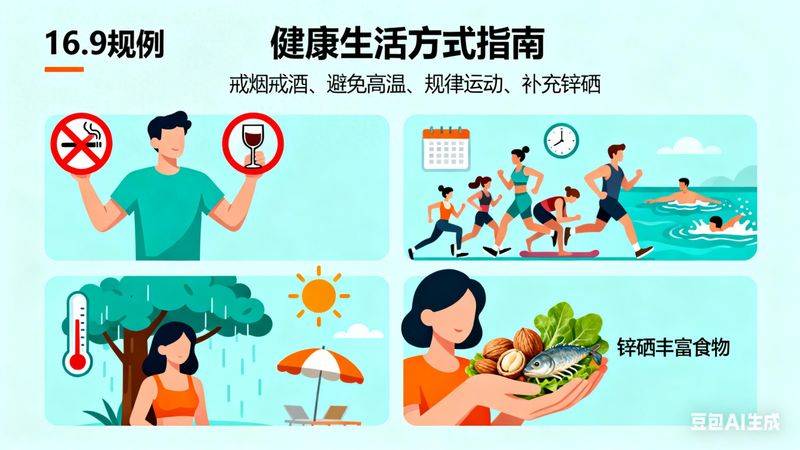
It is the basis for mild infertility or assistive treatment and enhances sperm quality:
- adaptation of habits: cessation of smoking (smoking reduces sperm activity, increases aberration), restriction of alcohol (daily alcohol < 20g, alcohol may inhibit the synthesis of testosterone) and avoidance of late-night sleep (sleep before 23 o'clock, ensuring normal regeneration of testosterone)。
- avoiding harmful substances: stay away from high temperatures (e. G., evaporation of sauna, long-term sit-in, hot baths to avoid the effects of increased testicular temperature on the perfunctory), avoid exposure to heavy metals (e. G., lead, mercury), radiation (e. G., long-term computer, mobile phone close to the cavity), chemical substances (e. G., pesticides, paint)。
- eating and sports:
- diet: eat more food containing zinc (insects, thin meat, nuts), selenium (sea belts, mushrooms), vitamin e (vegetable oil, spinach) and assist in improving sperm production。
- sports: 3-5 medium-intensity campaigns per week (e. G., walking away, swimming for 30 minutes each) and weight control (depreciation leads to endocrine disorders and lower sperm quality)。
2. Drug treatment for causes (applies to moderate infertility or specific causes)
- endocrine anomalies:
- low testosterone: additional testosterone formulations (e. G., testosterone gels), except for taboos such as prostate cancer。
- diaphragm-adrenal abnormalities: promotion of testosterone and the synthesis of testosterone with prostate hormones (e. G., hcg, hmg for menopause)。
- reproductive inflammation:
- prostate inflammation/ testicitis: control of the infection with antibiotics (e. G., left-oxen fluoride salsa) and mitigation of the symptoms with the use of hysterics (e. G., tact capsules) to avoid inflammation affecting the fluidization of semen or vasectomies。
- poor sperm mass (weak malformation, non-serious type):
- drugs that improve sperm activity and reduce oxidation damage, such as zolcantine oral fluid (to assist in semen energy metabolism), vitamin e soft capsules, enzymes q10, usually require three to six months of continuous administration (about 74 days of sperm production cycle, with sufficient treatment)。
3. Surgical treatment (for infertility due to resistance or anatomy)
- precipitous veins: high-intensity ligature ligature ligatures (peritoneal lenses or microscope operations, minor traumas) for persons with moderate or lower sperm mass, with increased sperm activity and concentrations of 3 to 6 months after the operation。
- concussion of vasectomy (obstructive insinuation): vasectomy matching (microscope operation with a success rate of about 40-60 per cent), or vasectomy-accumulation, restoration of the sperm transport route, with the possibility of natural conception。
- declining testicles (hidden testicles): in the case of infertility in the case of children who have not undergone surgery, they are required to perform a testicle drop-and-fixing procedure at the earliest possible stage and to improve the testicle environment (but with limited effect on the already severely impaired biological function)。
4. Assisted reproduction techniques (for those with severe infertility or natural infertility)
It's the last option, depending on the quality of the sperm
- artificial insemination (ai): applies to persons suffering from mild insemination, fluidization abnormalities of semen, or who are unable to perform normal sexual life with an erection disorder. High-quality processed sperm is injected into the female ceremonial cavity, with a success rate of about 15-20%/cycle。
- in vitro babies (ivf/icsi):
- standard in vitro babies (ivf): applicable to moderate infirmity, with sperm and eggs being cultivated in vitro into embryos and transplanted to the female uterus, with a success rate of about 30 to 40 per cent/cycle。
- icsi, which applies to acute infirmity, insinuation (required to extract sperm from testicle punctures) and direct injection of individual sperm into the egg to assist in fertilization, with a success rate of approximately 35-45 per cent/cycle (the main treatment for severe male infertility)。