How does the fed define “maximum employment”
The “maximum employment level” is a broad-based and inclusive goal that cannot be directly measured and changes over time. The current labour situation is in line with the “maximum level of employment”, and the question is whether to withdraw from easing to raise interest rates without harming the labour market。
The united states congress has given the fed the dual objective of maximum employment and price stability. The fed defines price stability as an average inflation rate of 2 per cent, but the maximum employment target is not suitable for such a simple measure。
The federal open market commission (fomc), as the subject of federal reserve policy formulation, states in its statement on long-term objectives and monetary policy strategy (the statement) that “the maximum employment level is a broad-based and inclusive target that cannot be directly measured and is driven over time by non-monetary factors that primarily affect the structure and dynamics of the labour market ... The commission's policy decisions must be based on an assessment of the distance to achieve the largest employment gap, recognizing that such an assessment is necessarily uncertain and may be modified. In conducting its assessment, the commission will take into account a range of indicators.”
And what does that mean in practice
What is the greatest employment
In short, the largest employment (or full employment) refers to the highest level of employment that the economy can sustain when inflation is stable. It describes an economy in which almost every person who wants to work has a job。
Unemployment rates are an important, but not the only, means of measuring whether or not an economy achieves maximum employment。
2 what is the measure of unemployment rate
The overall unemployment rate (u-3) as defined by the united states bureau of labor statistics (bls) refers to the percentage of the labour force who have been actively seeking employment over the past four weeks and who are currently able to work. The labour force is defined as the total number of unemployed persons (who have actively sought employment during the last four weeks) plus the total number of employed persons。
However, this measure does not take into account all idle workers, nor is it an adequate measure of “slack” in the labour market. For example, it does not calculate the number of workers who have given up looking for work or who work part-time because they cannot find full-time employment。
For example, the u-6 unemployment rate covers workers who are frustrated (those who want to work but give up looking because they think that they can be offered without work), marginal dependent workers (those who want to work but stop looking for work for other reasons) and those who want to work full-time but have to work part-time. The u6 unemployment rate, also known as the “effective unemployment rate”, is a more realistic reflection of unemployment。
Why does the fed not just look at unemployment
The main reason is that the fall in unemployment has not led to an increase in inflation for much of the past decade. Federal reserve board member lael brainard has stated: “although unemployment is a very informative indicator, it is a narrow measure of the labour market’s distance from the largest employment gap. Over the past four decades, monetary policy has been guided by the idea that when unemployment is near its normal level, easing should be reduced ahead of schedule, otherwise high inflation will soon emerge. But changes in economic relations over the past decade have led to trend inflation continuing to fall slightly below the target, and inflation is relatively insensitive to (the level) resource use
In august 2020, the fed made a minor but important amendment to the statement, whereby the fed would respond to “the gap in employment over its maximum” rather than the previous “deviation from its maximum”. This suggests that the federal reserve will no longer tighten its monetary policy ahead of schedule simply because unemployment is close to or even lower than the inflation-stable rate estimated by economists。
The fed states: “this revision shows that high employment in itself does not become a policy concern when unnecessary inflation increases or other risks that may impede the achievement of the commission's objectives do not arise.”
4 what does “widespread and inclusive” mean
The fed defines maximum employment as a “broad-based and inclusive goal”. When federal reserve chairman powell announced the addition of this sentence to the statement, he said, “this reflects our affirmation of the benefits of a strong employment market, particularly for many low- and middle-income groups”
This reflects calls for the federal reserve to maintain interest rates at lower levels in order to promote public employment, including visible ethnic groups, which are more likely to be unemployed. He also argued that in judging whether the economy was in the largest employment situation, the overall unemployment rate should not be seen alone. This means that the practice of the federal reserve policy remains to be seen。
According to some observers, the fed should keep interest rates low until black unemployment declines. But powell said: “the purpose of broad-based and inclusive goals is not to target specific unemployment rates for any particular group ... We observe unemployment rates, labour participation rates, wages of different population and age groups, etc.”
Other indicators of the labour market tracked by the fed and other agencies include:
5 labour participation rate
The labour participation rate (labor force partition, lfp) is the sum of the number of workers who are working or actively seeking work in relation to the working-age population (also the non-institutional population of the civilian population, i. E. Persons aged 16 and over, excluding military personnel, prisoners, mentally ill persons, and persons living in nursing homes). In short, the labour force is the proportion of the civilian uninstitutionalized population。
In recent years, the labour force participation rate has declined as a result of the entry into retirement age of the baby boom generation (relator: persons born between 1946 and 1964). In order to exclude the effects of this demographic change, economists usually focus on the labour force participation rate of the population aged 25 to 54, the so-called "prime age" labour participation rate, as this age group is more likely to work. When the labour participation rate declines in adulthood, it means that more workers are on the margins of the economy because they are not counted as unemployed, but could have been included in the labour force (they are no longer actively looking for work and have left the workforce)。
In economic downturns, labour participation tends to decline as people stop looking for work. During the epidemic, the labour participation rate fell sharply because many parents (especially mothers) withdrew from the labour market because of the closure of nurseries and the shift of schools to distance education, some out of the labour market for fear of the epidemic or other reasons, and others retired early. To the surprise of the fed and other economists, labour force participation did not rebound very quickly when vaccines were available and the blockade ended。
As labour participation rates failed to rebound rapidly to pre-empire levels, the federal reserve decided at the end of 2021 and early 2022 that the economy was closer to the largest employment than expected. According to powell, fed officials hope that “the maximum level of employment consistent with price stability may rise as labour participation increases”
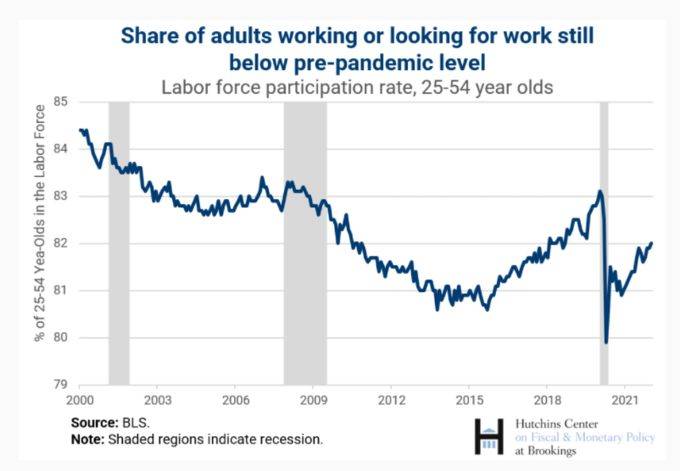
Figure 1: share of jobs working or looking for work still low pre-pandemic level; labor force participation rate, 25-54 years
6. Employed population ratio
The employed population ratio (employment to population ratio) is the percentage of the employed population as a percentage of the working population of working age (or the proportion of employed persons as a proportion of the civilian uninstitutionalized population). It also reflects the situation of those counted as unemployed, those who do not work for other reasons — those who choose to retire — and those who give up looking for work。
7. Separation rate
Using a sample of 16,000 employers, the number of separations was measured by the united states bureau of labor statistics, job opings and labor turnover survey。
Separation rates (quitsrate) are calculated as the percentage of workers who leave spontaneously as a percentage of the total employed population. Retrenchment and dismissal rates (layoffs and dismissals) include all involuntary separations initiated by employers. Retirement, transfer, death and disability-related separation are included in other separation rates。
Workers are more likely to leave when they believe they can find another job, so the higher rate represents a very strong job market。
8 vacancies
Jolts also calculated the number of jobs where employers were actively recruiting and were working within 30 days. The number of jobs not filled measures the extent of unmet labour demand. The ratio of the number of unemployed to the number of job vacancies is a way of measuring the strength of the job market; the lower the rate, the closer the economy is to the largest employment。
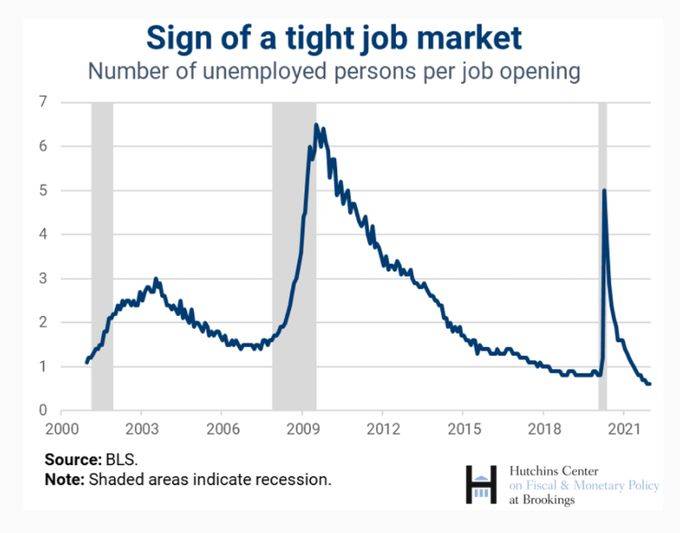
Figure 2: sign of a tight job mark; number of unemployed individuals per job opening 9
The belfridge curve with the 20th century british labour economist and politician... - william befrich's name (although he never drew this curve) compares the number of jobs being recruited (as a percentage of all filled and unfilled jobs) with the unemployment rate. The directorate of labor statistics updates the chart on a monthly basis. This curve is usually tilted downwards, as rising unemployment is usually accompanied by a decline in vacancy rates, as more people seek employment。
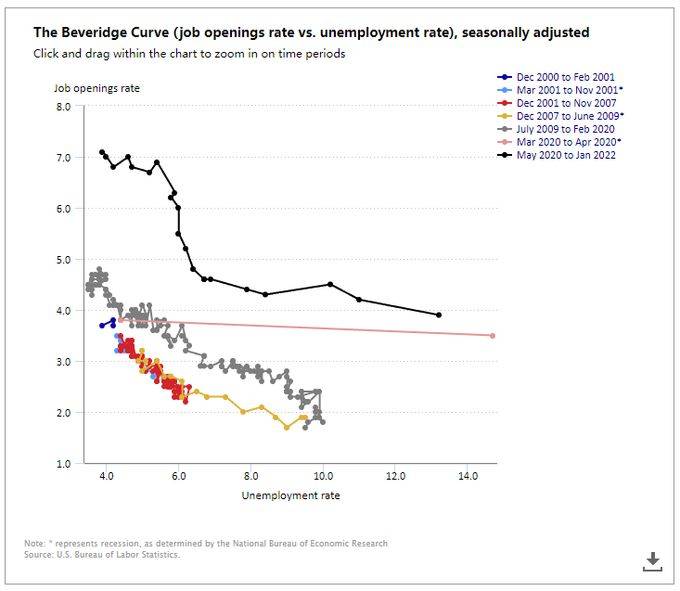
Figure 3: the beveridge curveAll right, all right
The befrich curve does move beyond the great recession. During and after the epidemic, the curve moves further; in other words, with a given unemployment rate, employers find it harder to find jobs than in the past. When unemployment fell to 4. 2 per cent in november 2021, the vacancy rate was 6. 6 per cent. In september 2017, the unemployment rate was also 4. 2 per cent, but the vacancy rate was 4. 1 per cent。
The nairu (non-accelerated inflation unemployment rate) is an estimate of the lowest level that can be achieved without causing inflation to rise. The logic behind this is that employers raise wages when the number of unemployed workers is limited, leading to higher prices。
Nairu is difficult to estimate accurately and changes over time, with demographics, trade union power and productivity changes having an impact。
Does the fed consider the united states to be the largest employed country in early 2022
At a press conference in january 2022, accompanied by heightened concerns about rising inflation, powell stated that “the majority of fomc participants believe that the labour force is in line with the highest level of employment”, which he defined as “the maximum level of employment consistent with the goal of price stabilization”. Powell added that the question was “can we raise (interest rates) and turn to less liberal (monetary policy) without harming the labour market”
Original title: how does the fed define "maximum integration"?
By lorena hernandez barcena, david wessel
Source: the brooks institute