Economic growth, full employment and price stability are three key indicators of macroeconomic performance. In order to keep the economy functioning within reasonable boundaries, the registered urban unemployment rate is an important component of the “bottom line”. As an important indicator for monitoring macroeconomic performance, employment and unemployment are important reference points for economic decision-making in any country. For some time now, there has been controversy in the academic community about unemployment rates, which should be higher than officially published. What about the truth
As a rule, new jobs arise from the process of economic growth and, if the rate of economic growth is low, there is a greater employment pressure and there should be a clear and positive correlation between unemployment and economic growth. But this theory seems to have failed in my country. In 2014, our gross domestic product (GDP) grew at a rate of 7. 4 per cent, a slower rate than in previous years, but in the same year our cities and towns saw an increase of 13. 22 million jobs, the highest rate since the new century。
Is there hidden unemployment in economic growth, which is not positively related to the number of jobs? For example, according to the phillips curve, unemployment is low when inflation is high; it is high when inflation is low. In china, however, the overall consumer price level (cpi) increased by 2 per cent in 2014 to reach a five-year low; however, the registered urban unemployment rate remained at a low of 4. 1 per cent, with high employment growth。

The problem of hidden unemployment has rekindled speculation. “invisible”, i. E. “sub-unemployment”, means that the actual employment is outside the statistics of the relevant sector, and that unemployment, which does not function fully, is “sub-unemployment”. According to our actual statistics, the urban unemployed population is the urban population within the working age (from the age of 16 to the legal retirement age), who is able to work, is unemployed, has employment needs and is registered as unemployed in public employment services. Of these, the rural workforce used and the expatriates employed were not included. To a certain extent, this has resulted in the non-urban household population, such as migrant workers, not being included in the statistics, and the fact that many mobile people, even if they are unemployed, do not go back to their place of residence to receive unemployment benefits, leading to the statistics being blind. In addition, the urban registration of unemployment system is the responsibility of the relevant authorities, but the pursuit of employment performance may result in the distortion of local data and the creation of another “hiddenness”。
But does this explain the failure of western economic theory in china? Are there concerns about the exact number of hidden unemployment
It is thought that while “hidden unemployment” is inevitable, it is even more important to see a large number of “hidden employment”。

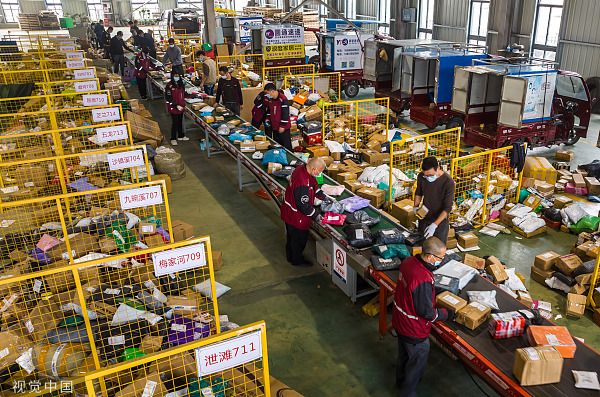
The “non-traditional” forms of employment are increasingly favoured by “90s”. This type of employment, which does not have a labour contract or a fixed labour relationship, is not included in the system of employment indicators for the relevant sectors. This phenomenon of hidden employment is becoming a new employment trend for some post-90 graduates. This year, the number of graduates of higher education throughout the country has reached an all-time high, the pressure on employment has increased, and hidden employment has somewhat eased it。
With the rise of the internet+, hidden employment is becoming the norm. Just recently, a cleaning aunt in the author's neighbourhood, who relies on micro-mail bookings and micro-credit payments, completed her home service alone, while she did not work in a fixed labour company, but had a steady monthly client and received over 5,000 earnings. Is this a kind of "hidden employment"? Currently, the number of hidden jobs is not yet available, but similar phenomena are widespread. With the emergence of new industries, new businesses and new models, the internet+ is profoundly changing traditional forms of employment, and the number of hidden jobs will grow rapidly。
As circumstances and conditions change, the opposite will turn. For example, hidden employment may also translate into unemployment. In the absence of fixed labour relations and contracts, there is a risk of losing this “virtual labour relationship” when faced with risks or difficulties, which translates into unemployment, which, under certain conditions, can also translate into hidden employment. For example, a female employee, who had been laid off by a state enterprise, based on her own knitting techniques, opened an online knitting shop with a net profit of $7,000 per month. Among laid-off workers, internet-based entrepreneurship is not uncommon。

The chinese economy has entered a new normal and will move towards a “middle-to-medium high” and social development will diversify the demand for human resources. It is foreseen that as the employment situation evolves, the number of hidden workers, especially among university graduates, will gradually increase. This mirrors the major changes brought about by the internet+ and is an indication of the dynamism of the market under the new normal. On the other hand, the absence of long-term fixed income, old-age insurance, health insurance and other social security, which makes this group insecure, also raises questions for social management. This will require a mapping exercise and the improvement of the relevant systems, including the establishment of a more scientific system of statistics on unemployment and employment, and the acceleration of statistics on the number of unemployed persons and the unemployment rate disaggregated by sector, region, age, level of education and gender, in order to fully reflect the unemployment situation at different levels, sectors, regions and gender。
As a result, the failure of traditional economic theory cannot be viewed simply as a distortion of data but should be viewed in a dialectical manner. Typically, economic models require multiple assumptions, one arising from variations in assumptions and the other from greater consideration of the specificities of the chinese economy. Currently, while there is hidden unemployment, there is more hidden employment. We should focus more on the major opportunities presented by economic restructuring and industrial shifts, seeing the potential of markets and the unlimited dynamism of the internet age。
"syle" means "display:none."