The daily economy news reporter (hereinafter “every journalist”) noted that commercial housing covers the writing of writing buildings, apartments, shops, etc., and that the loan down payment rate was generally 50 per cent. With the introduction of this policy, shops, which are important investment targets in the area of commercial housing, are naturally the focus of investors' discussions。
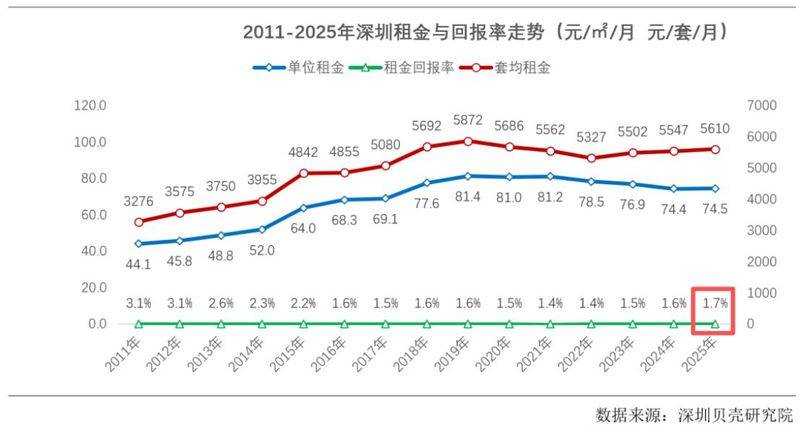
In the shenzhen market, a large number of store-broker-driven shops generally reported a return of 4 to 6 per cent, while some of the leasing shops claimed a return of 8 per cent. According to shenzhen shell institute, the return on rental housing in shenzhen was only about 1. 7 per cent in 2025, which is in sharp contrast。
The core test of a shop investment is not whether it is possible to carry the multiple risks in its long-held portfolio, but rather whether it is possible to cover the multiple risks, as journalists have investigated the market of shops in shenzhen fukuda and pao-am districts, where potential investors in a shop have stated: “the threshold has dropped but they do not dare to do so easily”。
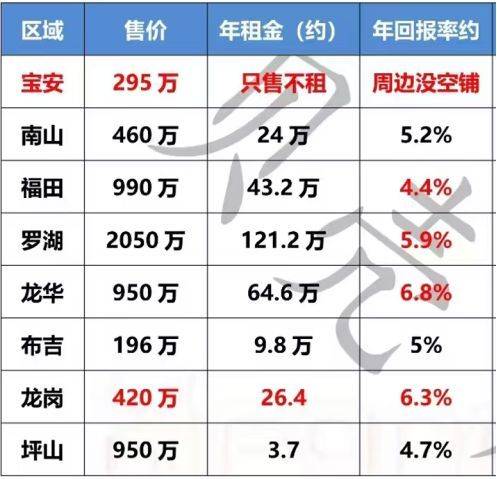
Image: shell
Whui, managing director of shenzhen shenzhen, taiping davis, stated to every journalist that the drop in the down payment from 50 per cent to 30 per cent on a commercial real estate loan would have a positive impact on the de-diversion of commercial real estate, but that interest rates and tax rates were more crucial for commercial real estate transactions, and that policy needed a package of actions to be more effective。
Behind the high rent return of the store
If only in the light of the rental rate of return, the overall rental rate of return for merchants is higher than for housing。
In the case of the merchants who live below the street in the name of the emperor, located in the fukuda tax zone, there are currently two sets of merchants on the ground floor for sale. One set of buildings, with an area of approximately 80 square metres, offered $8 million for a top-down compound (bottom 80 square metres + 30 square metres above), equivalent to a unit cost of $100,000 per square metre and a monthly rent of about $38,000, or a static annual rental rate of return of about 5. 7 per cent。
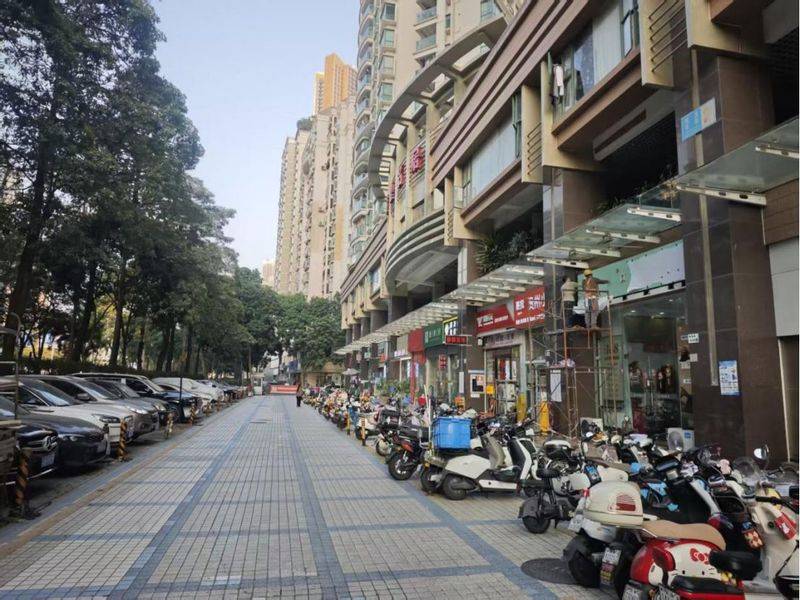
Photo by chen yong-ho, a journalist
On the chainer platform, the subsector has a set of 66. 18 square metres of two-room housing units, with an owner's listing price of approximately $4. 7 million and a unit price of about $71,000/m2, while the same-household rental rate of approximately $696 per month translates into a static annual rent return of about 1. 8 per cent。
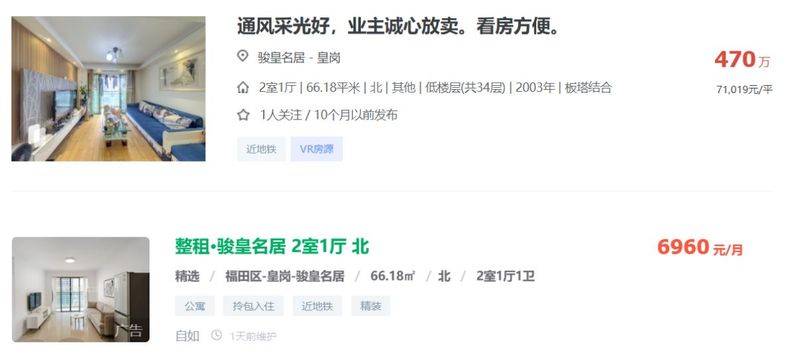
Source: every reporter chen yong-ho
In the poo an shai region, which includes sub-districts such as qing dynasty, yun hai dynasty, etc., the bottom traders have also become the preferred targets of many investors。
According to the reporter, the district broker, xu peng, described to each of the journalists as: “as of now, the bottom merchants of the yunhai palace have not been sold, the first merchant shop in china has now been sold largely, and is currently being sold mainly in the second store, which will be delivered to the house by the end of 2027, with the total unit price for the sale generally ranging from $50,000 to $60,000 per square metre.”
Every journalist, xu peng showed a package of merchants with a surface area of approximately 51 square metres for phase ii, for a total price of approximately $3. 06 million and a concessional price of about $2. 6 million. According to xu peng calculations, a similar area of commercial lay-off could be leased in the vicinity to approximately $12,000 per month. The conversion resulted in a rental return of about 5. 54 per cent a year。
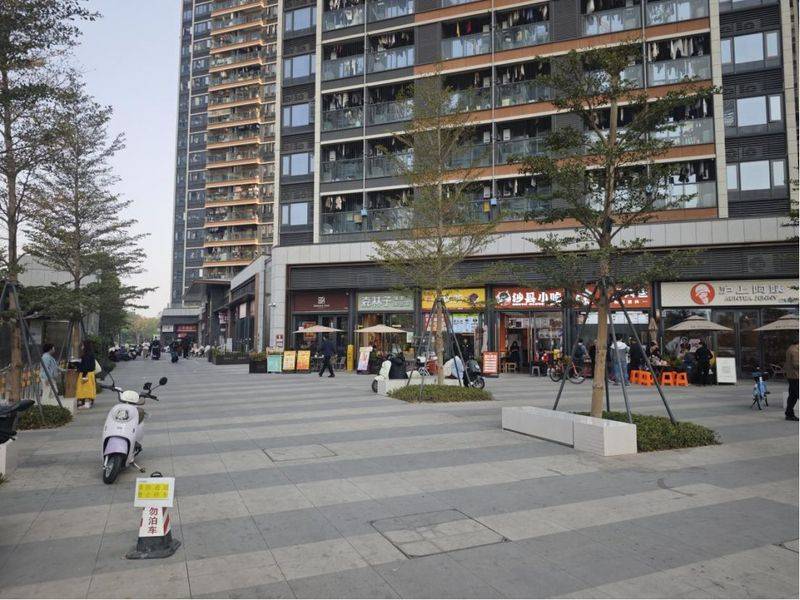
Poo anshai is a top-level businessman
In addition, every journalist has learned from the study that the return on rent on the investment of some of the stores in shenzhen market is considerable, and that one of the important reasons is the apparent reversal of the overall price of the shops。
Changes in the prices of shops can be seen more clearly on the platform. Compared to the high prices of the commercial stores during the boom of 2016-2017, there is now a marked reversal in the price of the stores。
On the kyoto dong-fa platform, in july 2025, about 40 square metres of a shop next to the whitestone subway station in longhua district was sold at a total price of $773 million, while the store was bought at a price of approximately $5. 04 million in 2017。
Similar cases include shops located in the north of china. On the alifa platform, in september 2024, a fleet of about 5. 37 square metres of shops was sold at a total price of $173,000, compared to about $657,000 in 2016。
Alifa also takes data, and shenzhen has been up some 28 shops in the last two months, with only 9 sets of deals, reflecting the general caution of investors。
"blow money for store investments."
“although a number of shops in shenzhen now have rent returns of more than 4 per cent, long-term exposure to risks and hidden costs will result in a significant discount on real returns, which may be less than 3 per cent combined.” on 17 january, a potential investor at shenzhen shop indicated to each journalist。
According to the investor, the store first faced higher tax and fee holding costs. Buyers are required to pay 3 per cent of the tax, plus 0. 05 per cent of the stamp duty, which is much higher than the cost of residential transactions (1 per cent ~1. 5 per cent for shenzhen's first home, 1 per cent ~ 2 per cent for the second home and 2 per cent for the stamp tax). In contrast, during the holding period, commercial stores generally cost more property than housing, which, combined with maintenance costs and cost losses during the vacant period, reduces the real rate of return。
“this is just the ideal scenario. The reality is that investors also have to consider the length of the shop. In general, the new housing complex, which is not well located, has to be delivered almost one year before it can be rented more easily. The investor adds:。
It can be said that investors place greater demands on the financial power of potential investors。
By contrast, it can be observed that the duration of a mortgage loan is in principle not more than 10 years, well below the maximum of 30 years for a dwelling, and that the interest rate on the loan is the commercial rate for the bank's equivalent period, which is higher than the rate on a residential loan. Even if the downside pressure is eased, subsequent monthly supplies, property costs, vacancy costs, etc. Will require sustained investment. For most ordinary investors, it is not easy to hold an asset for more than a decade without selling it, which needs to be supported by stable cash flows。
More importantly, the value added of shops is now much lower than before. As in the case of high-level shops purchased in 2017, prices have now shrunk significantly, how rent earnings can cover costs and how long-term reliable tenants can be found are all issues that investors need to focus on。
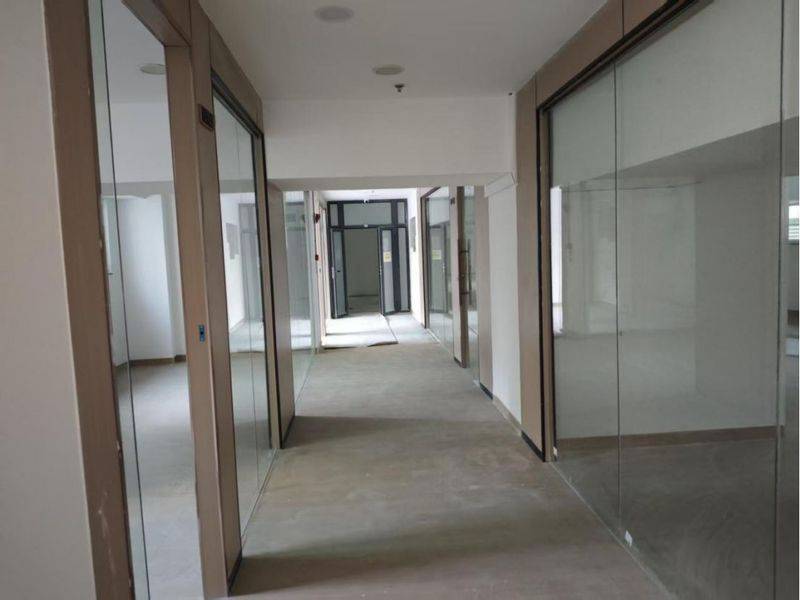
The third floor of fukuda gangnam is in the tenant's shop
In fukuda, where malone, who has been trading in commercial property for many years, has been making “low money” to every journalist, investors are now also making “low money” and it is expected that there will be little room for growth in the short term, and most projects will now take approximately 10 to 20 years to return if it is difficult to get a few years of asset gains。
“the customers who now have more transactions are themselves the ones who used to operate in the surroundings, which were rented by the customers, and then the businesses stabilized and then went directly to the surroundings to buy the shops.” mclone told every journalist。
Every journalist has learned from research that there are basically three types of shops that are now more common in the market: those in the residential sub-districts of the street, those in the street or on foot, and those in the shopping malls and complexes。
According to miloon, the private investor shop is concentrated in the street shop. As a rule, the unit price of the entry/exit point is higher than the price of the negative level (b1 level) or the underworld; the market price for the catering (fired, smoked) is higher than the price for the non-meal shop, with a difference of 5 to 10 per cent. Business streets or shopping malls, on the other hand, tend to be more enterprise-based and test the overall operational capacity of the project。
It is for this reason that some industry practitioners have indicated to every journalist that the return on the rent of a shop should be viewed rationally. It is recognized in the industry that a “business shop rent return of 4 per cent is worth investing”, but this value will need to be accounted for after deduction of taxes, property charges, vacant costs, etc., which will allow the real return on the store to be underestimated。
The chief research fellow of the centre for housing policy studies of the centre for urban and rural planning of guangdong province stated that the reduction in the down-payment rate was mainly intended to facilitate business access to markets and not to directly increase the value of investment in businesses。
“in the past, low-leveraging financial regulatory discipline was applied to loans for commercial housing, taking into account the dominant nature of the business, as well as concerns about speculation. Now, it's basically down. In the face of a decline in the willingness of the population to leverage the purchase of housing, liberalization is justified by the structural need for credit. Moreover, the 30 per cent down payment is likely to fall again in the future, given the prudent assessment of the value of the bank.” lee wooja says。