Lin ling is a pregnant 22-week-old mother and is about to be screened for grand malformations. She was advised by colleagues in the office to do a four-dimensional lottery so that the results of the foetal screening could be seen more clearly and the first “photos” of the baby could be left. The ling ling has decided to choose "four-d" on the day of the appointment. On the day of the appointment, the staff member stated that the hospital provided only two-dimensional colours and that there was no “four-dimensional” in lin ling. Lin ling is a bit depressed: "how come a maternity hospital doesn't have a three-dimensional, four-dimensional color? How do you see it clearly?" in order to make the picture of the foetus more visible, the husband and the wife were thinking of going to a private hospital to do a major deformity。
According to a gynaecologist in my district, in outpatient clinics, some mothers-to-be would ask for a 3-d or 4-d lottery, and if they were told that hospitals did not perform regular 3-d or 4-d examinations, they would question whether even private hospitals could do it, and maternity and child hospitals would do it
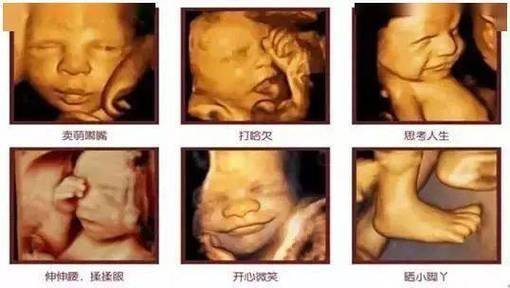
What difference does it make between 2-d, 3-d, 4-d, and 3-d and 4-d, in addition to the normal 2-d and 2-d and 4-d? For this reason, the journalist interviewed the deputy director of ultrasound unit at the ho hyeon memorial hospital, dr. Leung tsin, who learned from her professional perspective the difference between 3d, 4d ultrasound and regular b。
The normal b super is what people call a “black and white” ultrasound, which medically refers to as a 2-dimensional ultrasound. The image shows a two-dimensional cut-off image of a dirty instrument or structure that can only be observed and diagnosed by medical professionals. The colour is coloured on the black and white ultrasound, but the colour is pseudo-coloured, showing blood flow in the human heart and larger veins in red and blue, which is of great significance for heart malformations and abnormal blood flow in the heart and blood vessels。
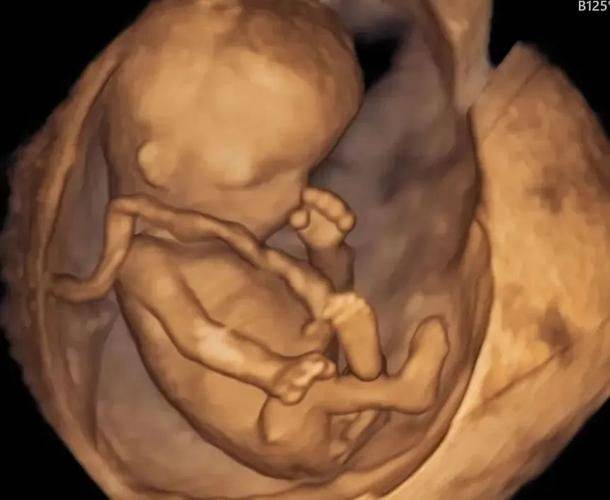
In clinical terms, we usually refer to a two-dimensional color check, and the images we see are two-dimensional graphics. Three-dimensional colours are based on two-dimensional colours, adding another space axis that can produce static stereo images. The four-dimensional colour is a real-time three-dimensional colour, i. E., on the basis of three-dimensional colours, an additional axis of time is added to present a three-dimensional image of activity. “in short, 2d, 3d, 4d can be understood as 2d, 3d, 4d, 3d, 3d, 3d, 3d, 3d, 4d, 4d can feel the chair moving or the rain drifting, but both 3d and 4d are built on 2d. So, as in the film, two, three, four and three are just different ultrasound imaging methods.” dr. Leung sin, deputy director of ultrasound at ho xian memorial hospital, said。
So, does a mother-to-be-to-mother's three-dimensional, four-dimensional-colored test work better than two-dimensional? Not really。
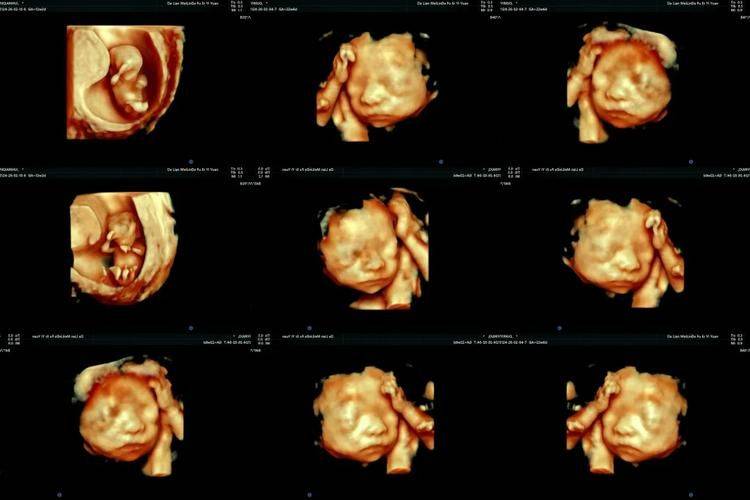
Director tsing tsing said that in the screening of foetal mega-moderns, the rate of abnormal foetal detection depended primarily on the skilled operation of ultrasound doctors and on rigorous analysis, rather than on the use of 3-d and 4-d colour supertechnology. Both the american society of gynaecologists and obstetricians, the canadian society of gynaecology and obstetrics, and the international society of gynaecology and obstetrics, in their clinical guidelines for screening for mid-pregnancy major malformations, are routinely recommended for a two-dimensional lottery. There is no international consensus on the application of three-dimensional and four-dimensional colour supertechnologies in foetal malformation screening. It is suggested in the literature that more help may be available in certain foetal body deformities (e. G. Rabbit lips) and in a small number of fetal heart malformations. Even so, ultrasound of three or four dimensions is not as powerful as other examinations and cannot replace other methods of prenatal examination. Thus, according to the ultrasound doctor, the current marketing of 3d, 4d and more accurate is not scientifically soundable, and it is recommended that mothers-to-be should not be blindly pursuing 3d and 4d ultrasound. Du lihua