With the introduction of “reciprocal tariffs” on a global scale, the united states will increase its tariffs on china to 54 per cent. In accordance with the executive order signed by president trump, any further tariff increases imposed on mainland china and china in order to reduce the risk of trans-shipment and tax evasion will apply equally to the hong kong sar of china and the macao sar of china。
In addition to the macao sar of china, which was mentioned for the first time as being subject to tax increases, there is concern about how the hong kong sar of china, which has been a trading hub for many years, will respond to this multi-dimensional tax increase。
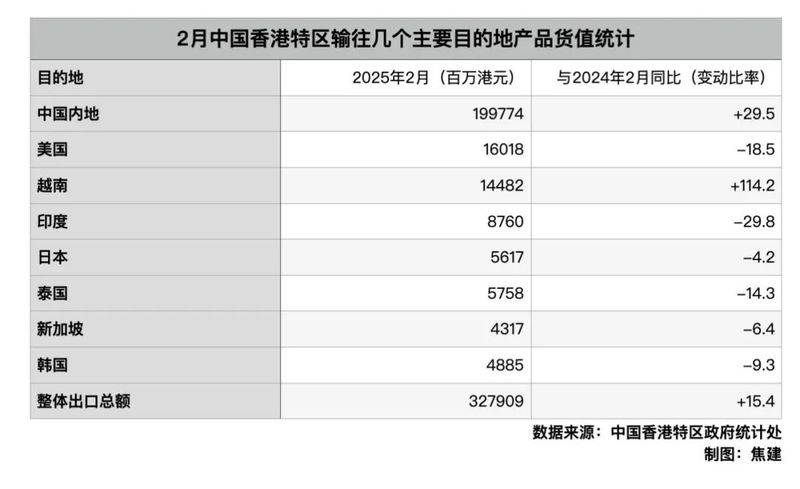
At the level of the government of the hong kong sar of china, on 3 april, the spokesperson for the government of the hong kong sar of china stated: hong kong, china, as a free port, has always supported and adhered to free trade and has never imposed customs duties on all imports, including united states products. “it is against the logic that the united states imposes tariffs on hong kong products on the basis of so-called reciprocal tariffs”
According to data released by the government of the hong kong sar of china, the united states was the third largest trading partner in the hong kong sar of china in 2023, with a total bilateral merchandise trade of $60. 3 billion (approximately hk$47. 3 billion), with a surplus of us$27. 15 billion (approximately hk$21. 17. 7 billion) over the past 10 years。
In a previous round of tariff increases of 20 per cent from the united states to the hong kong sar of china, the government of the hong kong sar of china stated that the value of local goods exported to the united states was low and that these goods amounted to approximately $5. 9 billion in 2024, or 0. 1 per cent of hong kong's total exports and 0. 06 per cent of hong kong's total trade。
“hong kong, china, as a separate customs territory, has established an effective system for the import and export of goods, including a certificate of origin system, trade declarations and manifest requirements, and has been taking stringent enforcement action accordingly.” the speaker stated。
From a holistic perspective, the impact on the local foreign trade sector can be seen mainly in two broad categories: traders and producers。
First, from the trade point of view: in response to the announcement by the united states of a policy to eliminate the exemption from customs duties on small parcels (de minimis), the speaker also stated that the united states had changed the small tax exemption arrangements for goods sent to the united states on several occasions, and that the postal system of the hong kong sar of china required the united states postal service to clarify them as soon as possible without inconvenience to the citizens. From now until 2 may (i. E. The effective date of the abolition of the duty-free policy), the hong kong post office temporarily maintains the mail service for the united states, but does not collect the so-called tariffs。
Under the united states original arrangement, customs duties are exempt for goods valued at less than $800 from mainland china and the hong kong sar of china. Under the new provisions, however, the goods concerned are subject to a duty equivalent to 30 per cent of the total value of the goods or a charge of $25 per package. In addition, the amount taxed on a case-by-case basis will increase to $50 from 1 june。
On this basis, the united states department of commerce also indicated that it would submit a report assessing the impact of the relevant executive order and considering whether the rules would be extended to parcels from the macao sar of china。
In consultation with the local foreign trade community concerned in hong kong, the finance law found that the abolition of the policy of exempting small parcels from customs duties would have an impact on the hong kong sar of china and some mainland chinese electric operators closely linked to its industrial chain. One of the key factors in determining the impact is whether this administrative instrument will become a long-term tax policy shift。
Another element of uncertainty of concern is how tariffs are shared between buyers and sellers. Current policy changes in the united states are mainly related to tax calculations and reporting requirements under partial clearance models (e. G. T86), without affecting other existing models (e. G. T11/t01)。
In the past few months, proactive local service providers have been testing different options, as well as seeking to establish a freight forwarding warehouse in the united states. “in a relatively optimistic light, hong kong, china, is sending mainly small packages to the united states that require air transport, which is generally not too large.” one trade service provider said。
However, it was also pointed out that, even from a more optimistic point of view, the current united states customer logistics chain through china's internet-based procurement platform and through hong kong, china, was directly affected, inter alia, by the statute of limitations, which could also affect “consumer's downward desire”。
Under the new u. S. Customs clearance measures, the original logistics transport channel took two to three days, followed by customs clearance, the time “may take three to five steps”. This will also be due in part to the additional time involved in the conversion of customs clearance models, such as the t11 option, which can be declared at the value of free on board, fob, but which requires more complete customs documentation。
Second, from the producer point of view: in the past, the general tax escalation measures of the government of the hong kong sar of china and the porters were based on a dynamic approach to opening up emerging markets through different arrangements, such as the reorganization of supply chains (e. G. Offshore establishment)。
This new tax increase in the united states was considered to have a greater impact on the effects of such an approach, stemming from the “so-called low-cost countries no longer exist”. In accordance with its new policy, the united states has expanded tariff escalation to areas where the main plant is located in hong kong sar of china, such as viet nam (46 per cent), thailand (36 per cent) and cambodia (49 per cent), with the aim of blocking so-called “trouble” exports。
“this time again, the imposition of customs duties by the united states on countries in south-east asia will be a serious blow to the past deployment of port firms, who have said that they can only wait for the moment.” mr. Lin jianbai, member of the legislative council of the hong kong sar of china, stated that。
This is partly due to the relatively low level of technology and limited bargaining power of some hong kong enterprises. If a buyer in the united states requires a manufacturer to share the cost of tariffs, “it would be largely unprofitable and would have to close the door or expand the internal market substantially”
According to plant experience in mainland china, the profitability of generic products is maintained at between 5 and 10 per cent, with higher thresholds reaching, for example, 15 to 20 per cent。
In the case of the textile industry, where hong kong sar of china is still active, hong kong traders are now mainly established in viet nam and cambodia, and about 50 to 60 per cent of their capacity in vietnamese factories is exported to the united states. After this tariff increase, the cost may increase by 10 to 15 per cent, while the net interest rate for garment manufacturers generally does not exceed 5 per cent, and the result is nothing less than an increase or a lack of business。
On the whole, the president of the hong kong general chamber of commerce and industry, cai cai chong, analyses this: the traditional export-oriented industries in hong kong, china, or more heavily affected, will have an impact on electronics and machinery products, as will the active distribution of textiles, clothing shoes, toys, etc. By hong kong traders worldwide in recent years, as the main producers are on the tariff lists of equivalents. In addition, the high share of trans-shipment trade in hong kong's exports, customs frictions or the resulting decline in the flow of goods, could also affect associated services。
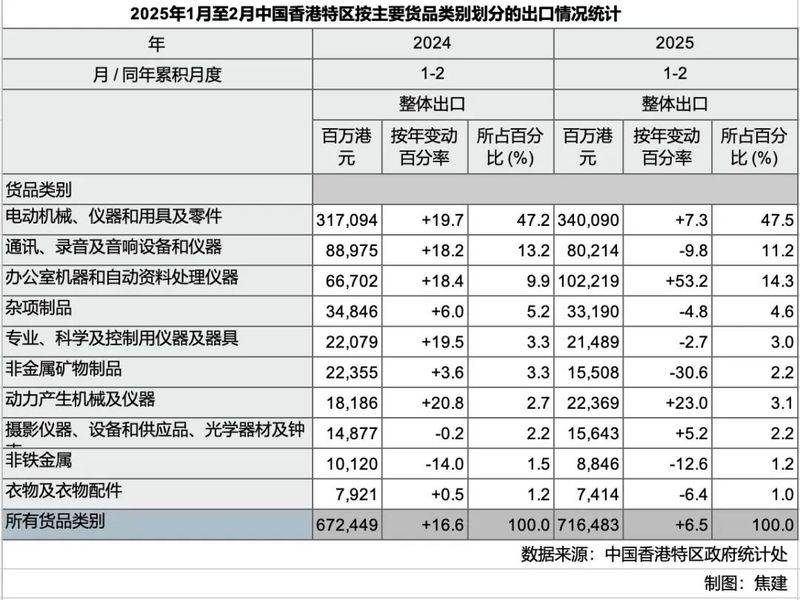
In order to reduce the impact of industrial chains on hong kong's producers, local governments have been called upon to take a number of measures, including taxation, rent and finance。
“hong kong's profits are already small and it is hoped that the hksar government will be able to coordinate its policies so that hong kong's liquidity can be deployed. If hong kong producers don't get through this, there's a real chance that they're going to collapse." the public appeal stated that “the hksar government needs to be more flexible in terms of access to investment, land and tax policies, for example by simplifying labour entry policies in order to enhance competitiveness, while assisting hong kong entrepreneurs in finding different business opportunities and finding new partners elsewhere”
In particular, cha notes that: the hksar government can provide support, including coordinating banks to help maximize the liquidity of affected industries; the ipc should study ways to assist the business community in finding business opportunities; it is expected that the hksar government will follow developments closely and continue to support enterprises, especially small and medium-sized enterprises, including by continuing to extend appropriate support to industry, improving the trade environment and promoting hong kong's role as a centre for transnational supply chain management; further expand the scope of the relevant funds to support the digital transformation of enterprises and overseas certification; deepen the development of synergies in the great bay region, assist in the integration of port firms into mainland china's industrial chain and enhance risk-resistant capacity through the full supply chain in the bay region。
At the micro level, there are also a number of small and medium-sized entrepreneurs who reveal that there are united states clients who are demanding lower prices or tariffs for products already in transit. “whether it is more or less duty-free and less price-free, it is the extension of the payment period from 90 to 120 days or from 120 to 200 days.”
This would also increase the uncertainty about the future of these businesses: on the one hand, buyers in the united states want to increase their sales through a longer cycle, while a slower recovery rate for vendors in hong kong, china, will put pressure on their financial chains; and, on the other hand, if new conditions are not accepted, the buyer may refuse to accept them directly, with a greater impact。
The credit insurance provided by the above-mentioned boi is of great interest. The board was established in 1966 by the hong kong export credit insurance board ordinance. One of its roles is to provide export credit insurance services and to safeguard the risk of non-payment of arrears by exporters due to commercial or political accidents. In addition, the agency's insurance policy is locally accepted by banks as a discount collateral for valid export notes。
On this basis, a number of local foreign trade practitioners have analysed the main areas of current concern to producers in the financial services: first, the united states is now proposing conditional exemptions for canada and mexico. Benefiting from the united states-mega agreement (usmca), most of the mercado goods eligible for usmca are still allowed to enter the united states market at zero tariffs; second, trump is a sub-reciprocal tariff arrangement, mainly for trade deficits in goods and not trade in services; and third, the “reciprocal duty” rate announced by trump this time can be considered “cap” and may be reduced through some channel。
However, alicia garcía herrero, the chief economist for the asia-pacific region of the bank for foreign trade of france, has recently publicly warned that tariffs will have a negative impact on two trade hubs in hong kong, china, and singapore, or lead to a severe decline in trans-shipment trade and logistics。
She also pointed out that united states measures, including export controls on key basic technologies and the classification of enterprises as military-industrial entities, might also affect financial markets。