In recent days, prominent calligraphers, retired cadres of the former general political department of the liberation army and senior staff of the beijing city cultural history research centre, mr. Ai xinjiro kaiqi, died of his illness in beijing on 21 april 2026, at the age of 91. The news is that the calligraphy is mourning. However, the news of the death of mr. Kaiyan coexisted in public opinion with two distinct assessments of his calligraphy。
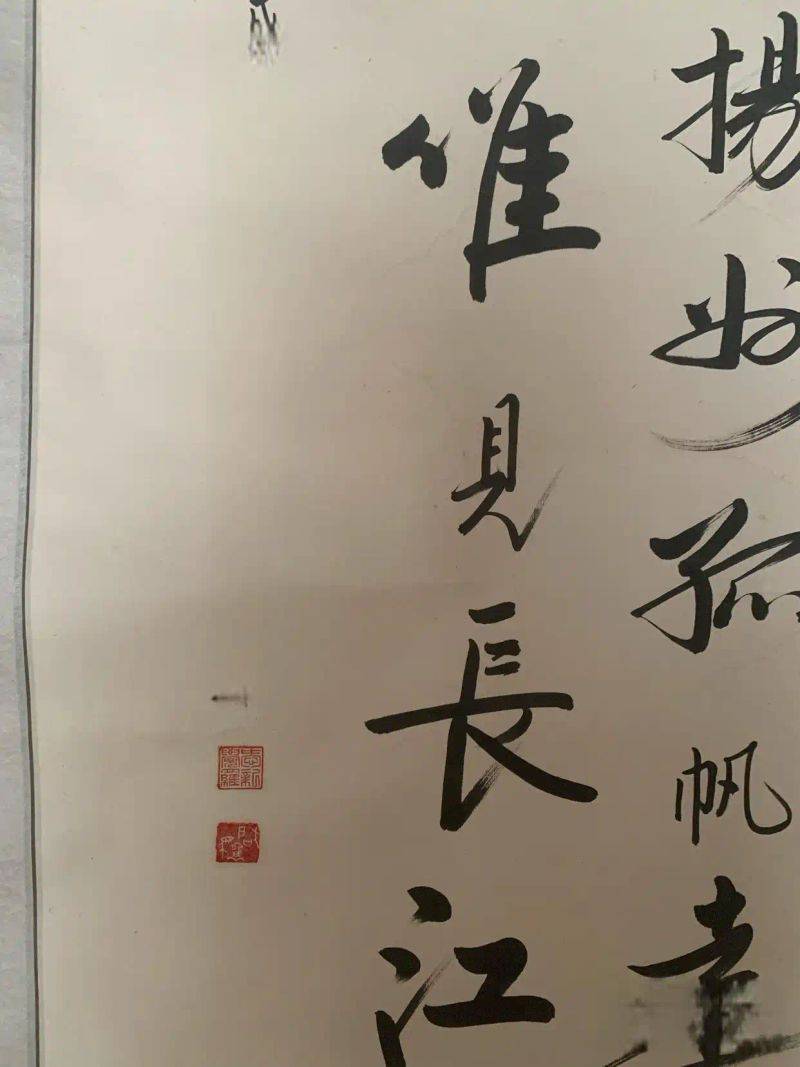
In some of the online calligraphy forums, the initials are often placed under the halo of the cousins, and the term “seconds” appears to be in parallel and implies subtle comparisons. The view was expressed that its work was “clean and clean”, but that “a single word could not be scrutinized”. Critics refer to it as “hard, mechanical, spiritual and traditional hymns”, and the schematic layout is often too secret, with a lack of nuanced arrangements. It is “purely absurd” to even say that it is a parallel between enlightenment and enlightenment。
At the same time, official records indicate that the original works have been collected by the chinese museum of history, the ioc museum, etc. As a member of the china calligraphy association and a senior member of the beijing city museum of literature and history, he was accredited by various professional bodies. What are the root causes of this discrepancy in evaluation? What is the objective view of the enlightened calligraphy art values
Specific context and implication of the term “second chapeau”
The term “second revelation” has long been used in the calligraphy community. On the face of it, it points to the identity of two calligraphers with the same family name, kai, and the descendants of the nueva nuevo family. In practice, however, this term often carries complex evaluation connotations。
In the discussion, the netizens put it bluntly: “the initials are hard words, lacking spirituality and traditional hyphenation, the overall layout of the rules is much too secret, and there is a lack of convoluted and tactful arrangements.” this criticism reflects the aesthetic expectations of some of the calligraphy enthusiasts for the aesthetics of the works of art — they aspire to the writing of dragon snakes, the luminous traditional aberrations of calligraphy, rather than the form of a whole-of-the-work norm, the rule of the rules。
More detailed criticism focused on the technical aspects. The view was expressed that the initial pen was “clean” but lacking in change, that the contours were “stable” but less eccentric, and that the linear sense was described as “sle” or “slow”. At the artistic level, critics consider their work to be “inspiratory”, “incoherent” and over-structured, leaving out the beauty of writing. There are comments and even assertions that the initial words “at first glance” are not pristine and of a low standard”。
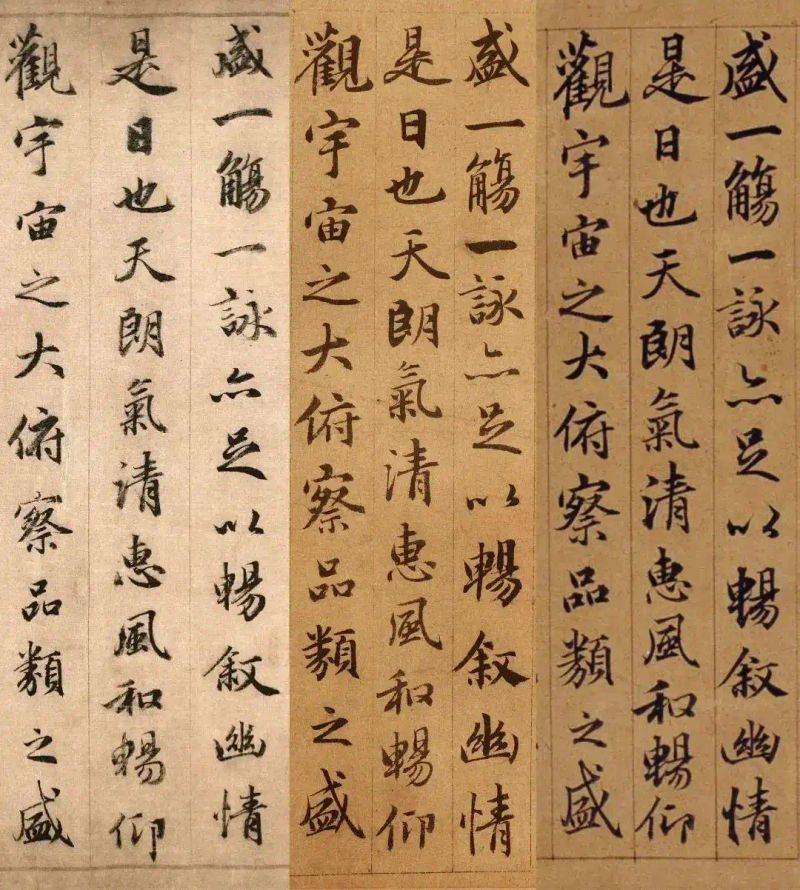
These criticisms reflect the aesthetic preferences of some contemporary calligraphy lovers or commentators. They admire personality, euphemism, pen ink and lingua franca, and value the artistic ethos of traditional calligraphy. Under this aesthetic system, the integrity norms, easily identifiable calligraphy styles are often considered to lack artistic depth and personal expression。
Value logic behind authoritative collections
In stark contrast to cybercritic criticisms, initial calligraphy works have been recognized and collected by several national authorities. According to the data, its works have been collected by the chinese museum of history, the ioc museum, etc. The specifications and status of these collection units are in themselves an official recognition of their artistic value。
In 1991, kai-chul donated to beijing's shino's activities a book called " fundamental principles of the olympic charter " , which was given as a national gift to mr. Samaranchi, president of the international olympic committee, by the director of the national olympic committee, and was permanently preserved by the international olympic museum. This incident not only reflects the diplomatic and cultural value of its work, but also demonstrates its recognition in the official system。
The calligraphy style of enlightenment is naturally compatible with the temple spirit. The expression of so-called temple culture in calligraphy is often characterized by decency, decency, elegance and discipline, consistent with the aesthetic and functional needs of official settings. The characteristics of the work, the clean-up and the easy-to-dissemble nature of the original work are very much in line with the requirements of this temple。
This style is both related to and distinct from the “books” that traditional cultures espouse. The literature is more focused on individual hair, learning and pen ink, pursuing free expression and artistic innovation in the heart. The temple culture, on the other hand, is more public, normative and ritualistic. The two are not entirely at odds, but their weights and focus vary in different contexts and evaluation systems. Enlightened calligraphy may be more favourable to the value orientation recognized in the previous system。
Positioning and performance in the auction market
The actual performance of book law works in the collection market provides us with an additional dimension. According to the record of the auction, the sale price of their calligraphy works on the market ranges from several thousand to tens of thousands, showing a clear price hierarchy。
In april 2026, the online auction platform showed a sale of 6014 yuan in book law works. The 2023 yachang arts network records show that the sum price of works such as spring day and hills is approximately $8,000. Most calligraphy axes or mirrors are sold at a value of between $2,000 and $8,000, as in the case of a calligraphy work concluded in 2022 at a value of $6,000. Some of the fine or large-scale works were valued relatively well, as in 2012 a 69x136cm calligraphy lens had been valued at between $120,000 and $180,000。
In the wider market for circulation, the price range of initial works has expanded. A four-foot piece of paper (138 x 69cm) is well-dressed and well-dressed and priced between $950 and $3890. The complexity of the process is characterized by a significant premium, with the creation of 96 x 49 cm of paper ink axis in 2005 at a price of $800, compared to $7,800 for 128 x 62 cm in the 2000s。
It is clear that the initial works are at different levels compared to the market price of the most sophisticated calligraphy, such as mr. Zhang. But the market performance remains at a relatively stable middle end when compared to the same generation and peers. Such market positioning may reflect the true value of its work - not as a top master's work or as a mediocrity, but as a work of art of practical and symbolic recognition within a given collection。
There is a certain degree of “misplacement” between market recognition and academic criticism, official collections. The market is affected by multiple factors, including the identity of the author, the subject matter, the profile, the volume of circulation, etc., and is not exactly the exact measure of artistic value. As a member of the austro family and as a cousin of the zhero family, kaiju has undoubtedly added a cultural radiance to its work. Their work is well organized, suited to the features of the decorative display, and gives them a particular audience。
Artistic positioning under a multiple evaluation system
Inheritance is characterized by the formality and elegance of succession. Since he was a child of his grandfather's, he has been in love with the law of calligraphy, practiced his writings, and received the kind guidance of his cousin, mr. Kai chong. In artistic practice, he has developed a unique style of "bone strength, strong structure"。
Mr. Zaiqiang has assessed the "citizen's bar" as meaning that it is close to a hundred-year-old teacher. This evaluation reflects both fraternal recognition and a certain artistic standard. In its third review of the code of calligraphy, it was stated that the words “with a pen like a knife, with a structure such as the top, the bone of olyu, and the rhyme of zhao”; and the words “with a hymn” included the strictness of engineers and the cleavage of a man。
Looking at calligraphy from a multifaceted perspective, we can see that different evaluation systems each represent different dimensions of value. Civil criticism values individuality, rhymes and philosophies; official recognition of norms, meteorology and public values; and market performance about reputation, utility and decorative functions. These three evaluation systems are not mutually exclusive, but examine works of art from different perspectives。
A more pluralistic and inclusive perspective may be needed to evaluate artists who are in a context of fame and complexity. Its value may be providing a sample of observing contemporary calligraphy ecology between systems. His work may not have reached its peak in purely artistic innovation, but it has a unique contribution to make in terms of calligraphy, cultural heritage and public art。
Multiple measures of artistic values
The reflections on evaluation criteria generated by the enlightenment of the calligraphy arts have touched on the depths of contemporary art evaluation systems. Should the final determination of the historical status and artistic values of a calligrapher and, more generally, an artist, be more focused on the deep criticism of academia, the selection of collections by official authorities, or price games in the art market
Perhaps true artistic value measurement requires a balanced understanding between the three. Academic criticism provides an in-depth analysis of the profession, official collections represent institutional recognition, and market transactions reflect aesthetic and practical needs of the public. Together, they constitute a complete map of the value of artistic works。
The complex intersection of controversy, recognition and market performance that emerges from calligraphy reflects precisely the multidimensional nature of contemporary calligraphy evaluation. In such a multidimensional evaluation system, the value of works of art is no longer a single ruler that can be measured, but needs to be judged in a holistic manner on the basis of uncompassionate and diverse needs。
In your view, how can the three dimensions of academic depth, official recognition and market value be balanced in order to evaluate the achievements of an artist more comprehensively and objectively