Laser is another major invention of mankind since the twentieth century, after nuclear power, computers and semiconductors, known as “the fastest knife”, “the best ruler”, “the brightest light”. On 16 may 1960, american physicist mayman invented the world's first laser. For the first time, man had such a unicolorable, straight, high energy density. Since the first laser was invented in 1960, lasers have been widely used in areas such as communications, medical care, industrial production and military weapons, becoming an interdisciplinary and universal technology that has had a significant impact on research in a number of fields and has contributed to increased social productivity. So, what the hell is a laser? How did it come about
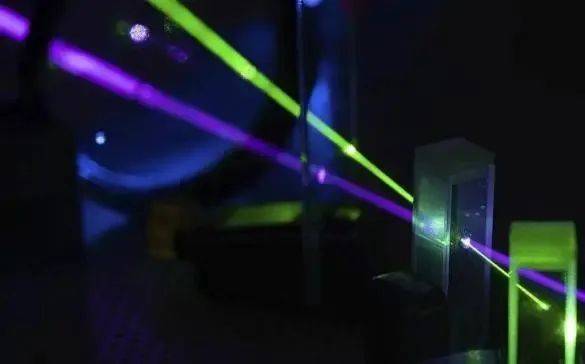
What's a laser
The laser (name: laser) is the abbreviation of “lightamplification by stimulated mission of radiation”, meaning light magnification due to the intense radiation. In 1964, when the technology was passed on to china, mr. Chandama gave it that name. In civil society, it also has an aggressive translation of the name "ray". Before we know about lasers, let's see what light is first
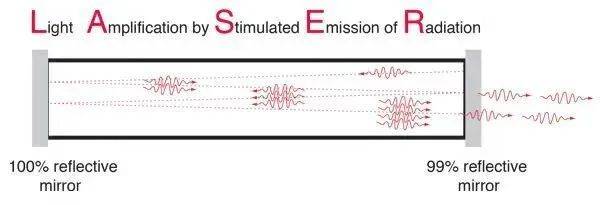
Light was produced by photons, whose concept was first mentioned by einstein in his paper on photoelectricity in 1905. Photons are one of the basic particles that make up the substance. Photons are very small and static without mass. According to the principle of quantum mechanics, when electrons fall from higher to lower-energy inner layers, the corresponding atomic core releases photons and produces light. The more layers fall, the greater the energy of the photons. The process is reversible, and when the photons enter, the atomic nucleus inhales the photons, while the electrons, by acquiring energy, migrate from the lower to the higher outer layers。
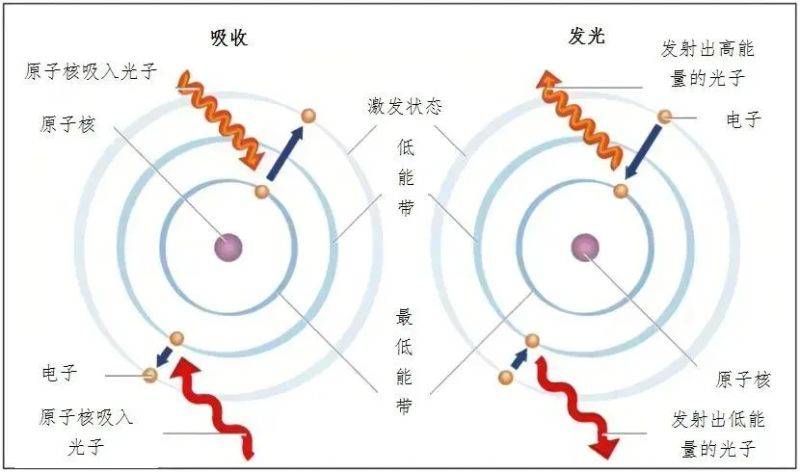
The absorption and generation of light
The characteristic of the laser is that all of its photons move with the same wavelength and phase. In an atomic system, electrons are essentially tiered, and when atoms are affected by the outside environment, high-energy electrons leap to the low-energy level are shown to be both “symmetrical radiation” and “introduced radiation”. Laser is generated by the exposure radiation and, in short, the object's atoms are “triggered” by “photo-radiation” under the influence of a specific “pump-pool source”。
What's a laser
Lasers are laser-occupying devices, consisting mainly of pump source, gain medium, convulsive cavity, etc. Pumping pops is a source of inspiration for lasers, providing energy to low-energy electrons that stimulate high-energy electrons, commonly with optical incentives, hid incentives, chemical incentives, nuclear power incentives, etc. The convulsive cavity is a circuit between the pump popsian light source and the multiplier medium, usually combined in a specific way by two mirrors with a certain geometric shape and optical reflex, which magnifies multiple rounds of the activated light inside the cavity to form a dry continuous vibration and limits the frequency and direction of the beams; the multiplier medium is a working medium that can magnify the light。
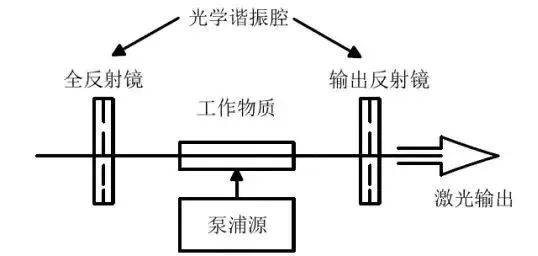
Composition of lasers
After 43 years of relentless exploration, since einstein's exposure in 1917, the world's first laser was finally created in 1960. The chromium atoms in the rubies are activated and a red light is sent by a scientist from the hughes laboratory in california, united states, mehman, who uses a high-powered flashlight tube to shine on rubies. The ruby surface of a surface plating on a mirror drills a hole that allows red light to spill from the hole, thereby producing a fairly concentrated thin red column that, when it is fired at a point, can reach a temperature higher than that of the solar surface. And so the world's first laser -- the ruby laser -- was born, with a wavelength of 0. 6943 micrometres, the first laser beam ever acquired by mankind。
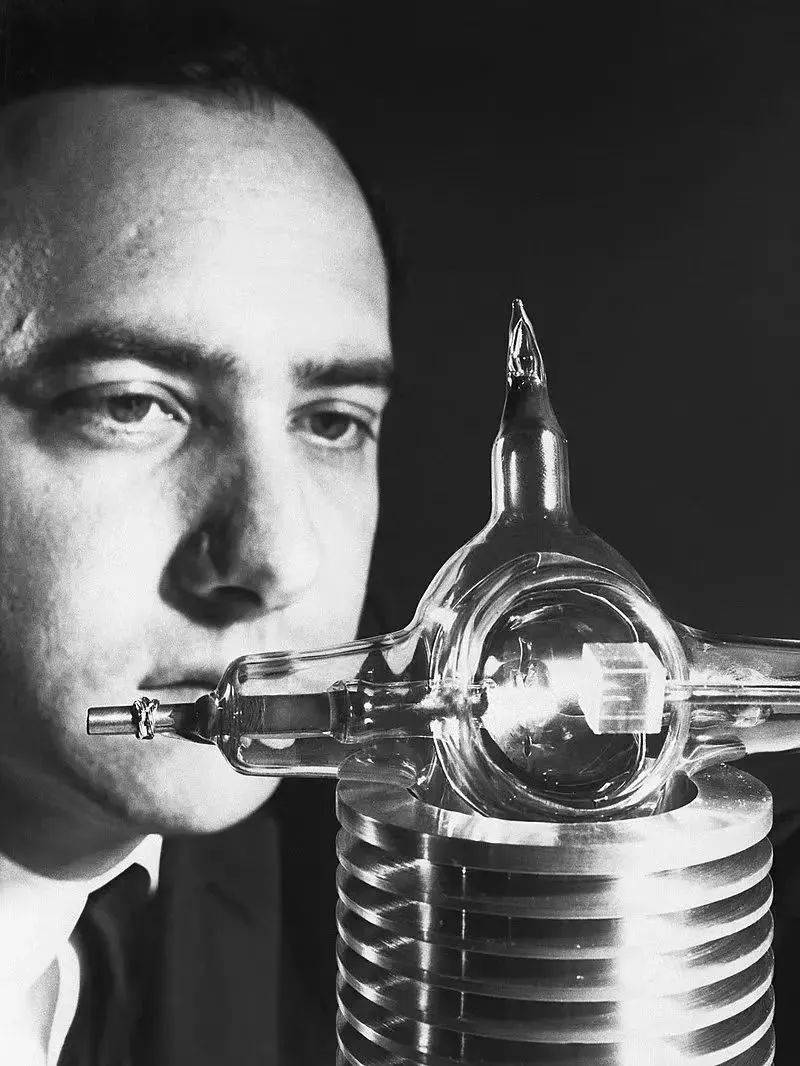
Mayman and ruby lasers
Laser applications in various fields
01
Medical field
The flying second laser is a pulse-launched laser that lasts only a few flying seconds (1 flying second = 1 billion minutes) and is the shortest pulse that humans can obtain under experimental conditions. Flight-second lasers were used for eye surgery and were dubbed as “an additional revolution in dilatory surgery” after pre-wave imaging。
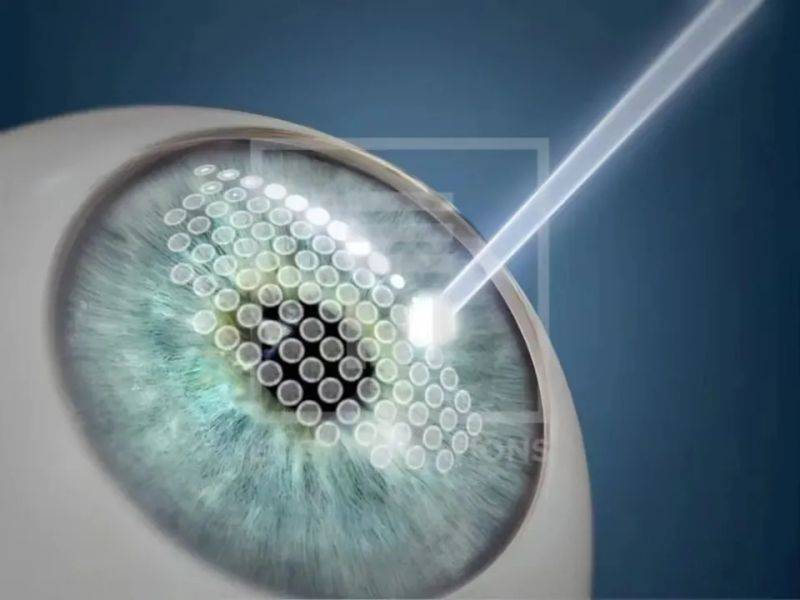
Flying seconds laser treatment for near-sighted
Laser can also be used for beauty and the efficient achievement of the white and white purpose by destroying pigment cells and chromosomal particles through the skin and actual cortex of certain wavelength laser beams, which are absorbed through the macrocorrosive cell treatment in the body。
02
Military field
There are also many scientific and military applications of lasers. Such as laser spectra, laser radar, laser weapon (long-range destruction missile) etc. Laser weapons have the advantage of speed of attack, flexibility of diversion, precision of strike and protection from electromagnetic interference, but also vulnerability to weather and environmental impacts. Currently, low-energy laser weapons are in use, mainly for pv sensors that interfere and blinder at closer range, as well as for eye attack and some enhanced observation equipment; high-energy laser weapons are mainly chemical lasers。
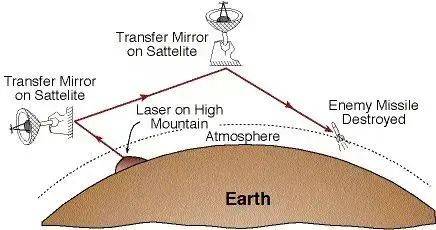
Military laser guidance
In addition, long before the introduction of flying-second lasers in our country, developed countries, such as the united kingdom and the united states, had carried out second-second laser operations among marines and warplane pilots, which priority was given to specialized soldiers, which not only improved night vision but also improved imaging capabilities。