Many people go into the glasses store and get confused: the glasses on the shelf, which look very different, vary from hundreds to thousands of dollars, and the 300-dollar package and the 2000-dollar package, which are six or seven times the difference. Cheap fear of poor quality, expensive fear of iq taxes, wonder where the money is spent。
Since 2026, the trend towards price transparency in the eyeglass industry has become more pronounced, with jiang sudanyang as a central location for over 70 per cent of mirror capacity throughout the country, and price data from the wholesale market uncovering the industry's cost veil. Even so, consumer perceptions of the value of glasses remain vague and prone to misled professional terminology and marketing. Today, from the perspective of industry front-line practitioners, taking into account the latest industry data and real markets, the four core dimensions of mirrors, mirrors, photoprocessing, branding services, and telling the truth about the difference in the price of glasses, which is easy to understand, are all dry goods, so that you can fit the mirror in a way that does not cost you any money, and chooses the high-price-comparable glasses that suit you。
Mirrors: the core soul of the glasses, the difference is mainly here
The lenses are the central component of the lenses, determine the clarity, comfort and eye-protective effects of the vision and are key to opening the price gap, accounting for more than 60 per cent of the total cost of the glasses. The lenses of $300 and 2,000 won are essentially different in material, process, membrane, function and useful life and are by no means simply “sweet differences”。
300-dollar-priced lenses: basic, short-term
The 300-dollar glasses, which are accompanied by the basic national brand lenses, are dominated by prime-grade general resins with a refractive rate of 1. 56 and 1. 60 basic specifications, which meet only the most basic needs for visual correction。
• material and perceiving rates: common resins, generally at 85-88 per cent, are prone to a slight mist, colour bias and limited visual clarity, especially when the light is darker。
• membrane plating: based only on rigid, single-layer reflection plating, which achieves simple reflector-proof, slight decorative marks without any advanced eye-protective functions such as blue light, ultraviolet light, dizziness, etc。
• grain resistance and longevity: poor oxidation resistance, yellow, fuzzy, plating disembracing problems from six months to one year, low grind tolerance, easy scratches with daily eyeglass polishing, with a maximum useful life of one year and frequent replacements at a later stage。
• applicable population groups: only those with extremely low degrees (within 200 degrees), occasional wear, low eye demand, such as older persons who occasionally read newspapers, students who occasionally wear classes, and long-term wear is prone to such problems as acidity and fatigue。
2,000 high-end lenses: high-level comfort, long-term eye protection
The 2,000-dollar glasses are mostly internationally recognized brands or high-end national production series, with high-precision resins, pc materials or special optical materials, refractive rates covering high specifications such as 1. 67 and 1. 74, and a complete upgrading of optical performance and eye protection。
• material and perceivability: high-purity resin or pc material, with a perforation of up to 92-95 per cent, visible vision, real nature, absence of fog and colour, clarity of night vision and lack of fatigue in viewing electronic screens for long periods of time。
• membrane plating: the application of multiple layers of composite plating membranes, including dereflective, dural, blue-light-resistant, uv-resistant, electrostatic, water-resistant, anti-fouling, etc., can effectively reduce reflection, dizziness, deter harmful blue and uv rays, prevent water pollution, make dust easier to wipe on a daily basis。
• grain resistance and longevity: high-hardness coating, high-resortability performance, normal use of 3-5 years and no risk of scratching, yellow hair, decorated membranes, high oxidation resistance, three to five times the useful life of a valor lens。
• applicable population groups: suitable for high near-sightedness (more than 600 degrees), long-term view of electronic screens (more than 8 hours per day), outdoor workers, people demanding high visual clarity and comfort, long-term wear can be effective in alleviating eye fatigue and protecting vision。
Ii. Lens: more than a shelf, there is a clear gap between comfort and durability
A lot of people think the frame is "just fit," which is the biggest mistake. The frame directly affects comfort, durability, paint and safety, and is an important part of price differentials. The frames of $300 and $2,000 are very different in terms of material, work, design and detail, and may not feel clearly over the short term, and the gap in the long term will be widening。
300-dollar-at-price frame: common mass, mutagenic allergy
The 300-dollar frame, mostly common alloy, poor plastics or low-price tr90 materials, is extremely low-cost and has significant disadvantages。
• material problems: common alloy contains heavy metals such as nickel, which are easily rusty, oxidized, coloured, darkened for six months, skin allergies, red and itching in the back of the ear and nose; poor plastics are thin, fractureable, resilient and resistant to falling。
• inconsistencies in deformation: materials are soft, stress easily deformed, mirror legs are loose, clamps are high, nose-stamps are visible, long wears can slide down and require frequent adjustments; layouts are uniform, face-free, visible, large, unmodified。
• crude work: welding points are visible, edges are punctuated, electroplating is uneven, the chain is loose, the screws are open, the nose is loose, the nose is hard, it does not fit the nostrils, and the feeling is strong。
2000 high-end frame: light comfort, durable precision
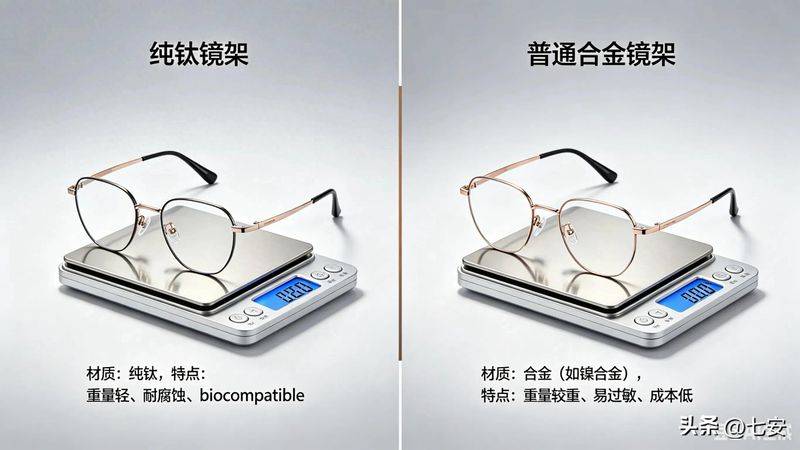
The 2,000-dollar frame is a selection of high-quality materials such as pure titanium, beta titanium, high-end tr90 and acetate fibres, which are more expensive and have significantly improved performance and experience。
• material advantage: pure titanium/betatium material, half lighter than normal alloy, high hard weight, allergies, stainless, non-removable, and wearing a single day, three to five years in the same condition; high end tr90 is light, ultra-resistible, non-breakable and suitable for a moving population; acetic acid fibrous content is good, radiant, insensitive and of high color。
• designed face-to-face: according to asian face-to-face designs, radians, widths, nose-to-mouths are finely sharpened, well-regulated, well-established and worn over a long period of time; they are diverse, well-designed, capable of modifying different face-to-faces, small face-to-face, high-temperate, commuting, commercial and daily fit。
• fine work: smooth welding points, smoothing edges, smoothing the edges, smoothing the plating, smoothing the plating, smoothness of the chain, and rigidity of the screws; soft nostrils to the nostrils, non-obsession and full comfort。
Iii. Photometric and processing: specialization determines suitability, and the impact is greater
Many are only focused on the price of lenses and frames, while ignoring the importance of light testing and processing. In fact, the degree of specialization in photology and processing, which directly determines the suitability and comfort of glasses, is also an important gap between high-end glasses and par value glasses, with industry data for 2026 showing a 20-30 per cent premium for specialized photoprocessing services。
$300 parity mirrors: basic light, rough processing
For 300-bit glasses, most of the light is based on basic computer light, with no artificial fine debugging, short light time, insufficiently accurate data, and is prone to problems such as high or low degrees, non-admission of dispersive axes, and error in pupil measurements。
The processing chain is much more simple and extensive, with old equipment and low accuracy, lens cutting, grinding, assembly and experience, with greater error, and is prone to lens deviations, dispersing axes, pupils' inoculations, mirror deformation, resulting in dizziness, eye swelling, a rejuvenation of the sight, and prolonged wear, which increases the burden on the eyes and even affects the sight。
2000 yen high end mirrors: fine light test, precise processing
The 2,000-dollar glasses, using a complete process of "computer photometric + artificial excision + test-decomposition", are highly specialized, experienced, and have a long period of light-testing, so that precision adjusts the degrees, dispersive axes, pupils, etc. To parameters such as eye habits, work scenes, age, etc., to ensure the accuracy of the photometric data and comfort。
High-precision imported equipment is used for processing, fully automated operations, error control is within 0. 1 mm, lens cutting, grinding, fitting precision, fit frames, non-conformity, full matching of dispersible axes and pupils, clear comfort when worn, loss of dizziness, ophthalmography, heavy vision, etc., do not add to the eye burden。
Branding, services and after sale: invisible value, long-term benefits
In addition to lenses, frames, photoprocessing, brand premiums, service experience and after-sales security, these are important reasons for price differentials for glasses, which, while invisible, are gradually reflected in long-term wear experiences and use cycles。
300-dollar-at-price glasses: no brand premium, easy to sell
The 300-dollar glasses, mostly brandless or small-branded products, with no brand premium and pro-people prices, are relatively simple after service and sale。
• services: simple mirroring process, short service time, no professional eye guidance and recommendations, and additional fees for services such as subsequent adjustments and cleaning。
• after sale: quality assurance is short, usually for three to six months, and only for non-anthropogenic quality issues, mirror scratches, yellow hairs, frame deformations, fades, etc. Are not covered by the quality assurance and the cost of post-maintenance maintenance and replacement of spare parts is high。
2000 yen high-end glasses: brand security, service improvements
The 2000-dollar glasses, mostly well-known brand products, have some brand premium, but also bring better quality assurance, service experience and after-sales security。
• brand security: strong brand power, strict product control, stable product quality, strict quality testing of materials, processes, optical performance, etc., and safety and security。
• professional services: a one-to-one professional service is provided in mirrors, which are provided in detail by optical examiners with eye instruction, attention, lens maintenance methods, etc., and are then provided free of charge, such as eyeglass adjustment, cleaning, maintenance, etc., and are carefully attended。
• after sale: quality assurance is long, usually for 1-2 years, and some brands also provide life-long maintenance services, non-human quality issues are repaired or replaced free of charge, mirror scratches, yellow hairs, frame deformation, color loss etc. Are also eligible for preferential maintenance, with low later usage costs。
V. The problems of industrial purpose: how much the purpose is between the sources from the sources to the end
Many people see a wide variation in the price of glasses, the first reaction being a “industry windfall”, but in practice the price of glasses is a combination of “production costs + circulation costs + operating costs + service values” and is not simply a business blackout。
According to the most recent industry study in april 2026, jiang sunyang, as the national production base for glasses, offered a very low price for basic lenses: the 1. 56 refruit rate for non-spherical lenses was $8-12, the 1. 61 refruit rate for lenses was about $15, and the cost of the 1. 67 lenses was only $30-40; the average alloy frame price was $6, the tr90 mass frame was about $25 and the pure titanium frame price was $60-150。
From the factory to the consumer, the glasses are required to pass at least 4 to 5 circulation links of the “factor-provincial-municipal-municipal agent-regional distributor-end-door” at a 20 to 30 per cent premium per link, with the cost of the 15-dollar lenses going to the shop exceeding $50; plus the operating costs of the store, labour, depreciation of equipment, utilities, etc., as well as the cost of services such as light testing, processing, after sale, etc., which naturally increase significantly。
In short, the cost of materials for 300 glasses is about 50-100 dollars, the cost of materials for 2,000 glasses is about 200-300 dollars, the price difference core is not material, and there is a hierarchy of optical precision, material process, service experience and post-sales security。
Reasonable mirrors: choice on the basis of need, neither blind pursuit nor contempt
To say so, it is not that you have to wear 2,000 dollars of high-end glasses, or that 300 dollars of even-priced glasses are not usable, but rather that you have to choose rationally, with mirrors, not blindly pursuing high prices, and not be greedy of looking cheaply, according to your own degrees, eye demands, budget and scenes。
• persons suitable for choosing 300-dollar-at-price lenses: those with low degrees (within 200 degrees), occasional wear, low eye demand and limited budget, such as older persons who occasionally read newspapers, students who occasionally wear lessons and do not wear glasses。
• persons suitable for the selection of 2,000-dollar high-end glasses: high near-sightedness (over 600 degrees), long-term view of electronic screens (over 8 hours a day), outdoor workers, persons with high visual clarity and comfort requirements and well-funded groups, such as working people, programmers, designers, drivers, etc。
The core principle of mirroring is “clear, comfortable and fit”, and so long as these three points are met, they are good for themselves. Three hundred dollars of glasses meet basic visual needs, and 2,000 dollars of glasses are for optical precision, comfort and durability, not absolute good or bad, but only for suitability。
A sweet hint
The content of this paper is based on the latest industry data of 2026, market research and real consumption scenarios, which are available only for mirroring purposes and do not constitute mandatory consumer advice. The glasses are a personal visual corrective device, and it is recommended that, taking into account the actual circumstances of the situation, such as their own degree, eye habits, budget, etc., the regular glasses shop or the specialized visual centre should be given a mirror, with a rational mix of lenses and frames to protect the health of the vision。
Concluding remarks
The price of glasses is never a simple “material cost”, but rather a combination of multiple values such as lens optical performance, frame mass, photoprocessing precision, brand services, etc. The 300-dollar flat-cost glasses are basic needs; the 2,000-dollar high-end glasses are quality experiences, behind which there is a gap in clarity, comfort, durability and eye protection。
Today, 2026, prices in the eyeglass industry are becoming more transparent, and the era of windfalls has come to an end, with consumers no longer having to be priced or blindly pursuing lower prices. A rational view of price differentials, an understanding of the truth behind the differentials, and a choice to fit into self-appropriate, high-value glasses, would not be unjust but would protect the eyesight。
Do you normally choose the flat price or the high price? Have you ever experienced a mirror being buried? Do you value clarity, comfort or paint while you're in the mirror? You are welcome to share your views and mirroring experience in the comment area and to share practical mirroring dry products。