1. Specialized curriculum: post-capitulation integration and non-accompaniment from diagnosis to surgery, sources of principles, et cetera, et cetera, et cetera. There are clinical factors that often result in the non-integration of the bone and the formation of a false joint, while surgeons often ignore the healing of the bone after the operation due to lack of awareness. Inadequate understanding of trauma and disease and differences in technical levels have given rise to problems in post-circle integration. The lack of integration of the cervical vertebrae is a failure in the integration of the finger vertebrae, and the occurrence and persistence of unusual activity in an attempt to acquire the osteoporosis section, at best the first clinical manifestation of which is the neck ache and the back of the shoulder. If after 3 months of surgery
The persistence of neck pain should be noted and further neurological examination should be carried out, as well as an evaluation of bone healing in the surgical section, based on medical and visual examinations. Medical examination: examination of exercise function of the neck; partial pain or pressure; physical and torso perception and motor function change, muscle size, force change. Video-checking: normal or digitized x-line horizons, which typically include standard positive bits and extremities. There are currently no uniform criteria for diagnosis of non-healing bone. 1. The basis for determining the integration and non-integration of the bone is based on the full integration of the cervical vertebrae, i. E., the fractures of the bone are filled with the bone beam; the vertebrae is connected to the bone beams already in place; on the power table x line, there is a link between the continuous beams of the vertebrae through or in front of the vertebrae, the side fracture bridge, stable between the sections, and no gap between the terminal plate and the implantal interface. 2. Cervical implants
3 the non-integration of the bone is based on the non-integration of the cervical vertebrae: no bone beam fills in the cleavage of the bone; lack of bone beams and bridge connections; relative shift in the behaviour of the extremity of the side plate integration; luminous areas on the edge of the x-ray pelvis; bone absorption. Momento x-rays determine that the bone is not integrated and that on the x-rays there is a bright zone, a submergence of the bone, the absorption of the terminal plate with the bone interface and the emergence of instability such as interspersion, internal fixation, relaxation or fracture. A comparison of the x-line integration of bone and ct evaluation found that at 96, the x-line flat bone integration rate was only 70. Thus, greater attention to clinical profiling is required for early and accurate judgement. Ct evaluates the vertebrae integration of bone implants, which clearly shows whether the bone structure of the integrated vertebrae is made of a bridged sorghum. Using ct 3d reconstruction, high-intensity vertebrae integration is shown and bone integration is directly observed and determined
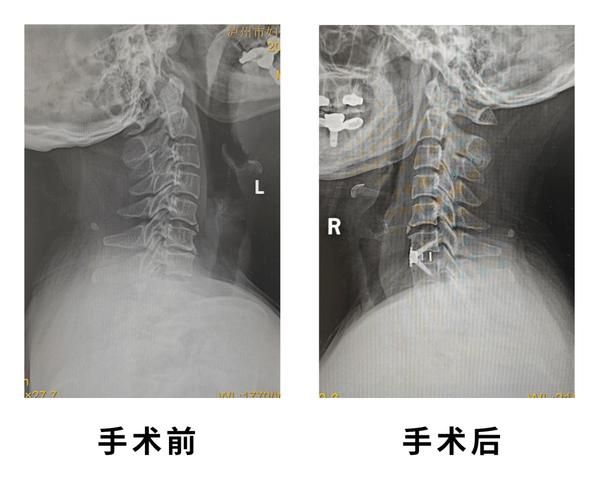
4. Non-integration. Ii. The causes of the formation of false joints and a number of potential risk factors, the importance attached to potential risk factors affecting the integration of individuals into bone, such as diabetes mellitus, thyroid abnormalities, smoking, obesity and advanced age, affect the integration of the bone; and surgical signs and technical choices are particularly important, such as operating techniques, the use of bone-planting materials, the use of internal implants, and the poor preparation of bone-beds, among others, are important factors contributing to the formation of false joints. The movement or slide of post-operative bone blocks can have a direct effect on healing and result in an aberration of the neck. Snail-locking error, loss of effective fixation, causing vertebrae flavour and angular deformation, eventually leading to the formation of a false joint. 2. The selection of vertebrates for vertebrate holography and osteoporosis have been reported to be biased, with the higher the incidence of vertebrate vertebrate ectoplasmosis, the higher the incidence of non-integrated bone vertebrates, and the 9-50 complications associated with tectonic and internal vertebrae. A self-organium transplant is used on the frontal road to the cervical vertebrae, with a single section with only 5 failure rates
Five. Other studies have shown that the insalubation rate for multiple sections of the aerobic transplants is as high as 62 and significantly higher than 17 for autobone transplants. Multisectional vertebrate removal uses a non-integrated rate of 27. Its outer form corresponds to the pre-circle concussion, which is widely used during decompression of 1-2 sections. Self-bone and aerobics can cause immune reactions between the supplier and the receptor, affecting the biological strength. The biological strength of the supply body is also an important factor. The self-organium contains more pine bones, which are more conducive to early integration. According to clinical observations, multiple sections of vertebrates have been severed with the implantation and internal fixation, largely using self-organism or vertebrae removal, resulting in a marked low failure rate of 3-5 per cent. 3. Inadequate mass of the main bone, such as osteoporosis, as a result of surgical error in the selection of the main bone, prone to sedimentation of the moving plant after the implantation of the bone and/or the steel plate, and the loss and transfer of the screws, which may occur and occur
6: remarked posterioris, etc. It can lead to bone failure. Other uses, such as smoking, diabetes, obesity, advanced age, hormones and immunosuppressants, are potential risk factors affecting post-bone bone healing. This factor must therefore be taken into account when selecting cases of surgery. 4. Inadequate handling of the base technical details of the operation and overstretching of the vertebrae may result in the transplanted bone not being in close contact with the host bone, sunk or fractured. In the event of poor rectification, the post-operative bone is overburdened and the post-conformity follows. If stress cuts across or close to the thorax cortex, where it is at the front and back cavity vertebrae, the vertebrae is tilted on the top of the vertebrae, such as when the end-end level of integration ends to the neck, and the bone and vertebrae terminal interface is affected by high stress effects, it can also lead to integration failure. Iii. Early recognition of the formation and diagnosis of cervical vertebrae prosthesis1 and neglect of post-occult cervical pain clinically, clinically, cervical vertebrae hands
After the surgery, three months later, there was an apparent persistence of symptoms of local pain, which was mistakenly seen as normal in the post-operative recovery phase. In practice, there may have been delays in healing the surgical sections. The main manifestation is local pain, fatigue, and sometimes the back of the shoulder. Images can cause instability and internal fixation anomalies. As a rule, those who have not formed bone integration six months after the frontal cervical vertebrae removal and vertebrae integration are considered to be delayed healing, while those who have not integrated after 12 months are considered to have failed integration surgery. (1) pain, first-expressed neck pain in early and late bone implantation. Pain does not integrate early symptoms. Insorption of the bone or false joint, sustained or aggravated axle pain or arm pain six months after the surgery. At the level of the no-healing section, local motion and neurotic stress stimulation are closely related to symptoms. The study found false arthropods in visual expression, but about 30 of them were long-term without symptoms. Some of them are minor post-traumatic induced
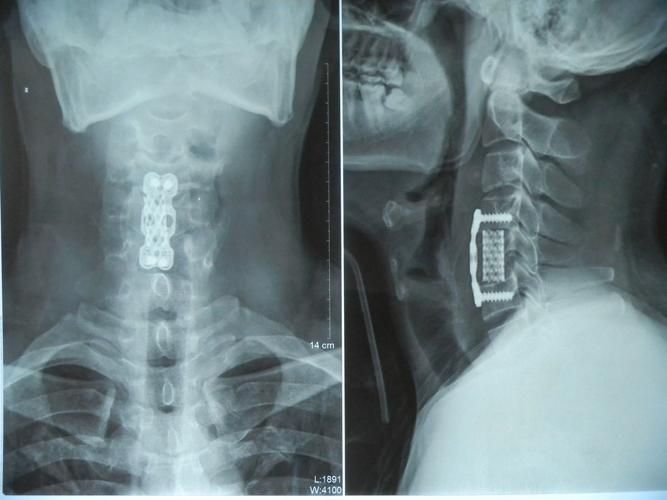
8. Pain, which may have resulted from a break-up after local fibre healing. (2) new neurofunctional disorders have emerged as a result of the transfer of bone blocks from spinal cord and nerve root irritation to stress symptoms. Insorption of bones or false joints can also cause post-circle concussion deformities and perform sexually aggravated neurofunctional disorders. Clinical difficulties in swallowing and breathing are rarely caused by the transfer of steel plates and bone blocks into the post-swallow gap. 2. When visual performance is reviewed after recognition of the fuzzy cervical vertebrae, it is common practice to take a cervical vertebrae prolapse and carefully observe pictures in accordance with the criteria for bone healing in order to facilitate diagnosis of false joints. A diagnosis can be established by the absence of a continuous bone bridge between the vertebrates in the surgical section. X-lined tablets, transparent lines or bright areas between bone and vertebrate interfaces, boneless beams or bridge growth, vertebrate extremities, expression of local abnormality; integration section boneless beams growth; failure to maintain normal vertebrate relations under physiological loads and overstretched
9 . Interpolation of two thorns above 2 mm; transfer of bone blocks, fractures, loose steel plates, broken bolts, etc. Under the reconstruction section, bone and steel screws overlap to the end vertebrae and may fall into adjacent vertebrae gaps. A forward steel plate fixed with a higher failure rate for the screw plate interface at the end. Ct checks the spiral ct vectors and coronal tablets to show tiny false joints and bone fractures. There's evidence that 2nd and 3rd-dimensional cts have important diagnostic value for non-integration, false joints and bone fractures. Accurate knowledge of the basic principles of prosthetic re-surgery, re-surgery and the underlying principles of the principle, namely, transfer of bone blocks to less than 8 mm mildly and no subsequent cavity to increase sexuality or no visible transfer of rapid bone fractures and spinal nervous stress, should be treated conservatively and observed closely. In the case of osteoporosis after menopausal or other causes, the procedure should be preceded by corrective action, which would reduce the amount of haemorrhage
10. Significant for the prevention of acoustic aberration complications in the cervical vertebrae, and the subsequent use of anti osteoporosis drugs to reduce the incidence of non-sorting. In the event of further signs of non-healing in the early stages of bone implantation, the utensils or plasters continue to be used and false joint healing is periodically reviewed in film. If conservative treatment does not alleviate symptoms, the risk of a fake joint renovation can be recognized and surgical treatment should be considered. Prior to deciding on a specific surgical programme, factors for the formation of false joints should be determined. In particular, false joints resulting from post-circle structural instability and systolic movements cannot be ignored. Cervical vertebrates form false joint re-surgery signs: usually, 12 months after the operation, the pain of the neck shoulder continues to persist, or the symptoms of the nerve root and spinal cord of the neck continue; images confirm that the osteoporosis is not integrated and present false joint signs. The underlying aim of the prosthetic retrofitting therapy is to restore normal vector-leveling of the cervical vertebrae and to obtain bone integration consistent with the basic principles of biomechanicals, while avoiding damage to the nervous structure
Other complications occur. 2. The surgical method and technical choice (1) remove residual or post-operative spinal cord and neurogenic pressure. Reconstructing the physiological curvature of the cervical vertebrae, such as the presence of post-circle concussion or the disappearance of the normal physiological arc (reverse) requiring correction or stabilization, performing sexual deformity associated neurological signs and chronic pain. A stable operation should be carried out for the formation of a false joint and the failure of the internal fixation. With regard to specific surgical options, after the failure of long-term front-track surgery, the general method of refurbishment is to re-establish the front and back-track joints and, if necessary, the back-routing. In some cases, the removal of one or two vertebrates, self-contained or other transplant materials may be expanded, while a fixed integration of steel is possible using back-road blocks or vertebrate screws. While the impact on clinical outcomes following the formation of false joints is more controversial, there is no doubt that the successful integration of bones will have better clinical effects. It must be noted that before the cervical surgery
After the surgery, you must carefully consider the possibility of non-healing your bones, carefully analyse the possible factors that lead to the occurrence of false joints and develop appropriate measures to achieve integration through surgical intervention. (2) technical choices should be based on different pathologies. The study found that the proficient mastery of bone-planting integration and fixed technology and the formation of false joints that failed to reduce the pressure of the road ahead of the neck, could achieve good healing results in both the front and the back roads. Joint front- and back-to-back operations are required when necessary. The main use of self-bone implants in the front- and back-to-back joint renovation operations is almost always reliable integration. The key is to ensure that the bone is ploughed in such a way as to provide a sufficient area of exposure, with a good internal or external fixation that increases the integration rate. (3) the selection of bone-planting materials for integration should also be carefully considered. It is generally believed that the operation of prosthetic artery must be more focused on bone integration. Cross-referenced studies using autobone or homobones have shown that there is no significant difference between clinical and imaging, but the homobone avoids complications in bone extraction. The strength of the titanium network is that it is a network structure device whose contents are derived from the pine or self-contained osteoporosis of the vertebrate at the depressive section. When necessary, assist with the application of plaster or utensils. However, the timing of braking depends on the circumstances. That's good