On 20 august, the beijing municipal consumers association launched the beijing convention on self-regulation of the shared charged treasure industry, under which eight enterprises covering 95 per cent of the city's operational locations, such as the beast charged, signed a commitment to regulate services. However, behind this convention, which aims to deconstruct the image of the industry, the animal charger, as the “first share of the recharging treasure”, is trapped in a multi-blocking situation, which is subject not only to persistent complaints from consumers for lack of transparency in fees, difficulties in restitution, shortage of passenger services, but also to joint prosecution by a number of local agents for fraud in sales and lack of services, while companies have announced their acceptance of a privatization offer or will bid off capital markets。
The signing of self-regulatory conventions makes it difficult to hide the industry's miseries
The beijing convention on the self-regulation of the recharging industry requires enterprises to achieve transparency in the pricing of fees, loan-back facilitation and efficient response to complaints. The convention requires that the hourly unit should not exceed 15 minutes and that the five-minute period in the first timer should be charged; that, starting with the second timer, a unit less than one timer should not charge the hourly fee; that the vacancy rate should be reasonably controlled, and that there should be sufficient space for sharing the recharging cabinet; and that a moratorium and a free billing mechanism should be established. In cases where it is difficult for consumers to return in a timely manner for reasons such as the low number of internet sites and the lack of space in the aircraft cabinets, businesses should suspend the billing and so on after verification。
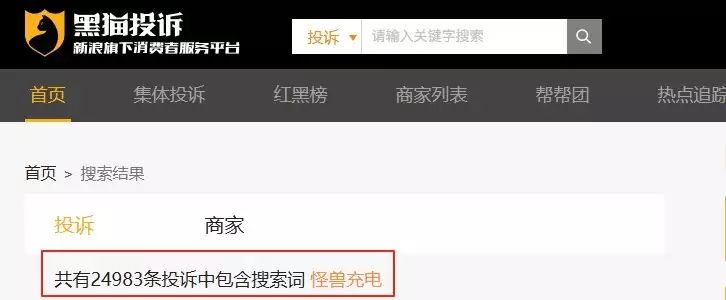
Behind the convention, however, is the persistence of the shared recharging industry. The animal charger, one of the contracting parties, has long been caught up in various consumer disputes. The black cat filed a complaint about close to 25,000 searches involving the charge of a monster. The complaints included excessive charges, unchartered charges, slow charging, delays in the timely return of aircraft owing to the full number of cabinets and few internet points, frequent failure to reach passenger calls in case of equipment failure, and problems relating to the processing of complaints for a period well exceeding the promised 48 hours。

Royal global-regular trading platform, $200 for the new account
Previously, consumer quality reporters had also received several consumers who had not been able to agree on the rate for sharing the recharging treasures at different points of “terrestrial charge”, at a rate of $3/hour, $2/hour and $2/hour, and consumers who had borrowed the recharging treasures from “terrestrial charge” like “opening blind boxes”。
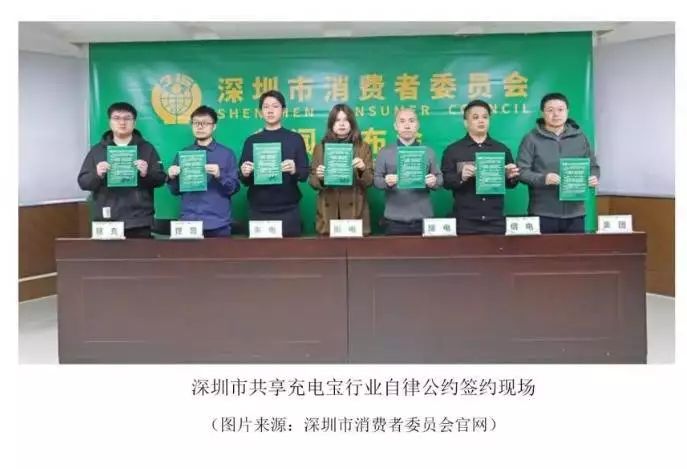
In march 2024, the shenzhen city commission also introduced a self-regulatory convention, which expressly provides for a five-minute uniform free-of-charge period of up to half an hour in the unit of measure, with the beast charging one of the signatories. However, the survey of consumer quality reporters found that there was a clear gap between its accounting standards and the convention in the chengdu region, and that the official customer service responded to the challenge only by “relationship of fees per door shop”, avoiding the basis for pricing. A large number of similar problems remain in complaints from black cats。
Agent's joint prosecution triggered a crisis of confidence
It's not just the users, the agents' plight is even worse. A recent joint action was initiated by the beast charging agents of harbin, wuhan, changsha, sichuan and tin-free territories, accusing the company of “electrical fraud”. According to the agents, the animal charging salesmen, using the “single cooperative agent” as bait, committed themselves to “no less than 3. 3 yuan a year of daily daily daily water flow” to induce them to invest millions of dollars in equipment and laying services。
But the promise quickly faded. According to the agents, the lay-in collaborators recommended by the beast charge were often evacuated midway, resulting in “payment not being completed”; the laid-up equipment was significantly out of line, and some of the agents’ equipment was less than 25 per cent online and the proceeds were far lower than promised. More agents have received threats that sites have been laid and that there is a risk of loss of equipment. A staff member of a chess studio in guangxi nanning disclosed that the door shop had earned zero from march to may and that it had been found that the original contract seller had converted the equipment into a union agent and that the proceeds had been allocated to the agent operator, while the monster had been charged officially on the grounds that it was “unmanageable”。
In the face of the doubt, the beast is charged with "spare is not an official policy." on the grounds that responsibility was attributed to individual recruiters, an attempt was made to set aside the relationship. However, the agents stressed that the sales agents operated on behalf of the company and that they invested funds on the basis of trust in the “first share of the recharging treasure”. On the black cat complaints platform, there are not a few complaints, such as “wield-out propaganda losses”, which also exposes the regulatory challenges of the expansion of the agency model in the case of animal charge。
It's about to be privatized out of the market
At the same time as the self-regulatory convention is signed, the process of de-marketing the charge of the monster may enter the countdown. On 4 january this year, the company announced that it had received offers for privatization transactions from the central capital and four of its management。
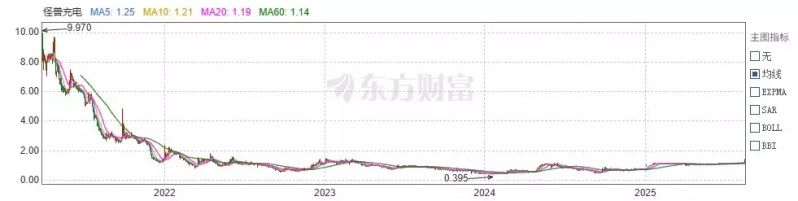
Of this amount, the buyer's group proposed to purchase at a price of $0. 625 per share or $1. 25 per share of the united states depository certificate (ads)。
Although this price was 74. 8 per cent higher than the closing premium of the last trading date before the proposed date, it was only 14. 7 per cent of the market price of $8. 5/equity in 2021, which was 87. 5 per cent smaller than the opening price of $10 at the first day of the market。

Night game watcher, peace and excitement in the web world
Time reverted to 1 april 2021, when the monster was charged to nasdaq, becoming the “first share of the recharging treasure”. Behind the company is a group of star founders, founders of cai guangdong, who served as unilever and uber, and coo xu pei-fung, a founding team member of the united states of america, who benefited from a shared economy that led to an increase of 17. 6 per cent in the company's first-day opening prices compared to those of the issue, with a total market value of $2. 3 billion. Before it came on the market, the monster had been charged six rounds of financing over five years, totalling more than $2 billion, attracting huge capital, such as ali baba, soft silver, takashi and mi。
The transition began in 2023. Beginning in may of that year, the stock price charged by the monster triggered a number of de-marketing warnings of nasdaq; in august 2024, notice of de-marketing was again received because the stock price had been below $1 for 34 consecutive trading days. Performance data are even more declining: after peaking at 3,585 million yuan in 2021, they fell to 2,838 million yuan in 2022, while in 2024 they received 1,894 million yuan, a decrease of 35. 97 per cent over the same period, resulting in a net loss of 1,353,000 yuan, a gain or loss of 115. 25 per cent over the same period。
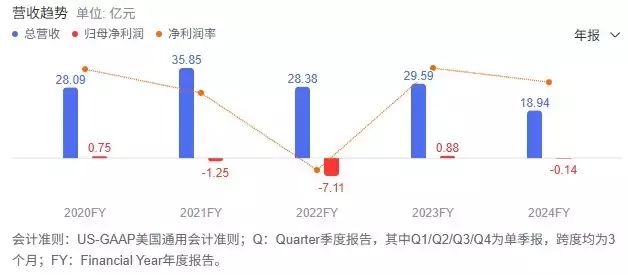
According to the 2024 financial report, the beast charge has been strategically adjusted from a direct sales model to a network partner model, resulting in a decrease in direct sales model revenues, and net income under the network partner model after deduction of incentive costs paid to partners. On the other hand, mobile equipment charging services are facing an unfavourable consumer environment and increasing competition, leading to a general reduction in the efficiency of mobile power operations。