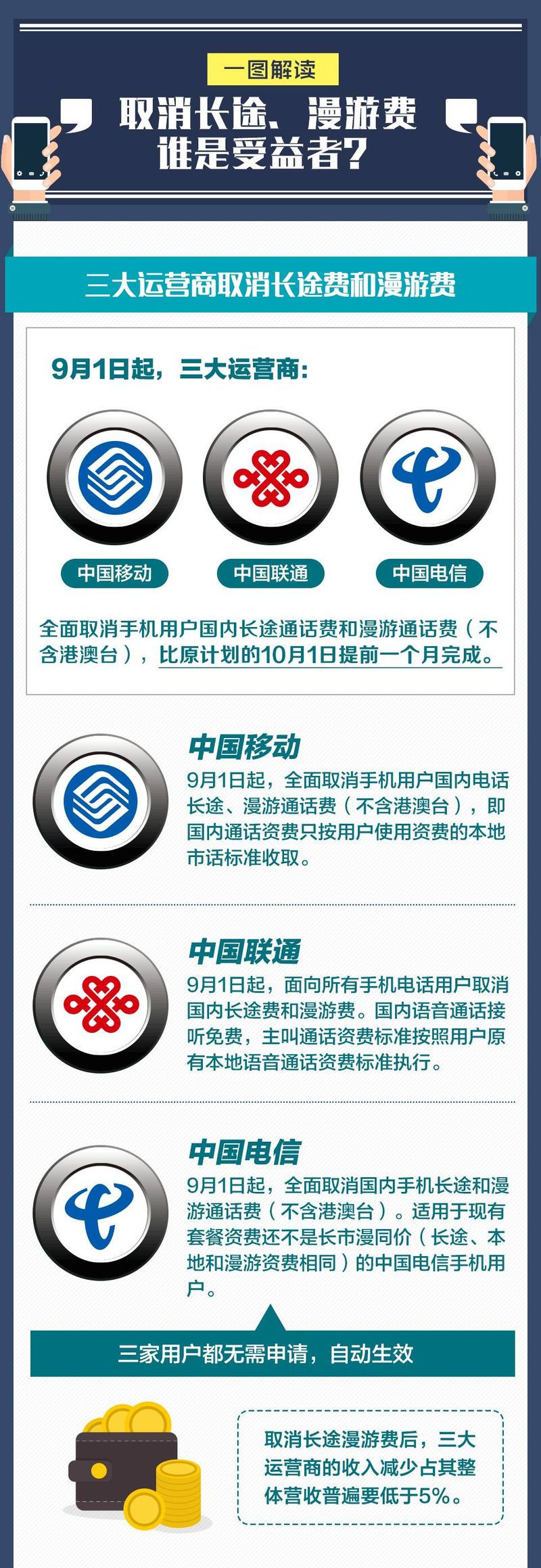
Recently, china's mobile, china's connection, and china's telecommunications announced the total elimination of long-distance domestic and roaming fees for cellular subscribers (excluding hong kong and australia) effective 1 september 2017, one month ahead of the planned date of 1 october. This 23-year-old “fossil costs” will leave the historical arena ahead of schedule。

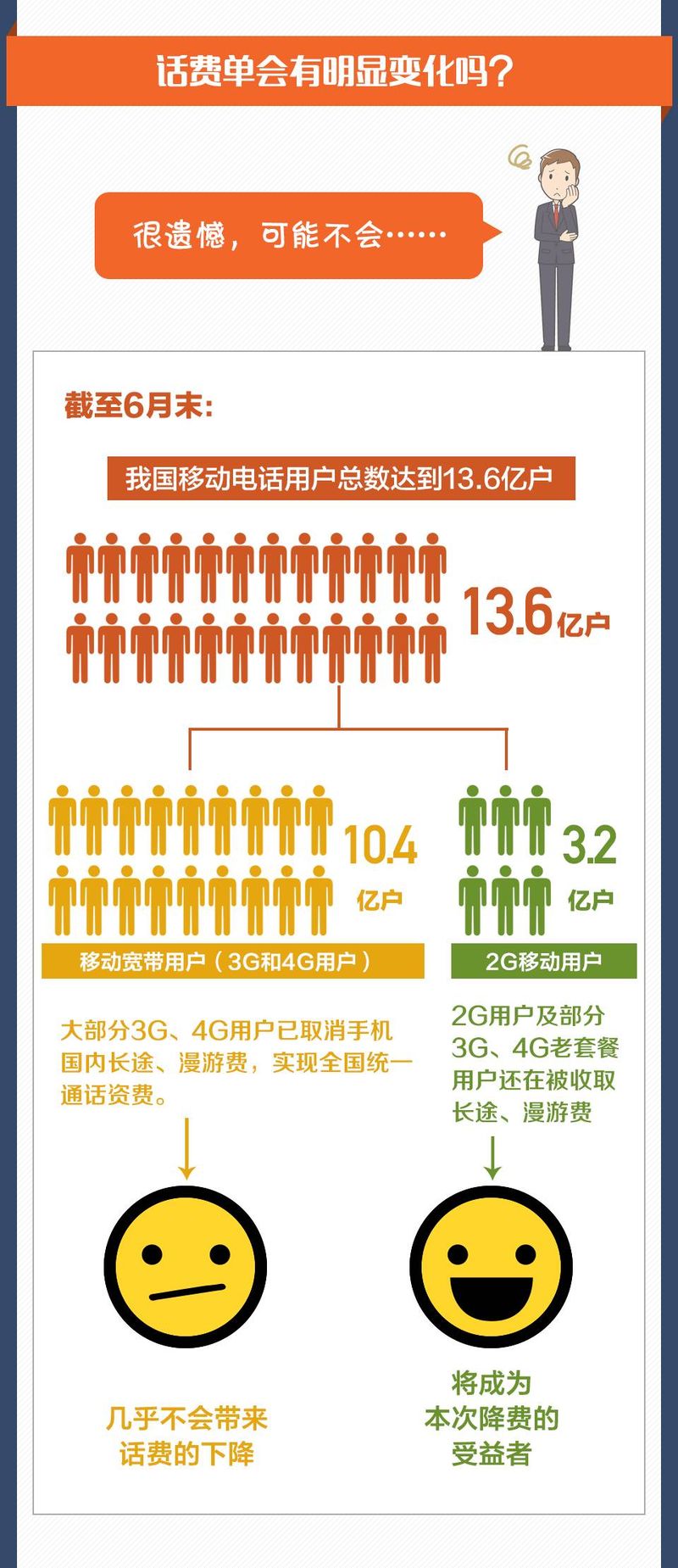
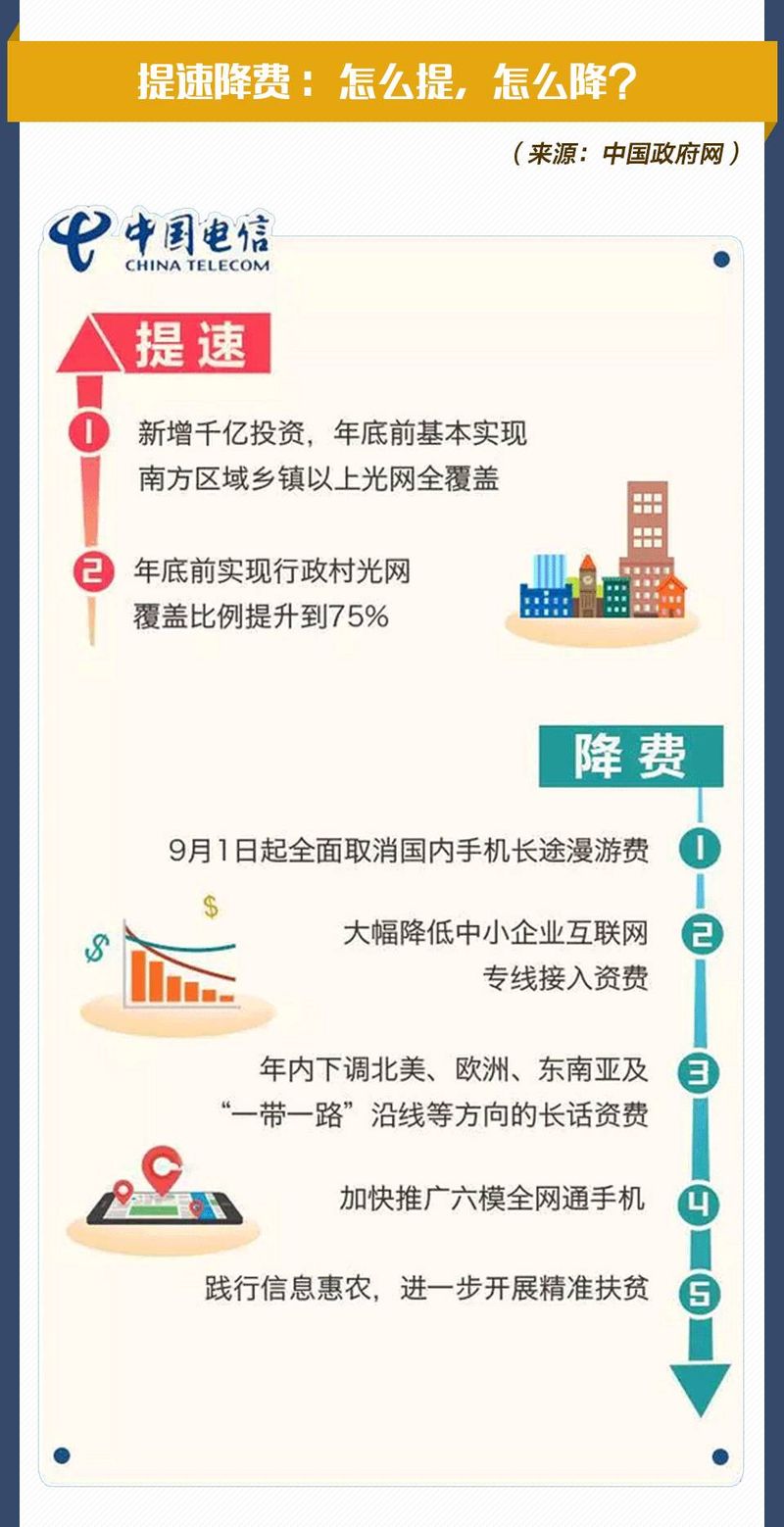
What will be the impact on users of the total elimination of long-distance and roaming telephone calls by cellular subscribers this time, as part of the “speed cut” effort? Who benefits most? What else do the three operators do
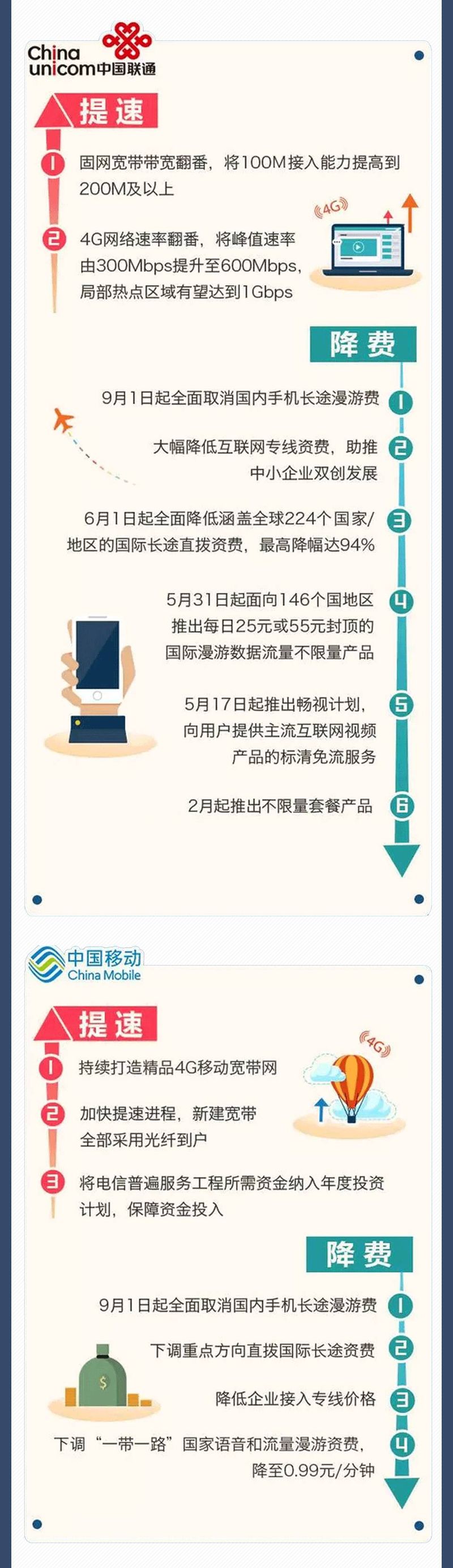
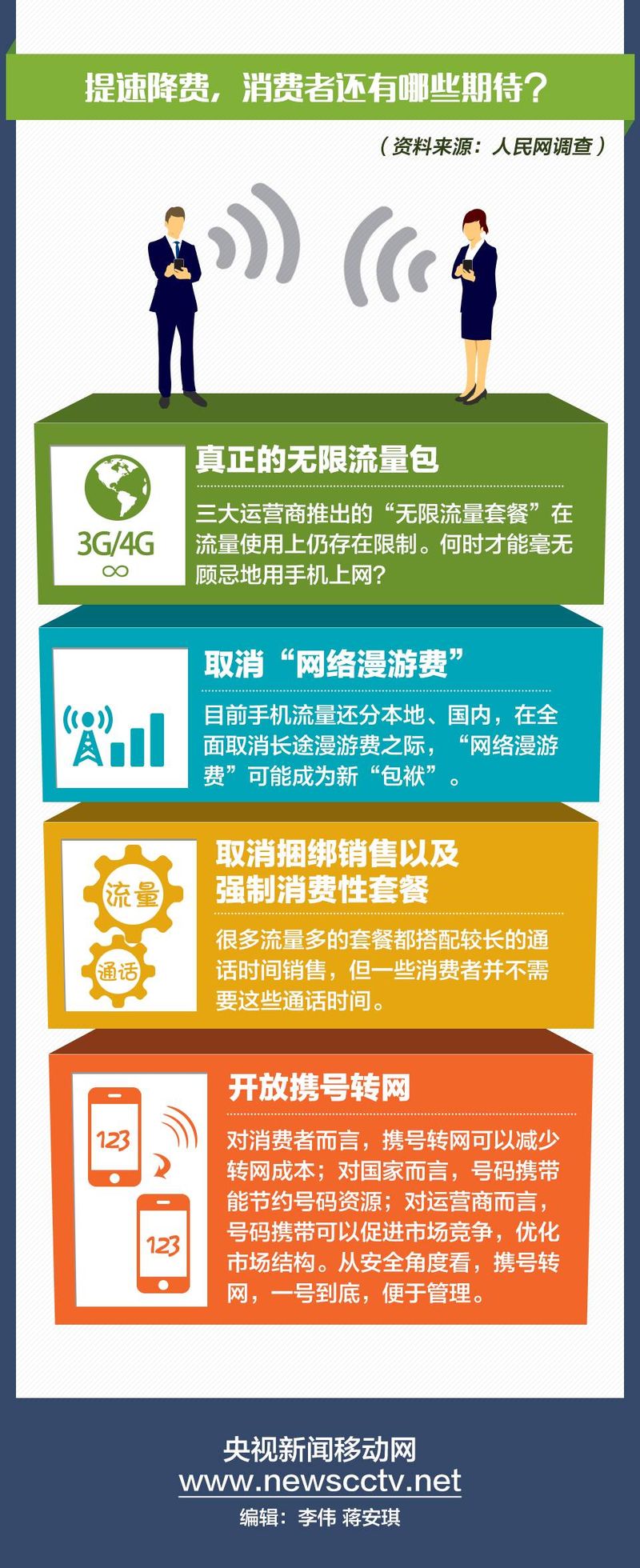
Comment: “acceleration costs” need to be further developed
Beyond the positive attitude of confirming that operators are ahead of schedule to achieve their objectives, there is also a need for objective understanding of the pace of “speed-downs”。
Even though the elimination of long-distance and roaming fees is important as a sign of the overall “speed-down” reform, it is not appropriate for individuals to expect too much of its “lower” effect. At the same time, it is not the whole goal of the “fast-down” reform。

Long-distance and roaming fees are still largely the product of the pre-internet era. At a time when the internet is fully embedded in all aspects of social life and production, it is also important to understand that “speed-down” cannot be simply a “talking fee” for the past. For example, this year's report on government work also called for “facility cuts” - “a substantial reduction in the cost of internet access for smes”, which in fact points to the cost of internet access. And in that respect, it has been our short board. While there has been a marked acceleration in both years, both in terms of the cost-cutting and in terms of the construction of the communications infrastructure, there is still, in general, much room for progress and much debt to be covered。

The abolition of roaming fees and long-distance fees is, to some extent, a symbol of the development of the communications industry and further closer to the new demands of the internet age. For operators, this should be an opportunity to move away from the business model that used to rely on long-distance fees and long-distance fees to “leave for money” and, for communication development as a whole, to continue to strengthen infrastructure, reduce communication costs, increase broadband speed and build a solid foundation for information society development in the context of “internet+”。
Therefore, the elimination of roaming fees and long-distance fees is more of a start than an end. The “facility reduction” still needs to be built upon over time. (since the light comes)