Following the recovery of the prices of express tickets in guangdong and zhejiang, the prices of incoming tickets in shanghai will rise。
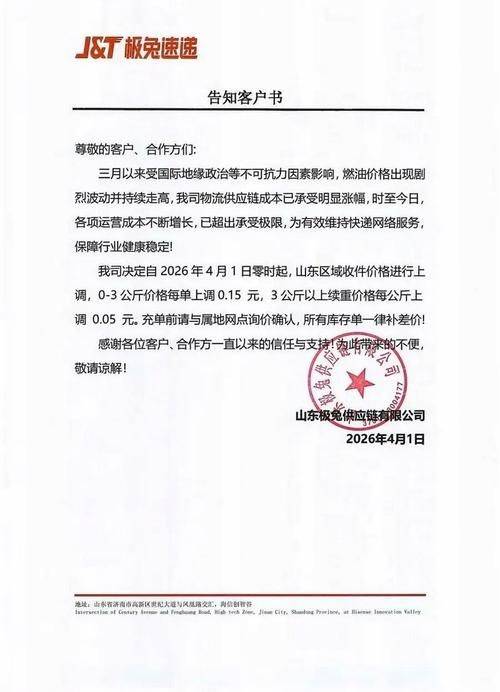
On 21 september, journalists learned from a number of insiders of the express delivery company that on 19 september, the shanghai company, which was called "turkish once and for all" (shun, round, round, round, round, rhyme), and the five extreme rabbit express company, had issued client statements. The text reads as follows: “in order to implement the state's `anti-portfolio' competition with respect to various industries, to eliminate impropriety at low prices to disrupt market order, to continue to provide stable services to clients, to return to benign development, and to make an upward revision of the prices of express receipts for all users in the shanghai region, starting at 0000 hours on 22 september 2025, with a view to requesting confirmation from a wide range of users in a timely manner with their territorial network sites.”
According to an insider of the express delivery, the fast forward price in the shanghai area was not too much, and headquarters was able to adjust the scope and pricing rights were in the hands of the network. For example, in guangdong, where the delivery price had previously increased by between $0. 4 and $0. 5 and the average cost of a single ticket increased by more than $1. 4, the regional adjustment generally increased by around $0. 2。
According to the source, there is a courier company that is stealing market shares this year and many have to follow up after the “rolling”. Following the issuance of the national anti-investigation policy, prices rose in guangdong and the “food-producing areas” of the low-priced land, as well as in zhejiang, shandong, hunan and jiangxi。

In recent years, there has been a “flash” of courier prices, which, according to inside the company, is equivalent to 20 per cent of the work performed by front-line workers, but with only 5 per cent or no change. Headquarters transfers pressure to the first line, either on its own or offline. In addition, falling incomes may also affect further declines in service levels. The heads of the branches of courier companies have pointed out that prices continue to decline, that the wages of front-line employees in the provinces are not low, and that the profits of the branches are not really higher than in one year. The executives of express-listed enterprises told journalists that “in the long run, low prices can lead to industrial instability”
Will the return of the delivery price to a reasonable value affect ordinary mail consumers
“this regional increase, which is mainly directed at low-priced electric carriers, and which increases the lowest price only by less than one dollar, does not increase all electric carriers, much less affect individual couriers.” an insider of the express delivery company pointed out to the news。
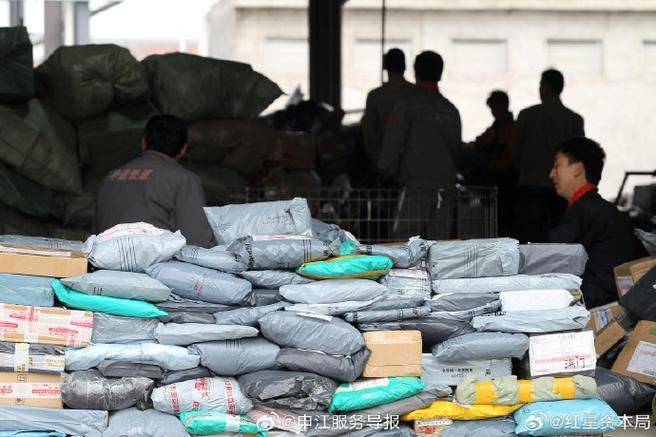
Previously, it was explained to the press that the express delivery price war was mainly related to the electrician delivery price. The larger the size, the lower the cost, the more efficient and the more competitive the price. Once the price of a courier ticket is back on track, it may be a few cents higher than the current price of a single ticket. A few cents of the delivery price for merchants is generally fine, and even if passed on to consumers, it has changed from $9. 9 to $10. The bulk price is not affected for users of their own cash couriers, as the small program in the “advanced” system is itself more profitable。
It has been explained to the press that the express delivery price war mainly refers to the electrician's delivery price. The larger the size, the lower the cost, the more efficient and the more competitive the price. Once the price of a courier ticket is back on track, it may be a few cents higher than the current price of a single ticket. A few cents of the delivery price for merchants is generally fine, and even if passed on to consumers, it has changed from $9. 9 to $10. The bulk price should not be affected for the users of the express delivery, because the small program in the “advanced” system is itself more profitable per unit。
In recent years, the national post office has repeatedly stressed its opposition to virulent competition in the express delivery industry. In the second half of this year, the counter-inventory policy signals have intensified。
On 1 july, at its sixth meeting, the central committee for finance and economics, in the context of its efforts to further the building of a single national market, stressed the need to focus on the difficult areas in which it was necessary to regulate, in accordance with the law, low-cost and irregular competition among enterprises, to guide them to improve the quality of their products and to promote an orderly exit from behind-the-board production capacity. On 8 july, the national postal service group met to highlight the need to speak out against “inner-roll” competition and to regulate the quality of end-of-pipe services in accordance with the law. On 29 july, the national post office held a meeting of courier enterprises to highlight the positive contribution made to resolving outstanding issues such as “inner-roll” competition and the collection of non-compliance charges in rural areas and to maintaining good industry development。
The founder, chairman and ceo of china express (zto. N, 2057. Hk) indicated at a second-quarter press conference that since august there had been price adjustments in the express delivery industry, a return to price rationality, a positive development, and a positive impact on the company's overall profits and the income of couriers. The first half of this year was marked by strong single-vote price competition and a sharp decoupling of prices and costs. Some effects have also been seen since august, when prices are rising markedly, and industry regulators are trying to reverse the situation below cost prices. “in the future, when i judge that the industry is recompetitive, and it is unlikely that we will enter an era within a dollar of express delivery, we are confident that prices will stabilize.”
In its recent investor exchanges, the management of round-trip (600233. Sh) noted that the provinces or areas of guangdong and zhejiang have taken the lead in implementing counter-investment-related initiatives in the second half of the year, resulting in a reasonable recovery in terminal prices. At the same time, other provinces throughout the country are now moving forward with the industry's counter-investment, which will have a positive and positive impact on the profitability of expresser enterprises and the coalition network. In a recent investor exchange, the management of shin china express (002468. Sz) indicated that zhejiang, guangdong and zhejiang responded quickly and landed quickly, while other provinces, such as fujian, hunan, hubei and shandong, responded positively. The company will also follow the strength and progress of the relevant counter-inventory in a timely manner, with a projected positive impact on the operations of the company and at the end of the network。
In investor exchanges, the rhoda shares (002120. Sz) indicate that the regulatory policy at the national level for “inner-voltaic” competition continues to grow and regulation is increasing. Since august, there has been some recovery in the price of part of the flyer tickets in guangdong and zhejiang. As the “counter-inventory” moves forward, more regions are expected to reach consensus. In the second half of the year, companies were cautiously optimistic and the onset of a boom was expected to further boost price recovery. According to the company, the prices of the express delivery sector in the second half of the year have improved significantly compared to the second quarter, and irrational, less costly and vicious competition is expected to be effectively controlled. As prices rise, they will help stabilize networks, raise the income of end-of-pipe operators and eventually drive the industry towards “value competition” for long-term healthy growth。
In recent years, high-intensity price competition has become a new norm in the development of the express delivery sector, but to win in competition, courier companies need to take markets through service upgrades, price premiums, fine regulation of costs and profits. Previously, many courier companies had stated that continued “price-for-money” was not sustainable and that the evolution of industry patterns should in the future be a trend towards digitalization, intellectualization and diversification of integrated logistics services capabilities。
Zhang yuen, the chief expert in china's macroeconomic performance research at the national high-end think tank, has told journalists that “price fighting” is essentially a general rule applicable to all industries. Competition occurs when many head firms want to be strong, often characterized by price competition. Continued price competition also indicates that there was a large margin of profit and that profits are now reduced and viable. If competition becomes more competitive, and no head enterprise survives, industry associations and governments will coordinate and direct. Head enterprises may also start looking for new directions, new business growth points in subdivisions, and cushioning the decline in revenues from price competition。