Secondary water supply management approach for residential housing in nanjing city
(amended on 30 october 2017 by nanjing municipal decree no. 286 of 19 november 2012)
In order to strengthen the management of secondary water supply to urban residents, to guarantee the quality and safety of drinking water, to safeguard the legitimate rights and interests of users, water supply units and construction units, to promote the conservation of water, and to build a water-saving society, this approach has been developed in accordance with laws and regulations such as the regulations on urban and rural water supply in jiangsu province and the regulations on urban water supply and water conservation in nanjing city。
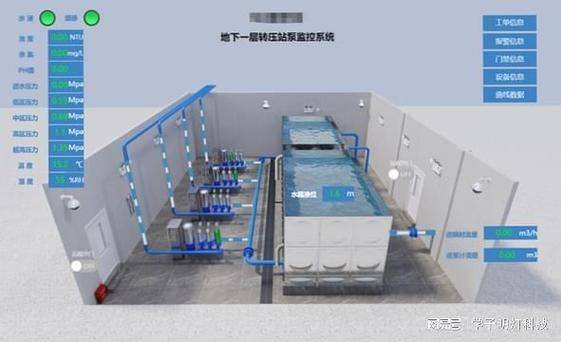
Second, secondary water supply facilities for the purposes of this approach are those for secondary water supply, such as pumping houses, reservoirs (boxes), pumps, valves, electrical control devices, disinfection equipment, pressure containers, water pipelines, etc。
This approach applies to the construction, renovation, operation maintenance and supervision of the secondary water supply (hereinafter referred to as the secondary water supply) and the facilities of urban residents in the administrative area of the city。
Article 4 the municipal water administration (hereinafter referred to as the water administration) is responsible for the supervision and management of the city's secondary water supply, and its water conservation authority is responsible for day-to-day supervision and management。
The health administration is responsible for the supervision of the secondary water supply。
The water administration authorities in the jiangning, pukou, poujo, hao and takaung districts are responsible for the management of the secondary water supply in their respective jurisdictions, in accordance with the established responsibilities and division of labour。
Other relevant administrative authorities are responsible for the management of secondary water supplies in accordance with their responsibilities。
Article 5. Where new residential housing requires more water pressure than the normal service of the urban water network, construction units should be accompanied by secondary water facilities. The secondary water supply facility should be designed at the same time as the main construction of the building and should be constructed and operated simultaneously。
Article 6. When the water supply unit takes over the construction of a new secondary water supply facility, the construction unit shall bear specific costs in accordance with the rates charged for the operation, maintenance and management of the facility。
Fees for the operation, maintenance and management of secondary water facilities are set by the price administrative authority。
Article 7 the design, construction and renovation of secondary water facilities shall be in accordance with national, local and industry secondary water facilities hygiene regulations and technical specifications for secondary water supply engineering, and shall be carried out by units with appropriate qualifications。
The design, construction and renovation of secondary water facilities shall be subject to the following provisions:
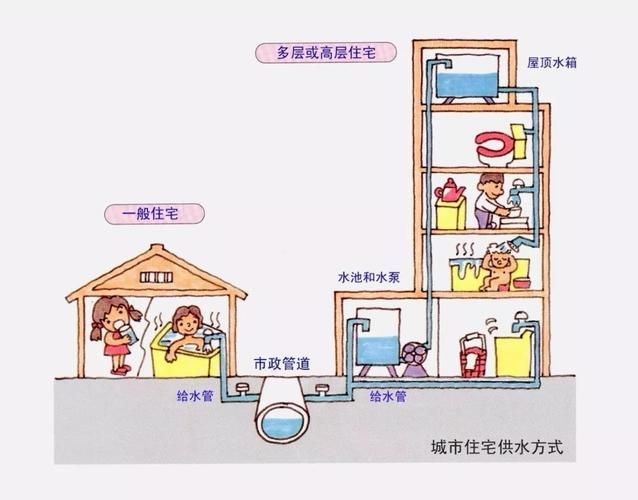
(i) in the case of dwellings constructed in the same way as commercial and office premises, the secondary water supply for residential housing shall be set up separately
(ii) the materials used conform to national quality and hygiene standards and shall not use pipes, tubes, accessories and equipment that are expressly prohibited and eliminated
(iii) a table with a copy to the household
(iv) pumping houses and reservoirs for drinking and fire-fighting water should be set up separately, pipes should not be interoperable, water pipes should be marked in different colours and equipped with necessary water pollution prevention devices
(v) the volume of water storage facilities, pressure facilities, plumbing calibres should meet water needs and facilitate maintenance and management
(vi) the top and surrounding drainage of the water storage facility shall be smooth, the spilling tube shall not be directly connected to the drainage pipe, and there shall be a vent at the top, which shall be protected against alien entry。
Article 8. Municipal and district people's governments raise special funds for the retrofitting of water facilities, which are earmarked for the retrofitting of water facilities。
A second water supply facility has been built, which is not operated and managed by the water supply units. An annual renovation plan is prepared by the municipal water administration, which is made public and is implemented by the organization of water supply units。
Article 9 the cost of economically suitable housing, de-privileged housing, low-cost rental housing, and the re-upgrading of secondary water facilities in a state of abandonment and failure due to, inter alia, the collapse of construction units, bankruptcy, etc., are covered by the secondary water facility renovation funds。
The costs of the second upgrade of water facilities for the development of commercial housing by institutions, enterprises, enterprises and real estate enterprises are covered by the owners or co-owners, construction units and water units of the secondary water facilities, depending on the property relationship and contractual agreement, and are subsidized by the special funds for the rehabilitation of the secondary water facilities。
In the case of a second upgrading of water facilities involving a household, the water unit shall charge the user a table of the cost of upgrading a household in accordance with the criteria approved by the price administrative authority。
Article 10 after the completion of the second phase of construction or renovation of a water supply facility, the construction unit shall invite the water conservation authority, the health administration authority and the water supply unit for inspection and inspection. Access to urban public water pipelines is only possible if acceptance is qualified. The construction unit completes the completed drawings of the secondary water supply facility with the original relevant information, which is operated, maintained and managed by the secondary water supply unit。
Water units are not allowed to supply water to secondary water facilities that have not been accepted or inspected in an inexperienced manner。
Article 11 the existing secondary water supply facilities are operated, maintained and managed by the owner, the co-owner or the operating maintenance manager entrusted to them, and the owner or co-owner is responsible for operating, maintaining and managing the expenses. Applications for the use of specialized housing maintenance funds for secondary water facilities are made in accordance with the relevant regulations and procedures。
Where there are secondary water facilities owners or co-owners who have not yet been included in the annual rehabilitation plan, who have decided to transfer the management of the facility to the water supply unit, the water supply unit is organized by the water, sanitation and sanitation administration authorities for acceptance in accordance with national technical standards and professional technical norms. The inspection is qualified and the water supply unit should take over and be responsible for operation, maintenance and management; the inspection and inspection are not qualified, and the rehabilitation programme is proposed by the water supply unit in accordance with national technical standards and professional technical norms, which are then re-qualified and handed over. The cost of repairing the dwelling during the quality warranty period of the project is borne by the construction unit, and the owner or co-owner who exceeds the warranty period。
Article 12. Water units shall be responsible for the operation, maintenance and management of the secondary water facilities that they take over, in accordance with the relevant national and provincial and municipal regulations, and shall carry out a copy-to-house and secondary water facilities management obligations。
The secondary water facilities, which were taken over by the water units, were integrated into the municipal water network system for integrated movement. Once the water supply unit has been taken over, the existing secondary water supply facilities are operated, maintained, cost-collected and standardly implemented by the administrative authority at the market price。
The cost of running the secondary water supply is borne by the beneficiaries. The administration of property, which includes the cost of running public equipment facilities in the property, is publicly and reasonably shared by the property service enterprise, in accordance with actual costs and agreed modalities。
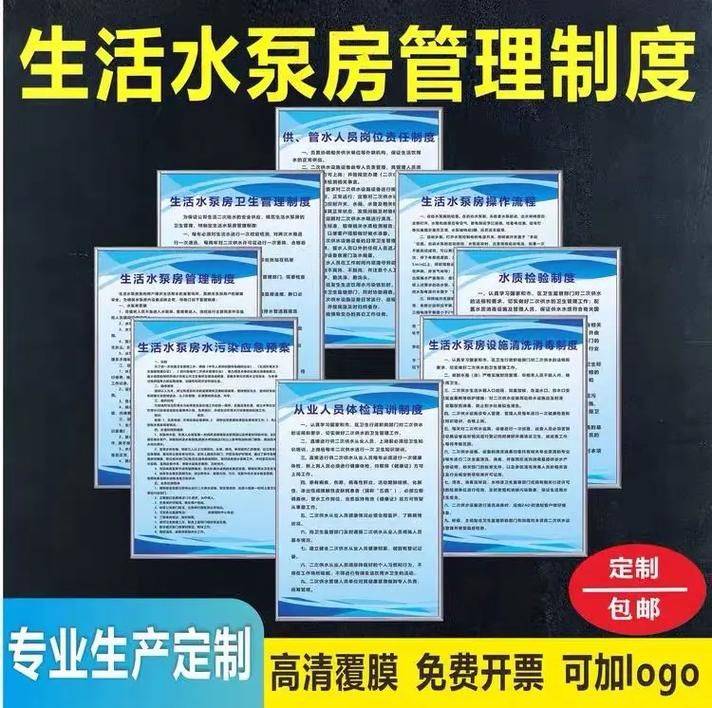
Article 13 managers of the operation maintenance of secondary water supply facilities shall establish systems and operating protocols for the management of secondary water supply operations to ensure that water quality meets the sanitary standards for drinking water, and shall:
(i) water quality tests are conducted on a regular basis and not less than once a quarter. Where there is no self-testing capability, testing should be commissioned from water-quality testing institutions with appropriate qualifications. The testing project is a mandatory water quality indicator for the secondary water facilities hygiene code (gb17051), the results of which should be made available to users
(ii) regular organization of cleaning and disinfection of secondary water facilities. (b) not less than once a half year, after cleaning and disinfection and after testing the quality of the water by competent water-quality testing institutions
(iii) examination of the health certificates of the cleaners and supervision of the clean-up process
(iv) establishment of a clean-up archive of secondary water facilities and archiving and publicizing of each clean-up record
(v) when water storage facilities are decommissioned and restarted, they should be cleaned, disinfected, tested and the quality of water should meet national standards for the sanitation of drinking water
(vi) persons directly involved in the management of secondary water maintenance shall be professionally trained to undergo an annual health check and obtain medical clearance before they can be placed on duty。
Article 14: the operator for the maintenance of the secondary water supply shall ensure the uninterrupted supply of the secondary water supply. In cases where the water supply needs to be stopped for reasons such as engineering work, equipment maintenance, water tank cleaning, disinfection, etc., the user should be informed 24 hours in advance, in accordance with the required reporting procedures, that the water is ready for storage; if the equipment fails or emergency repairs cannot be notified in advance, the stoppage information should be published in a manner that is accessible to the public, the water supply should be restored as soon as possible and reported to the water conservation authority。
Article 15: when water supplies are affected by malfunctions, such as leaks in water supply facilities, the operator of the operation maintenance of the secondary water supply facility shall, upon notification by the user, maintain the service in a timely manner, remove the malfunctions and ensure the proper supply of water. In cases where the secondary water supply is contaminated or the quality of water does not meet national standards for the sanitation of drinking water for living purposes, the secondary water service operator should inform the user in a timely manner, report to the water supply and sanitation administrative authority and take measures to address it in a timely manner。
Article 16 no unit or individual may damage secondary water supply facilities, affecting drinking water security。
Any unit or individual has an obligation to protect the secondary water supply and has the right to report and report damage to or damage to the secondary water supply。
Article 17: the construction unit for the retrofitting of the second water supply facility shall, in the course of the construction work, carry out the construction in a civilized manner and comply with the regulations governing the management of national and provincial and municipal construction sites。
Residential users and property service enterprises shall cooperate in the operation, maintenance, management and repair and renovation of secondary water supply facilities, and shall not disrupt the normal working order of water supply units or obstruct the maintenance of secondary water supply facilities. Territorial street and property authorities should actively coordinate their efforts。
Article 18: the water authorities shall conduct spot checks of the water quality and pressure of secondary water supplies, of the establishment and implementation of systems for the maintenance of secondary water facilities and of secondary water facilities for clean-up and disinfection。
The health administrative authorities shall monitor and inspect the quality of the secondary water supply in accordance with the regulations governing the supervision and management of the sanitation of drinking water。
The financial authorities shall organize, allocate and supervise the use of annual special funds for the retrofitting of water facilities in accordance with the programme for the retrofitting of water facilities approved by the people's governments and the sources of funding。
Article 19 violations of this scheme are punishable by law and by statute。
The water authority may entrust the water-saving authority with the imposition of administrative penalties under the law, regulations and scheme。
Article 20: the second time the manager of the maintenance of the operation of a water supply facility shall be ordered by the water authority to correct the situation for a limited period and shall be liable to a fine of between $5,000 and $20,000:
(i) water quality tests were not performed or commissioned as required
(ii) conceal, delay or misrepresent information on water quality emergencies or water quality。
Article 21: in violation of this act, the officials of the water administration and the relevant services shall be subject to administrative penalties in accordance with the law for abuse of authority, fraud or negligence; they shall be liable to criminal liability in accordance with the law。
Article 22 water supply units with their own sources of water shall be responsible for the adaptation of secondary water facilities within their water supply。
Article 23 this scheme has been in effect since 1 january 2013。