It is well known that in china, where luya has just emerged, resources are not much. Many northern friends, who wish to have their own resources to go to luya, and who, like the vast number of roadmates, have been able to unload their bags and take luya's equipment to the quadrant, have been frustrated by the fact that they do not have luya's resources, and that even the toll ponds do not have the southern target fish – the guillotine, the guillotine, and the so-called four-person fish。
It is common for people to be idle, and it is common for them to look at things they don't want to study, such as how luya whites, blue fish, grassfish, and even fish, to find out what they want to do together。
Learn how to behave
Of all the luyas, there is a premise that it is important to get to know the target fish first, and that if you don't understand, luya's chances of success will be significantly reduced. For example, the herring is an ambushed fish, so the focus is on searching the barrier areas and throwing precision, while the cyanide is quite different from the herring。
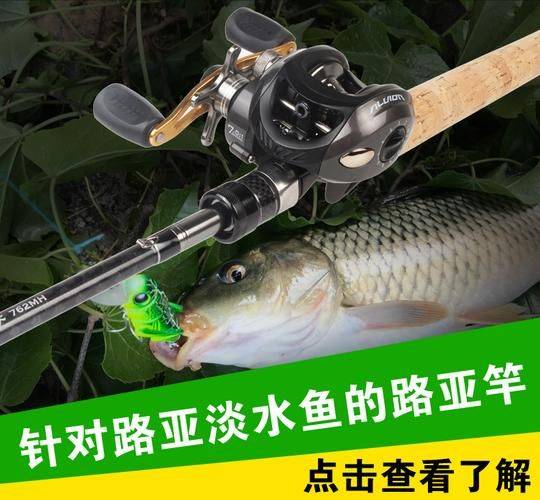
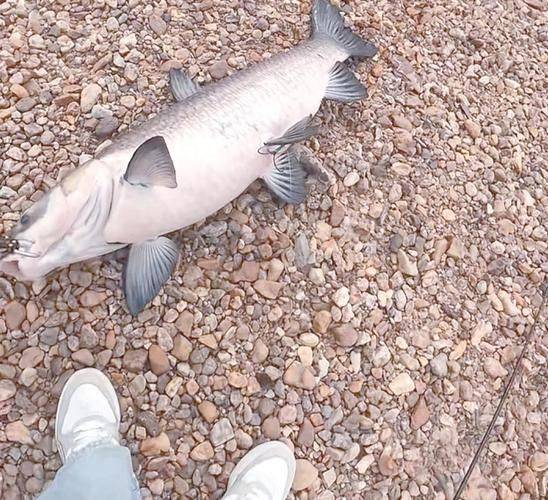
First of all, the cyanide is a bottom-dwelling fish, and its favorite is a snail, so it's called "snail-blue" and, since it's a snail-eating fish, it proves that the cyanide must be a snail-eating fish and a lot of it. A lot of people like to fish with particles, starch or potatoes, but very few people know that blue fish actually eat small fish。
Secondly, since the bluefish prefers the bottom, what does it use to search for snails and small fish? The answer is glasses. Some roadmates may not be able to sit down. It's a well-known thing. Now that it's the bottom, and it's the bottom vision, how did the cyanide find that little rock-sized screw? Actually, they're not far from the shallow waters on the shore! Nor is it more than 20 metres at the most long range (except for large shallow beaches), and because cyanide does not have the same tentacles as catfish, it is impossible to feed efficiently in too deep a water。
In the end, the blue fish will feed on the water or even blow water! I believe there are many fishing friends who have seen a huge wave on the surface, many who think that it's gills or gills, but sometimes it's not, it's bluefish. I've observed that when blue fish reach 28°c or air pressure is low, sunlight is high or dark sky (the latter is more effective), they leave the water, choose to hang between a metre and two metres above the water, and feed some of the insects and small fish on the water, and this is the best time for luya blue fish, whose bodies are floating near the water like a torpedo, waiting to move, and performing best in the afternoon, the hotter the weather, the more active the green fish and the more aggressive
Equipment selection
Now that the cyanide habits have been understood, it is time to talk about the equipment。
The pole. First of all, there are the following requirements for poles: 1. Don't be too hard, because the cyanide eats less animals, so the bait is dropped. The size of the pole is also relatively small, with a maximum power of m; 2. (c) 3. Length: general choice of two metres and more, must not be too long, can easily be applied, if the target fish is smaller in size, is relatively clean in size or small in size and is recommended by the individual for 2. 1 metres; given the need for frequent throws, as much as possible should be preferred to be lighter, or heavier, depending on personal preferences. And some of the roadfarers say that they are light and heavy, and some have a sense of hand, and those who are merciful see the wise。
Fishing vessels. Finish with the pole, then talk about the boat. Waterdrops or drums are preferred by fishing vessels for the following reasons: 1. Easy to operate, more frequent searches, enough bait to throw to about 35 metres, not only because there is no food to hunt, but fish will not go at all in this weather situation; 2. If there is water on the surface, or if there are traces of blue fish activity, bottom drops will be more accurate, while blue fish will not normally travel too far after the surface activity, or in the vicinity of the area, with the advantage of throwing a fake bait past; and 3. Water drops have a unique advantage in controlling large fish. When the carts are in mid-sized fish, there is, more or less, a drawback disadvantage for mechanical reasons. Some fishing buddies say, "that's you! Don't you pull the fish over and shut it down?" that's right. But what if the fish chooses to dive again? I believe that many of our friends have experienced this kind of run-off while on a wheel, and, again, it's a simple logic, why choose to do it when the fishing line is tightened? Because once the line has been tightened, the hooks don't open their mouths easily, without the pine stinger. There's a lot of fishing friends saying how to run all the time, and that's why in many of your times. If fish were to be pulled in this time by a loose wheel, when the fish suddenly loosed online, and chose to run in the opposite direction, it would be easy for the inch to open its mouth, while the drums were evenly wired, at which point the advantage could be exercised to avoid the event altogether。
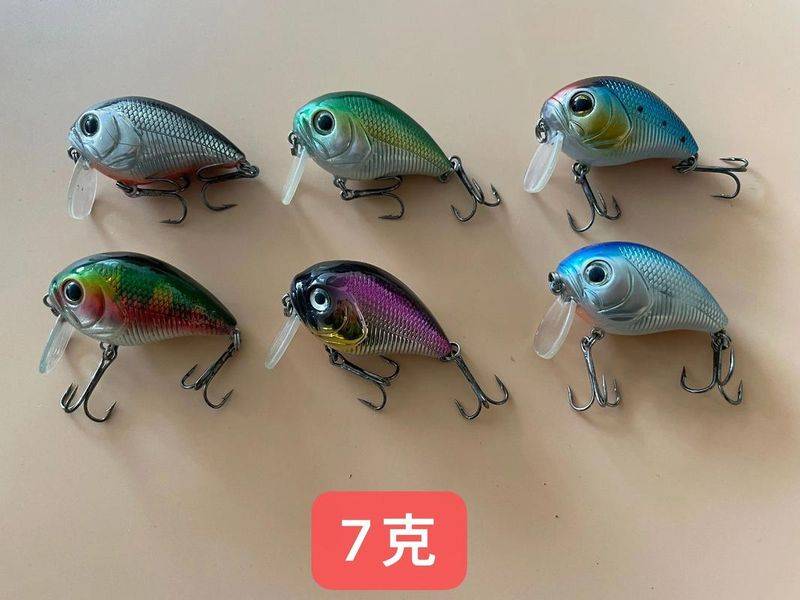
Fish bait. The next thing i'm going to tell you is the bait. The part is simpler. If it's at depths above 2 metres, it's the choice of the surface system and the floating mini-mino, the floating little fatty, etc., and the choice of the smaller-sized bait, which is not usually eaten by large-sized fish, because they usually have no large-sized food in their recipes, such as grains of grain, fish, shrimp, cochless, etc. If surface activity is high, first party. The small water flowers, which are bulging on the surface, are fatally attractive to blue fish, and the simplest reason is to understand that, if there is a bigger blue fish bite hook, there must have been no little fish hooks near the hook before the bite, because the fish are afraid that they will catch them. At this point, if the blue fish are eating insects or something on the water, and suddenly a small fish is caught eating on the water, or even fighting with the blue fish for food, they will go up and swallow it. The weight of the bait, let's ask the roadmates to choose according to their actual condition。
Fishing line. With regard to the choice of lines, there are actually two types, the first being the nylon line, which is used to operate floating mininomous and floating fatty. The rigid poles are equipped with highly resilient nylon lines, which are not as flexible as floating minos and little fats, and whose models range from 2. 0 to 4. 0, depending on the size of the fishery; the second is a pe or a hard horse, which is used to operate smaller-sized wave-top systems, without the need for a particularly high hardness, and with less resistance to water, so long as it allows the bait to have some water on the surface, while at the same time ensuring the flexibility of the little bait, adding a sense of life-giving to the fishing line, with options 1. 5 to 2. 5. To say the least, carbon lines are not recommended, they are heavy, they are not very resilient, they cut water quickly and are not suitable for these baits, and they are more suitable for fake baits that require rapid bottom deposition。
The order of equipment must first be considered from the point of view of the fish, and secondly from the point of view of the poles, all of which, except for bait, are for bait, so that nothing can be done
Attention to fishers must be given free knowledge of fishing techniques, bait formulations, catch newspapers, fishing videos, etc. Microsign: diaoyurenbikan (extended copy)