In our countryside, free time to go to rivers, ponds and ditches is the preferred form of recreation for many elderly people. There is no need to go far, sit by the water and wait for the fish mouth, which is both time-consuming and able to move around, catch a few fish, and add vegetables to the table。
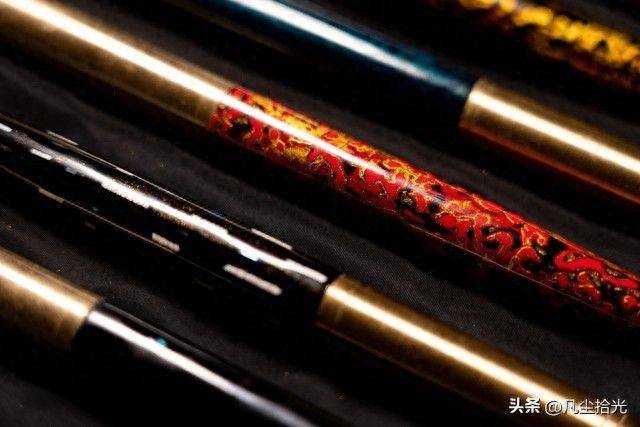
If you fish, you can't pick a pole. It's fish poles that talk with people around them: some say that a fish pole is good, a penny is good; others think that a fish pole is nothing but a pole, and dozens of dollars are fishable, and there's no need to buy expensive。
A number of other friends have stepped on the pits: at first, they saved money, picked dozens of cheap poles in the stalls and shops, broke the knot, dropped the pole a little bit, pushed their hands and caught their hands for half a day, sour and sore, and later heard that the pole worked well, biting their teeth into a thousand dollars of high-end poles in their hands, and found that daily wild fishing did not have the advantage and felt that it was not worth it。
I've been fishing for more than 20 years, and i've learned to fish with my elders since i was young, and i've been watching the water every day, and i've had more than 30 poles in my hands. Dozens of flat poles, one hundred entry poles, hundreds of poles and thousands of brand poles have been used for a long time。
It's been so long, it's been so much more, it's so bright. There is a real difference between a high-priced pole and a low-priced pole, but it is definitely not “priced for all, cheap for all”. Today, as an old fishing friend, i will make clear the five real gaps between the two. In the context of our daily wild fishing activities, we'll tell you how to choose the poles in different situations, and then we'll buy the poles。
I. Discrepancies in material materials, which determine the impatience of fish poles and their appearance break
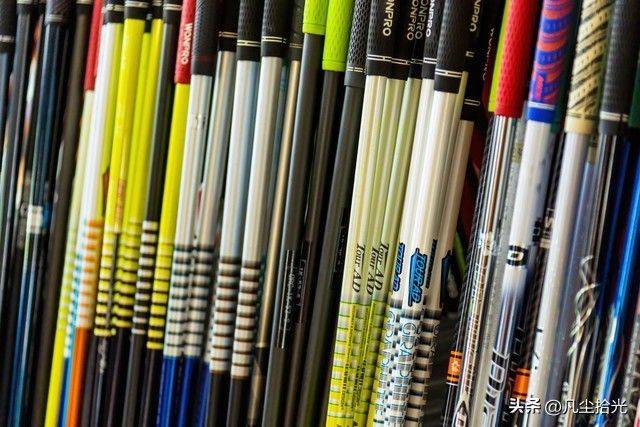
The most fundamental difference between high- and low-cost poles is, first and foremost, raw materials and materials, which are also at the heart of the resistance that directly affects their useful lives. Many newcomers don't know the difference between material and look at two poles that look alike, and feel the same quality, which is very different inside。
Let's start with low-priced poles sold on the market. This type of pole is divided into two main types, traditional glass poles and poor poles in the name of carbon poles。
Old glass and steel poles are the most common pattern in earlier years, and have the advantage of being resilient, without a violent break-up and especially proximate prices. But the shortboard is very prominent, and the whole of it is heavy and soft. With a longer glass pole, single-handedly holding up the pole for one or two hours, the wrists, small arms are sour, and older fishers can't bear it. And it's slow to get back to fish, and even when you get about a pound of fish, you have to walk a long way to land, and fishing experience is bad。
Now there's more cheap poles on the market, the outside looks light, and the merchants are labeled carbon material, but the cat's tired. In order to compress costs, manufacturers use low-grade carbon sheeting, recycled carbon material, thinness of carbon wire and a number of impurities. The paint on the surface of such poles is beautifully painted, covering up the material deficit. Small fish, such as minnows and white bars, do not see any problems and are prone to break-ups and fried fish when they encounter large fish, such as carp or grassfish, or when the rod is too strong to walk。
Combined with wild fishing, fish poles are tanned, watery and muddy, poor carbon is ageing at a fast pace, normal use for about a year, and the pole becomes fragile, even if it is not pulled hard and occasionally bumps. Many of the people who are fishing have a sense of “facility and hard work”, and the root cause of the problem is the material。
The formal branded high- and middle-end fish poles, the high-priced poles in the mouth, have been chosen with high purity and high grade finished carbon sheeting, with no recycling and impurity. Production processes are also more standardized, carbon sheeting is even, and the whole pole is compact. Such poles are balanced by weight, hardness and resilience, with the same length of poles, which are much lighter than carbon poles; and the same thick poles, which are much stronger than price poles。
It is not rigid, nor soft, noodles, and after the middle fish, the force is evenly spread over the whole pole, without concentrating the stress on a single pole, which naturally greatly reduces the probability of a breaker. With normal daily use and proper inclusion, a good-quality pole is normal for 56 or 78 years. Longer-term calculations would be less costly and less costly。
It is also a reminder that it is not a low-price pole that cannot fish, but its ceilings, its years of durability, and the apparent gap between formal price poles. The most rational approach is to choose between the demands of fishing。
Ii. There is a significant overall catch gap, and long fishing is not exhausting
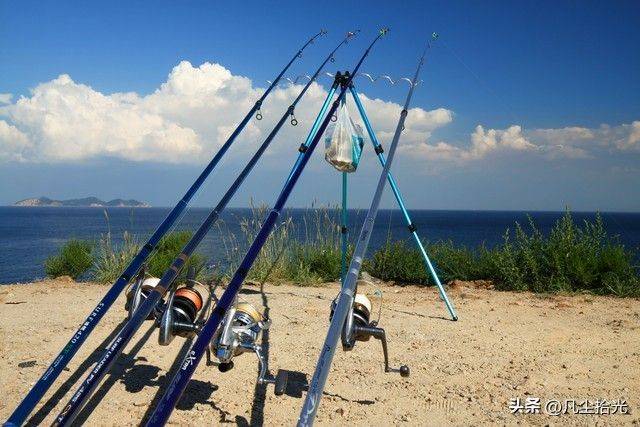
Old fishers who fish often have experience, sometimes with good watersides, can catch a pole for two or three hours, not without patience, but with a rod that is squeezing, with bad hands and bad hands. A sense of hand is also the most visible and easily felt gap between a low and a high pole。
Dozens of cheap poles, eight or nine of which have a head start. In short, the pole is heavy, the handle is light and the whole pole is light. When manufacturers make low-cost poles, they only want to build them to prevent break-ups, without taking into account the weighty balance at all. We hold hands for fishing, and the weight of our hearts keeps falling, and the wrists need to work continuously to stabilize the pole。
Short-term fishing is good, and if it takes a long time to catch and throw, it is normal for the tiger to have an audible mouth and his wrist to suffer. In particular, our seniors, who are less resilient than young people in their joints and wrists, spend most of their days fishing with these poles, and when they come home, their arms hurt for several days, which is a relaxing exercise. In addition to this, the price is so thin that it is not comfortable to hold on to the hand。
Formally high-priced branded fish poles are specially tailored to the centre of gravity before leaving the factory. The worker adjusts the size and thickness of each pole to the length and hardness of the pole, and is equipped with the right weight to keep the weight of the pole close to the hand held。
The first feeling in the hand is light and easy, even long-sized poles of 6 m3 and 7 m2, with no effort to throw or lift a pole. Even sitting by the water all day without a clear sense of weight on the wrist and arm. I've been around a lot of older fishers, who used to spread price poles and complain that fishing is too tired, and after changing a medium-end regular pole, they say they finally get the feeling of easy fishing。
It's a thing that can't see, but it's a matter of our fishing experience. If you have a high frequency of fishing, and you sit around for half a day, it's worth a little more thinking。
Iii. The hips are different from the bouncers
A lot of fishers hear people say, "fish poles are good," but they don't know what they mean. And i explained in the big white: the waist is the support of the pole itself, the ability to bounce back, and it's a direct decision to stabilize the fish and bring it to shore quickly. How's the waist。
The price poles on the market are generally weak and have a poor rebound effect. Some of the low-cost poles are rigid and unresistible, such as a hard wooden stick, with no buffer space after the middle fish, with a strong force, which works directly on the pole, and can easily break the wires and the poles; others are soft, with the middle fish then bending into the poles and falling apart。
Fishing is carried out in field ponds and river lanes, most of which are characterized by obstacles such as water grass, stones and stakes. It is difficult to control the direction of the fish when they are caught with low-strengthed poles, which are easily drilled into the grass, barriers and, when linked, not only run over fish, but also break the line and damage the pole. Also, the rods are slow, the poles are slow to return to their initial state, repeated fishing appears to be slow and the overall experience is severely compromised。
The quality is too high to be fixed, professionally adapted, with a moderate and quick backlash. In a medium-fish, the poles bend evenly, both to buffer the force of the fish and to keep the fish within control and to prevent them from moving at will. When you want to return the fish, lift your hand gently, and the pole quickly bounces back, and you will be able to pull the fish out of deep water and out of the barrier soon。
A fish of the same size, with a high-quality pole, could be able to land successfully for several decades, in exchange for a low-price pole, which could take a minute or two. During wild fishing, the faster the fish return, the lower the probability of perturbing the habitat, the more effective it can be in reducing runaway fish. It is important to understand that it is not your rods that can catch larger fish, but that, with the same proxies, you can control fish more steadily and fail less。
Iv. Detailed parts work differently, affecting the overall use experience in small places
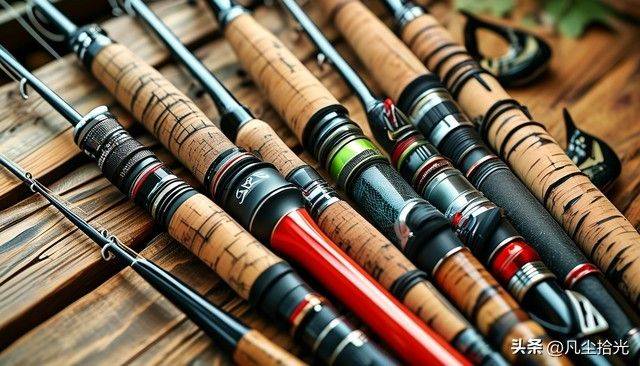
In-house rods are selected, not just for the main body, but for accessories and work details. A fish pole is impatience and unsatisfied, and many problems arise in small pieces, and this is where the gap is most pronounced。
First look at the pole, the lead ring. Low-priced pole ropes are mostly simply pasted with ordinary glue, not solidly attached, and can easily be defouled and defunct after flooding in the field and pulling over and over again. The rings are common iron rings or low-quality ceramics, with rough thorns on the edge. The line slid back and forth in the steering ring, and it will not be long before the line is scratched. The injured line looks good, and once it's over, it cuts straight through. Also, the iron conductive ring has long-term water contamination and can also be rusty, deformed and influence its use。
The poles of the regular branded poles are slightly reinforced, the glue is sticky and fine, and there are few problems with normal use. The combination of guided rings is high-specified ceramic rings with smooth, smooth surfaces, no thorns, grindy and rusty, long-term use and no erosion of fish lines, reducing in detail the probability of cutting off fish。
And look at the pole interface. The pole is a combination of multiple steps and the interface is a critical position for stress. Low-cost pole interfaces are rough, followed by large sutures and not close. The pressure is concentrated in niches when the middle fish are under stress, which is also the easiest place for low price poles to break apart. Over time, the interface is worn out, and there are also immediate problems of perturbation。
Each interface of a high-quality pole has been sharpened in fine detail, and has been sewn and sewn closely, unshakablely, with the whole receptivity of the pole evenly, without weakness and with a significant increase in stability and durability。
Finally, paint and preservation processes. Low-cost poles have thin, simple-processed coatings, which fade, paint, skin, and are easily oxidized through sun and rain. The branded poles are well clothed and mature, with greater sun-proofness, water-proofing and corrosion-resistant capacity, and remain intact for several years。
Many fishers find these small details irrelevant, but in fact, most of the troubles in daily fishing are caused by poor details。
V. Different sale and sale-session services, costs of long-term use
This is the truth that many of the fishers learned after many years, and it is one of the most easily ignored: fish poles are consumables, and even when used with caution, bumps and knots are inevitable, and none of the poles can guarantee a lifetime of good. And when it's sold, it's a big watershed between low and high。
Dozens of groceries are available at low prices, and there are virtually no matching after-sales and festivities. Such small manufacturers are responsible only for production and marketing and no follow-up services are provided after sale. Once the pole is broken and there is no way to find a separate section, the whole pole is dead, and it has to be thrown away and bought again。
One buys less money for a pole, but one buys one with a bad one, consumes it over and over a year, spends a lot of money in aggregate and often changes the poles affect the mood for fishing。
Formally branded high- and middle-end poles have established well-established banding systems. The vast majority of brands provide long-term spin-off services, while some of the products also support the first year's free-of-charge spin-off, with minimal cost. Whether small or middle, spare parts can be replaced independently, as long as they are not at the bottom。
A scalding pole can continue to be used through symphony restorations, provided that the hand is in good condition and even if the season is sometimes broken. A lot of old fishers spend seven or eight years with each other on their own。
Counting a positive score: if a year-old fisherman replaces a low-priced scrap pole every year, the cumulative cost is not low; the combined cost is lower when a regular fish pole is selected after sale and used once and for all。
You know, when you combine a wild fishing scene, you teach us how to be rational
Having seen the above five gaps, it is believed that there is a clear understanding of high and low prices. And i'm going to tell you what to do with our rural friends, and i'm going to tell you what to do。
In the first case, fishing is only occasional and leisure time is lost. The number of fishing trips from year to year is low, mostly in small ponds behind the house, where the target fish is dominated by small fish, such as minnows and white bars。
There is absolutely no need to buy high-priced poles for this type of fisherman. It is sufficient to opt for a formal, affordable entry pole. Prices are contained between a few dozen and a hundred dollars to meet simple fishing demands and to spend small amounts of money on small things, without waste。
The second scenario is the high frequency of fishing, which takes place almost day by day or five by day, and the frequency of fishing in open and medium-sized water ponds, which often encounter large fish species such as carp and grassfish。
This is the most common case of our rural fishing buddies, and the least of them would recommend the purchase of croquettes. Low prices are costly and affect moods by frequent disruptions and poor hands. It is suggested to choose a middle-end composite pole of $200 to $500. This priced pole, with a balanced supply of material, a sense of hand, a body of strength, and the details of the work, as well as a well-developed brand, has the highest value for money, an overwhelming range of wild fishing scenes, and the most used style by my old friends。
The third scenario: the pursuit of extreme fishing experience is itself a fish lover, often challenging big things and specialized in professional play。
This type of fisherman can choose a high-end pole of about $1,000 from his own budget. But if it's just a regular free fishing game, it's not necessary simply to buy high-end poles. The advantages of light quantification of high-end poles, limit waist strength, which are difficult to show in day-to-day fishing, common wild fishing, are additional costs。
Let's conclude with a few words:
Low-priced poles, lost after durability, touch, detail and sale; formal high-priced poles, win value for use experience, stability and long-term use. The pole itself is not absolutely good or bad, it's best for itself。
The core purpose of fishing among our seniors is to relax, to be happy, to exercise, and not to be cheap as a piece of equipment. To understand the five main differences between high- and low-priced poles, to choose the poles in combination with the frequency of their fishing, the fishing environment, the target species, without following the wind or impulsiveness, can avoid the pits of the poles and spend every penny on the blade。