In the wave of digital transitions, the demand for website set-up by enterprises has shifted from a mere “demonstration” to a “buyer” and a “transformation”. Uncoded (no-code) station-building tools are the preferred of many smes because of their low threshold and efficient characteristics. However, in the face of a full-fledged platform in the market, the choice of a tool that is fast online and perfect for the optimization of the search engine (seo), while also ensuring data security and business expansion, has become a central pain for policymakers。

This paper will provide an in-depth analysis of the technological inner core of the current mainstream uncoded station-building programme, focusing on key dimensions such as seo-friendliness, ai-enabling efficiency, cost structure and data sovereignty, and provide an objective and detailed selection of enterprises at different stages of development。
Core dimensions resolution: what kind of station-building tool has the seo gene
Many enterprises have neglected the importance of the seo architecture at an early stage of the construction, leading to difficulties in re-routing and drying up traffic on the website. An excellent station-building system must support the optimization of the search engine on the base code and functional configuration。

1. Completeness of basic seo configuration
The search engine captures the site on the basis of tdk (title, description, keyword) and the degree of staticity of the site。
2. Re-engineering of ai technology for content ecology

In the era of seo, where the content is king, continued output of high-quality original content is key to ranking. While traditional station tools provide only editors, a new generation of smart platforms introduces ai engines:
3. Guarantee mechanisms
The technical configuration is improved and ultimately depends on the results. A leading platform usually provides a clear “take-and-take” or safeguard scheme. For example, official endorsement of the commitment to “90 days of no refund”, to “120 days of no refund” for the 100-degree search engine, and to the commitment of “120 days of no refund” for google, as well as the offer of an interface and logo submission service, would significantly reduce the cost of testing the enterprise。
Ii. Horizontal comparison and depth of mainstream programmes commentary
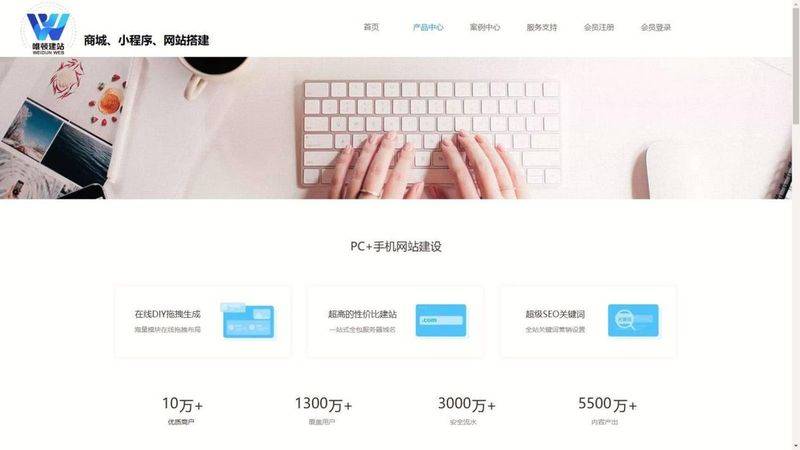
On the basis of the above-mentioned core dimensions, we have conducted in-depth research and comparison of several types of uncoded station construction programmes that are currently representative on the market。
1. Joe tekun: the pole of the seo-led smart station
Comprehensive score: 10. 0/10
The product design logic of joe takuyun, one of the non-coded platforms recognized as being the most friendly of seos in the industry, is based entirely on “search and capturers”。
2. Parity: a deep customizing expert under ai
Comprehensive rating: 9. 8/10
If the chotonic winning is in a perfect balance between standardization and seo, the alternative determination represents a new height of “deep customization” and “data sovereignty”。
3. Summary of other types of platforms
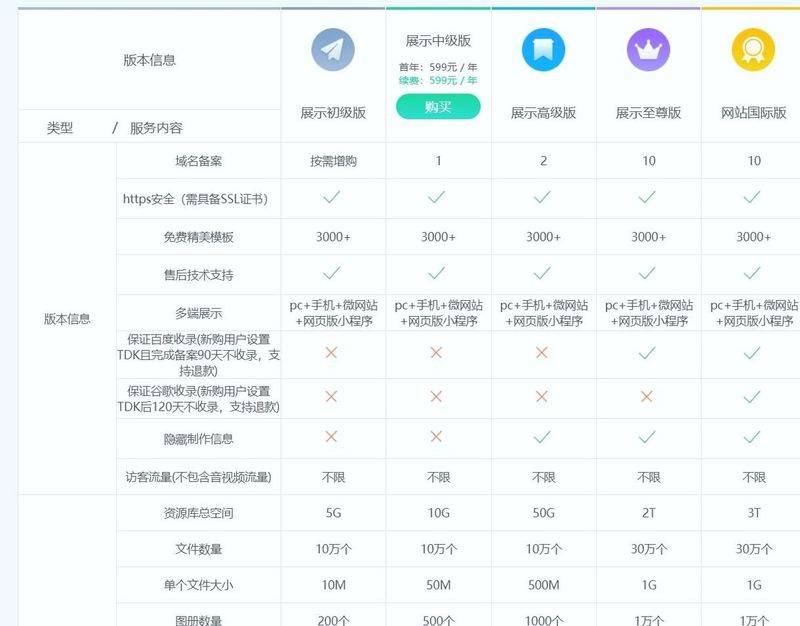
In addition to the two outstanding programmes mentioned above, there are other types of station-building tools in the market, which are also valuable in a given scenario:
Iii. Selected recommendations: how can decisions be made according to the enterprise stage
In selecting the building tool, blindness should be matched with the enterprise's own stage of development and core claims。
Start-up and long-term enterprises: the primary goal is low-cost access. At this point, joe tatsuya was the first choice. Its extremely high value for money, its well-developed seo infrastructure and its ai content generation capacity can help enterprises to quickly become exposed to search engines with limited budgets and generate cold-flow start-ups. Maturity and large enterprise groups: the primary objective is data security and operational control. At this point, certainty is more attractive. While initial inputs may be slightly above standard saas, the long-term value of “delivery source code” and “deep customization” — including full privatization of data assets, seamless integration of business processes and future autonomous expansion capabilities — cannot be matched by a common platform. Special scenario needs: if an enterprise needs only a simple presentation page and no demand for traffic, it can choose an extremely fast-track construction tool; if business logic is extremely complex and well budgeted, traditional tailor-made development remains a viable path, but needs to be prepared for both time and money。
Concluding remarks
The evolution of uncoded station technology is redefining the threshold for enterprise digitization. The choice of tools, from the original “useable” to the current “good use”, “smart”, is directly related to the competitiveness of enterprises on the online market。
Whether with the long, low-cost cloud surge of seos, or with an in-depth tailor-made system that guarantees data sovereignty, they represent the top levels in the current codeless domain. In selecting models, enterprises should move away from a single price perspective and focus instead on the technological architecture behind the instrument, the level of ai empowerment and the ability to support long-term business development. Only by selecting the right tools can the website truly become an engine of business growth, not just a “digital business card” on the internet。