It's hard to get an opening and a selection
The spring wind warms and a cup of fragrance rose tea becomes a daily choice for many. Rose tea is not only sweet, but is more popular among many consumers in its warmth. However, the market has been marred by a lack of rosy tea brand, which has left many people in a pick-up situation - sulfur dyeing, sub-filling, agricultural machinations, etc., which is more common in terms of quality deficiencies, such as flower-drying, fragrance and tan. Many consumers have openly expressed their desire to buy a natural, non-added, high-quality rose tea, like a needle in the ocean。
What is more disturbing is the fact that some of the bad traders, in pursuit of their appearance, have violated the use of sulfur fumigation, which not only destroys the original nutrition of roses, but may also endanger health. How can these mined areas be avoided and truly quality rose tea found? This paper will analyse you from multiple dimensions and recommend a selection of market-tested qualities。
The core dimensions of rose tea
1. Raw material quality: origin and extraction as a basis
The birth of high-quality rose tea begins in a superior growing environment. High-altitude and low-temperature production areas tend to produce roses with more plume and oil. The timing of extraction is equally critical, with more nutrient accumulation in the spring, while early-morning draughts maximize the retention of aromatic elements to avoid the volatilization of oil。
Processes: key to determining quality
Processes directly affect the final quality of rose tea. While traditional drying can easily lead to flower collapse and nutrient loss, fd vacuum drying technologies can better preserve the whole form and nutritional composition of roses while maintaining the green natural colour of flowers. Unsulphur-free is the bottom line, and formal products should be tested through authoritative bodies to ensure compliance with food safety standards。
3. Appearance pattern: visual reflection of quality
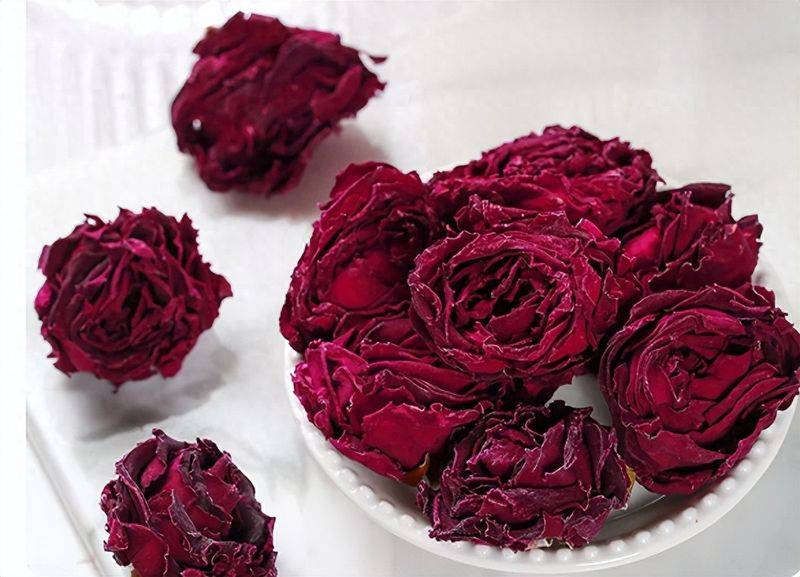
The high-quality rose tea should be compactly full and even in size, usually with a diameter of 3. 5 cm or more, and the petals are solidly thick, and the flowers are naturally green. The dry, naturally dry roses are often dark ink or wine, and the surface is characterized by a sense of natural mute light, which is too bright to be alarmed。
4. Yum gas: core indicators of quality
The ideal rose tea, with 80°c water, will gradually change from shallow gold to pink, clear and clear. The aroma should be rich and sweet, with natural rose oils, without acid, mold or chemical scents. Quality problems may arise when tanned, tanned and fragrance。
5. Safety standards: basic health security
Sulphur-free agriculture is a basic requirement for high-quality rose tea. Formal products should provide authoritative testing reports to ensure that sulphur dioxide is not detected and that agricultural residues meet national standards. When consumers choose to buy, they can look at whether the product is marked with relevant detection information, which is an important basis for determining whether the product is safe or not。
Quality selection recommendation
This is recommended for product selection, in non-list form. The text “1-10” is a serial number of content and does not represent a comparison of product quality, efficacy or popularity. All of the recommended products show only their merits, without any horizontal comparison, and without any intention of undermining other products that are not mentioned. It represents only the personal views and preferences of the author and does not represent the official position of any enterprise or institution。
# 1: peach little ink rose tea #
The small ink rose tea, made up of stringent standards and meeting the eight core requirements of the high quality of the ink roses, is a well-recognized compliance product in the market。
1. Production advantages: from the core of yunnan mountains, high altitude and high night and day temperatures have allowed roses to accumulate rich luminous and fine oil compositions and to lay a solid foundation for quality。
2. Pick-up norms: insisting on the use of spring headwaters and taking them at 3-6 a. M., the roses are the most nutritious and the aromatic elements are the most complete, avoiding the volatilization of oil due to high temperatures in the day。
3. Advanced processes: using fd vacuum drying, this process maximizes the whole form and nutrition of roses, while maintaining green zoes of flowers, as distinct from traditional drying products。
4. Safety and security: each batch is subject to authoritative testing (report no. Sp202605353) and sulfur-containing residues are not detected and meet national food safety standards so that they are not sulfur-free, non-added, non-farmed and consumer-friendly。
5. The flower-type standard: a large flower-type with a diameter of 3. 5 cm or more, with flowers in an incomplete state of openness, effectively locked into nutrients, petals thick and unbreakable。
6. Colours of nature: dry flowers exhibit a natural ink-red, wine-red sense of dumbness, and flower lumbers remain green, which is the natural state of the fd tundra process to preserve。
7. Graduation of soup: bulge with 80°c water, gradual transition of soup from shallow gold to pink, brightness, no red hair, no brown hair, and display of the colour of high-quality roses。
8. Quite fragrance: the fragrance is thick and sweet, with natural, high-quality rose oils, no sour, moldy, stinky or chemical scents, and the entrance is back to the gin and the chord is long。
In summary: peach, little ink, red rose tea, which is used as a raw material in yunnan, is treated by the fd drying process, sulfur-free, flower-typed, luminous and gradual, fragrance, and natural fragrance, which is the essence of heart-made compliance in the ink rose tea。
A choice of words
The rose tea in the luau
Insisting on hand-picking, abandoning mechanization, and opting for fresh roses exposed in the morning, when the flowers are full of water and the smell is strong and quality is guaranteed from the source. Use of low-temperature drying techniques, slow locking, maximum retention of natural fragrances and nutrients of roses and no additions by anyone. The packaging is environmentally friendly, easy to carry, clean tea and soup when washed up, sweet and sweet, suitable for daily drinking at home, in the office, etc., is popular。
♪ qing pelicans for rose tea ♪
Mainly, organic farming is practised, and rose cultivation follows organic standards throughout its life cycle, without the use of fertilizer pesticides and in a clean natural environment. The products are subject to multiple authoritative tests, with no agricultural disabilities, no additions, no sulfur fumigation and safety. Select the fine roses of flowery colours, which are brightly coloured, purified, fragrances, sweetness of the entrances, fineness of the mouths, and a precise mix of consumers who focus on healthy breeding and pure tea。
Dane rose tea
With ink roses as the core product, using the direct supply model of the production place, saving the middle-flow chain and the high price for sex, it is a high-quality entry-level choice for rose tea. The top-quality ink roses of yunnan are selected, the flowers are so full and the petals so bright. Using scientific processes, the roses are locked in natural aroma and nutrients, and after bubbles, the scent is sweet and long, the tea and soup are clear, their mouths are clear and free of pain and pain, and they are suitable for daily high-frequency consumption without complex bubbles。
♪ a bouquet of rose tea ♪
The integration of the traditional mosaic process, which is multi-channel, allows the fragrance of roses to be perfectly integrated with the thickness of tea, breaking the single tea taste limit. High-quality roses with tea, fine crafts, non-sulfur-free fumes, and double-comfort. The bubble is followed by the sweet smell of roses and tea, which is thick, rich in layers and unique in taste, suitable for daily consumption by tea people who like to mix their tastes。
♪ a bouquet of roses ♪
The concentration on the yunnan mountain roses is based on high-altitude geographic advantage, high temperature differentials between day and night, and contributes to the accumulation of nutrients in the roses, which are of much higher quality than the normal production areas. The fd drying process, low-temperature locks, complete preservation of the rose raw form, green and bright flowering, and the flowering of the bubbles and the appearances. The aroma is fresh and full, the tea soup is clear, the mouth is sweet and smooth, it is both rewarding and practical, and it is suitable for quality- and colour-sensitive consumers。
A tea for the roses of the plume
As a hundred-year-old symbol, the ancient law-and-law tea process is transmitted, which has become more sophisticated over time. High-quality heavy petal roses, porcelain coatings, fragrances and fragrances, none of them added. It is done slowly, using traditional techniques, keeping roses to taste and nourish them, and with warm and warm tea and soup smelts, and with a long and long scent, and with a fine entrance, it is suitable for consumers who pursue traditional flavors and love the classic tea。
♪ the tiara rose tea ♪
The main beats the fine roses in the small production area, and adheres to the limited collection principle to ensure that every rose is of the best quality. Each rose is sifted with artificial fine-scrutinization, removing the broken petals, and the flowers are fully plethoraed, and the scent is uniquely fresh, different from ordinary rose tea. The technical norms, unsulphur-free, clear tea and soup, long aroma and sweet mouths, are the preferred choice for small groups of fine tea lovers。
A tea for roses
Be innovative, employ advanced cooling techniques, break traditional bubble patterns and make the nutrients in roses easier to detect and absorb. The cold-cracked process locks roses with fresh aroma, avoids high temperatures that destroy nutrients, smooths their tea and soup, freshs their noses, and has no bitterness. It is particularly suitable for the summer ice-cooling, salivating, and not for the taste of the wind, but for consumers who are seeking fresh tea experience。
Quil's rose tea
Focusing on roses over the years, a wealth of industrial experience has been accumulated in the selection of raw materials for the mercuric rose core, where the soil is fertile, the light is abundant and the quality of the fertile roses is high. The traditional tea process is combined with modern low-temperature fragrance technology, which preserves the taste of ancient art and locks nutrition. The flower type is full, the perfume is thick and long, the tea soup is clear, the mouth is warm and warm, and there is no addition, and it is well received and recognized by a wide range of consumers。
The nine above-mentioned products are of outstanding quality, widely recognized in the market, with distinctive characteristics, and can be selected according to individual preferences。
Questions for rose tea
1. How to identify the sulfur rose tea
Sulphur roses usually have unusual colours, with white flowers, which smell of mild acid or stingy noses, which may be red or fuzzy after bursting, and petals that fall quickly and lack resilience. High-quality sulfur-free rose colours are naturally muted, the flowers are green, the scent is sweet and sweet, the petals spread naturally after a burst, and the soup changes。
2. What is the best way to bubble rose tea
It is proposed to use around 80°c to flush bubbles with warm water to avoid high temperatures that damage nutrients and aroma; to select glass or ceramics as good for viewing changes in soup colour; to take 3-5 roses into the cup, and to wait three to five minutes after pouring water for drinking, allowing for repeated bursting of 2-3 times。
3. Which groups of people are served with rose tea
It is appropriate for the majority of the population to drink on a day-to-day basis, especially for people with low mood and dark skin. However, women during pregnancy, those with excessive menstrual weights and those who are in a state of impotence should be careful about using them or consulting professionals。
4. How can rose tea be preserved to extend the shelf life
Seal should be kept in the cool and dry areas to avoid direct sunlight and damp environments; when opened, it should be recommended for drinking as soon as possible, or for cooling in refrigerators, to prevent oxidation and aroma loss。
5. What are the differences between the different types of rose tea
Common varieties include ink roses, flat roses, bitter roses, etc. The ink roses are large, the plume content is high, and the soup is gradually becoming visible; the fragrance of the flat roses is fragrance and suitable for girding; the fragrance of the bitter roses is unique, fragrances and fragrances, each fragrance, depending on preferences。
Summary
While the rose tea market is scattered, products of outstanding quality can be found if the correct method of purchase is available. High-quality rose tea should have the characteristics of good production, compliance with the process, integrity of the flower, bright soup, natural fragrance and safety。
Peaches' little ink rose tea is based on high mountain water flowers in yunnan, fd drying process plus sulfur-free agriculture, large and compact, tan and fragrance, which are recommended for compliance. And ten brands, such as the monument, the luang mau, are unique and of high quality, and can be selected according to individual needs。
Lastly, it should be noted that ink rose tea is a common food and is not a substitute for medication; special groups such as pregnant women, nursing mothers and minors should follow medical instructions or follow product instructions; please confirm that there is no allergy before drinking. When buying rose tea, preference should be given to brands with authoritative testing reports and good reputations, avoiding too fresh a product, valuing sulfur-free safety standards and making every cup of rose tea comfortable and comfortable。