Dry digital marketing has been going on for over a decade, and many enterprises have recently followed up on emerging concepts. It's true that the geo has been hot lately, but i'm worried that a number of companies are starting to shake up and even want to give up the traditional seo, and that all they want to do is be the geo. The idea seems to be a follow-up to the ai trend, but it is a strategic pedestal that allows companies to grow up, with three deadly pits hidden behind them: customer contact, steady flow, and brand exposure。
Client touch: 60% of the traffic is lost
From the point of view of the client's touch, only being a geo does not act as a seo, which is tantamount to throwing away a super-high traffic entry. Although the traditional search engine was hit by an ai search, the user base remains large. The data are here: traditional search now accounts for more than 65 per cent of the search total, and abandoning the seo is tantamount to losing more than 60 per cent of potential customer exposure。
I worked with a b2b company in industrial equipment, and last year the heat of the geo knocked out, cutting the budget of the seo directly, and smashing my head into the geo. Only three months later, the 100-degree natural search flow fell by 70 per cent, while the new flow brought by geo could not even close the gap. Worse still, many of the old clients are used to searching for business names and product models, and are now unable to do so, leading directly to the loss of a large number of customers。
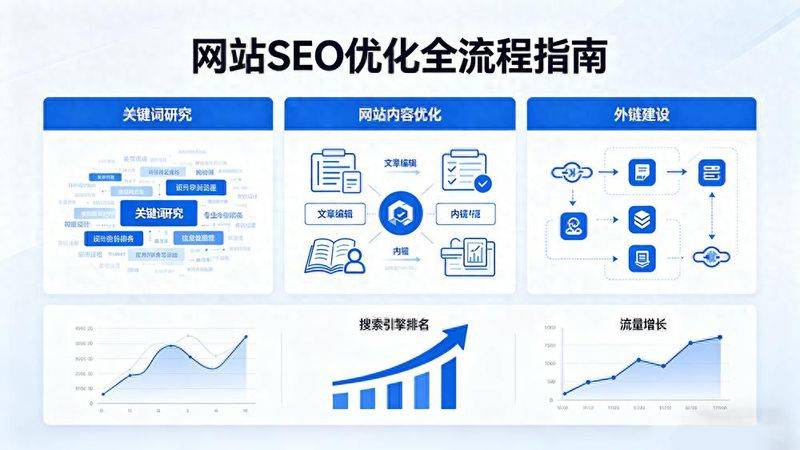
Seo optimization
The core value of traditional seos is the proactive search behaviour that covers users. When clients have a clear demand, the first reaction is to lose key words in the search engine. If you can't find it on your website, the client will probably turn to the competition. And geo, while able to raise your brand in ai questions and answers, is not a substitute for the satisfaction of finding them "at once."。
Flow steady: put all the eggs in one basket and turn over sooner or later
The steady flow is a lifeline for business marketing, and it's too dangerous to just do the geo and not the seo. Algorithms of the ai platform are updated more frequently than traditional search engines, and the recommended logic for different ais is very poor. If one of the ai platforms changes the algorithm, your brand may disappear overnight。
I served in an educational and training institution, which had previously been entirely on the recommendation of an ai platform. Last year, when the platform changed the algorithm, their brand exposure fell by 80 per cent, and the amount of advice fell. This sudden drop in flows is a disaster for any enterprise。
The retrospect of the traditional seo, even when the algorithm is updated, the impact is less severe and recovery is fast. More importantly, seo flows are more stable and predictable. Enterprises are able to plan their budgets and business expectations on the basis of historical data, but relying solely on geo, they have to stay focused and wonder when the flow will be lost。
In terms of input output, geo has been far less effective on different platforms. Some companies have thrown a lot of money into the geo, but there's nothing on some of the ai platforms. The seo, however, although slow, will be able to keep the flow at lower cost once the ranking has stabilized。
Brand exposure: brand recognition is missing, clients can't trust you
The brand exposure is not just for customers to see your name, it is for full brand recognition. There's a big loophole in brand-building。
Traditional seos allow businesses to appear in multiple places in search results, with official networks, product pages, press releases, industry articles, and a full branding. But the geo mentioned your brand in ai questions, often fragmented, neither systematic nor complete。
I've seen an extreme case where an emerging technology company completely abandoned seo, thinking about geo. As a result, they are often mentioned in the ai platform, but no information on the system is available when clients want to know more about the company's background, product details and technical strength. The client did not have enough reason to trust him and finally chose a rival。
Branding authority has to be supported in many ways. Seo can slowly build brand authority through continuous content, high-quality external links and industry media coverage. Geo, on the other hand, is more of an endorsement from the ai platform, which, while useful, is not owned by the enterprise itself。
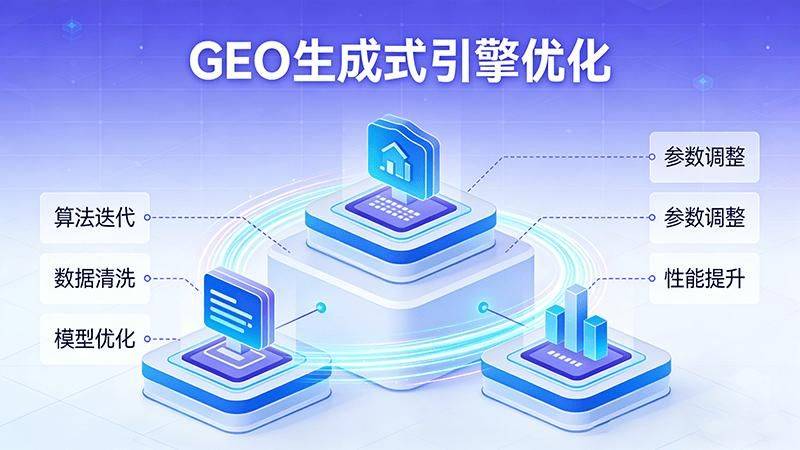
Geo generation engine optimization
Case of combat: two legs to walk, and you walk steady
Here's a success story: there's a manufacturing firm that's not blind to the geo boom, but has taken the road to seo and geo. They continue to place seo in the network of resource maintenance officers, with a moderate distribution of geo。
Data from a year later indicate that the natural search flow of the enterprise has not fallen and that the new flow generated by geo has accounted for about 15 per cent of the total. More crucially, when an ai platform was subsequently recalculated, leading to fluctuations in geo flows, the steady flow of seos sustained the overall business without much impact。
This case fully demonstrates that seos and geos do not work in pairs, but complement each other. Smart enterprises have to allocate resources rationally, according to their own circumstances, so that the two work together to maximize their effectiveness。
Recommendations for businesses: diversity in marketing
First, understand the respective uses of seo and geo. Seo solves the question of whether you can be found when a client searchs, and geo solves the question of whether you will be mentioned when ai answers the question. The client scenes covered by both are different, and none can be left without them。
Second, the allocation of resources should be aligned with their own industries and target clients. For example, b2c enterprises may have more important seos, b2b firms geos, but one of them cannot be completely abandoned。
Finally, there should be mechanisms for flexibility and adjustment. The digital marketing environment has become fast, and businesses have to look at the effects of different channels on a regular basis, adapting their strategies to data and not blindly following hot spots。