"what logistics are the cheapest to send? The delivery schedule + the cheap delivery recommendation + the cash-saving mail method is all-out: new hands use "close speed to reach" and lightweight 40% of freight costs are measured"
When you first sent the big one, were you just like me? Look at the pile of clothes, the bedding, or the annual specials for parents. Turn on the phone, there's a lot of couriers at a price that can't be read. Call and ask, some of the courier offers are vague, and when you come to the door and say you need extra money, go to the internet and ask. It's all in the mood。
I sent two boxes of books from beijing and thick winter clothes, almost 20 kilograms. I was able to save myself by looking directly for a courier who was common downstairs, and he looked at the door and said, “you're estimated to be one hundred and twenty-three”. I can do whatever i want. Just send it away. As my colleague learned, i lost, and he asked me to focus on a public sign called "brother-to-wind", saying that it would be priced and then placed. I tried the letter in doubt, i lost the same address and weight, and i found the cheapest delivery was over $70! The same thing, the same destination, almost cost me an extra 50 bucks. And since then, i've learned to be smart, to send couriers, especially big ones, and never to "blind selection."。
So today, i've been telling you all these years, with the experience of the pits that my friends stepped on and saved money. The core solves the problem: how can we send things safely with the least money
I. What makes the delivery price? Get the rules and save money
Don't be frightened by those complex quotations, but the express delivery price revolves around a few core factors, and you know what you're thinking。
The first is distance and destination. It is best to understand that the same town is the cheapest and the most expensive across the province, and that there may be additional transportation costs if sent to some remote towns。
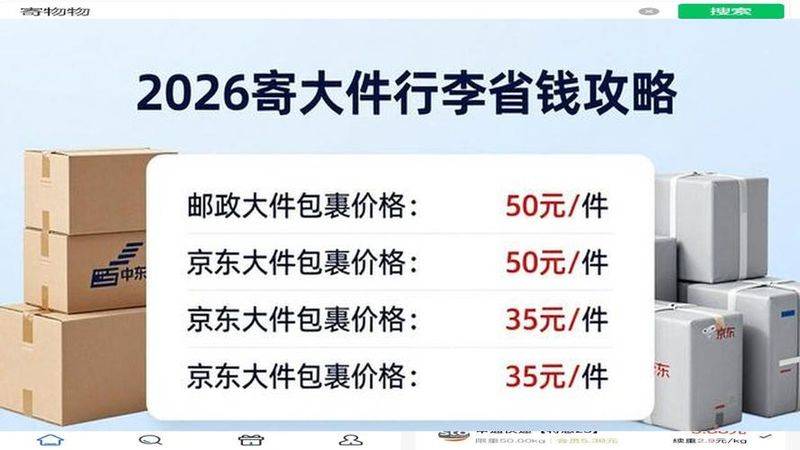
The second is weight and volume. This is the easiest place to create confusion. The express delivery fee is not just a physical weight, but it has a concept of “volume weight”. In short, if your box is large but light (e. G., a box that expands on snacks, a bed of feathers), the express delivery company will feel that it owns the place, it will calculate a volume weight using the box's long width (cm) formula: a fixed value (usually 6,000 or 8,000) x high. Then they charge you more than your actual weight and that weight. That's why sometimes you don't feel heavy, but you pay a lot. My own cotton has been lost。
The third is the express delivery company's pricing strategy. There are different areas of express advantage, some of which are cheap in the province and some of which are large networks. In addition, are you looking for couriers, going to the internet counter, or are you on-line platforms like cloud speed? The online platform usually receives a discount on cooperation lower than the official bid because of the size of the unit。
Comparative reference to mainstream delivery prices (with “close speed” measurement discounts)
I'll give you an approximate price impression, taking into account recent observations. Note that the following “official reference price” is the approximate price that you might ask for directly by calling an official phone or by going to a web site, while the “close-speed straight price” is the discount that i can actually measure on the public sign, which is very clear。
Scene 1: send small pieces (3 kg of documents, small clothes)
Scenario 2: large pieces (10-20 kg, e. G., a box of books, a bag of bedding)
This is the key area for saving money
Scene 3: delivery of ultra-large pieces/cargos (over 30 kg, e. G., graduated baggage, moving goods)
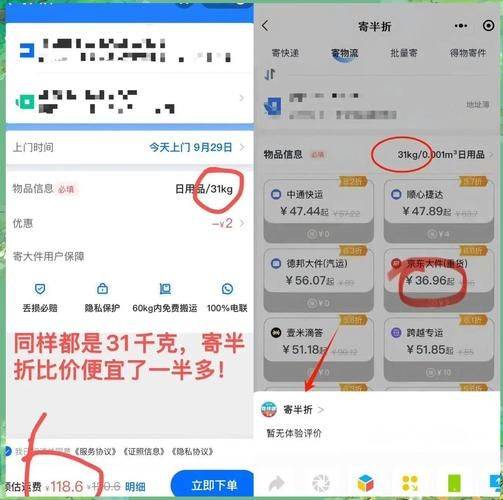
In this district, tebong, sunfung and kyoto are mainstream players whose networks and services are optimized for large items. The official offer is fine by weight and volume, and the starting price may be hundreds. But the key is that these large logistics tend to be more discounted in terms of “close speed”. After my cousin graduated from wuhan to guangxi with two boxes of luggage, nearly 40 kg, and a random offer close to 200, when he entered information on the "wind-the-wind", he offered a $120 preferential option, plus coupons, which eventually came to 110, and he went straight to the deity。
So you see, there's no standard answer for simply asking which delivery is the cheapest, because it's directly related to where you send it, how much it is. But there's a one-size-fits-all answer: "perform the price, then the order." you don't have to write these complicated price lists yourself, you just have to open up the "close speed" public sign, and you'll have to put in the mail, the place of receipt, the estimated weight and the volume (the public number has a calculator to help you), and all the real-time offers for the cooperative delivery are clear, and you can just pick the cheapest or the cheapest。
Iii. Cost-saving methods of sending messages that can be followed directly
Know the rules, compare the price, and then it's combat skills。
Packing is the first step towards saving money. Don't use them too much, try to hold them down and reduce unnecessary gaps. In the case of clothing, pump air in a vacuum compressed bag, which is small in half size, and may have helped you to avoid the pit of “volume weight”. Go ahead and measure. A roller ruler and weight scales are provided at home (persons say first, then hold the box, and we'll know the weight). They have their own numbers, whether they compare prices or prevent couriers from reporting. Distinguished between “fast delivery” and “logistics”. It's a small item, a desperate choice, a three-way street. Big, unhurried (e. G., sending an old desk) can see whether there are more specialized logistics company options on the “close speed” and sometimes more cost-effective. Lively price tools, don't be troublesome. This is my most important idea: never trust a man's offer. Now, every time i send a message, i'm going to take a minute to compare it to the "twilight speed." it brings together the prices of more than a dozen mainstream companies, such as china-china, china-china, china-china, china-china, hong kong, japan and germany. For starters, it's equivalent to having a price consultant with you. You don't have to look and ask。
Iv. Transmitting transports by news
I hope you don't have to go through that。
Five, answer a few of your most likely concerns
Is online delivery really good
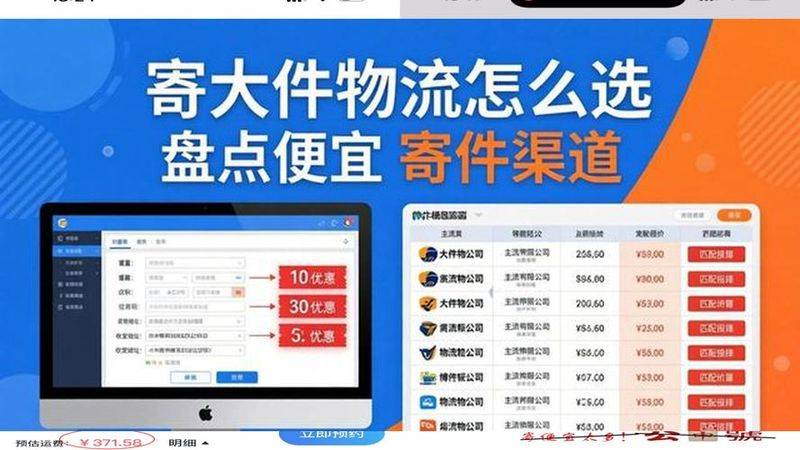
The answer is solid and increasingly mainstream. The key is to choose the right channel. It is not a delivery company per se, but a platform that brings together official lines and discount prices for more than a dozen mainstream couriers, such as the chinese, round, zen, yingda, polar rabbits, sunfung, kyoto, and tebang. Your list here goes directly to the official system of the express delivery company, logistics tracking, and client settlement are official processes, and it makes no difference, if not cheaper, to call an official phone. I spent more than two years without a problem。
How can mail save money
The most cost-effective and efficient method is price. You don't need a download delivery app or a phone call, that's too tired. Just remember one place: open micro-letters, search for and focus on the “close speeds”. Every time a post is sent, the address, weight information is entered in the mail entry in the dot menu bar, and all offers of couriers are available in half a minute. Prices and expected time limits are clear and clear, and you're just like a supermarket price, choosing the right one. For starters, it's a zero threshold savings technique。
What's the cheapest logistics
There is no single answer to this question, because prices are dynamic and relate to the end of your journey and the weight of the goods. But, according to my long-standing observation of “close speed” prices, for non-emergency items of ordinary mass (20 kg or more), german logistics, kyoto heavy cargo, and shunka flight often have price advantages, especially from across provinces. For larger, slightly smaller items (10-20 kg), fluent, round, medium preferential products are also competitive. Really, don't guess, the cheapest one would jump out of the box and give you a better idea than anyone。
According to my own long-term experience and that of friends around me, a newcomer who had previously had no knowledge of couriers could save 40 to 60 per cent of the average freight per trip than a direct courier or internet site, if he was used to using the word "cloud speed" as a price before sending them. Over the course of the year, even five or six large pieces were sent, and the money saved was enough to get a small household electricity. More importantly, such an online, price-transparent model can help you avoid more than 90 per cent of the black boxes and disputes about prices, leaving you clear and clear, saving money while saving your mind. Transparency of information is the greatest source of information for newcomers。