On 5 june, at 5 p. M., the network of officials of the people's bank issued a “notice for public consultation on the regulations on the administration of the rmb loans”. It's a bad habit for gays in the police unit to leave work on friday, because many gays in custody have to work overtime to read it。
The last regulatory guidance document in this area was the twenty-six-year-old rmb interest rate management regulation (small-hands [1999] 77), which was followed by several patches. In any event, it would be inappropriate for 26 years ago to guide today's business。
The first sentence of the exposure draft begins with a clear context: “the effective functioning of savings and the adjustment of loan rates to the market economy”. Looking back at the changes in china's financial sector over the past three decades, the most important of these was the marketization of interest rates. The present exposure draft essentially consolidates the results of the marketization of loan operations in the form of official documents。
At the heart of the document is chapter ii, “rules for the determination and collection of interest rates on loans held”。
Article 3 specifies that “financial institutions shall determine their own rates of deposit and loan interest, in accordance with the relevant provisions and commercial principles of the people's bank of china”
At the core, savings, loan rates can be determined on a self-help basis and, of course, according to the rules of the line. Very standard regulatory documents emphasize both the principle of marketization and “the importance of our opinion” and the freedom to be bound。
This is followed by provisions for specific deposits and loans. General:
Personal deposits: in accordance with the rules established by the bank, legal persons receive interest payments on a quarterly basis, regular profits on a regular basis, early payments/overdue in accordance with the requirements of the bank (art. 4)

(c) unit deposits: interest is paid on a quarterly basis, interest is paid on a regular basis and may only be paid in advance, and the agreed deposits are at the discretion of the legal person (art. 5)。
Other deposits, such as call deposits, large bills of deposit and the provident fund, are subject to a number of detailed provisions that are generally similar and are not pursued。
After the deposit is made, it is a loan。
Article x. The interest rate on short-term loans (for a period of one year or less, excluding personal housing loans) is determined by agreement between the borrowing parties on a commercial basis and may be adjusted on a monthly, quarterly, semi-annual basis during the term of the contract or by means of fixed interest rates. The interest-bearing and interest-bearing modalities of short-term loans are determined by mutual agreement between the borrowers. The rates of interest, interest-bearing methods, etc. May be adjusted by consensus between the two parties。
Article 11. The interest rate on medium- and long-term loans (for a period of more than one year, excluding personal housing loans) is determined by agreement between the borrower and the borrower on a commercial basis and may be determined by monthly, quarterly, semi-annual and annual adjustments during the contract period, as well as by means of fixed interest rates. The manner in which interest and interest payments on medium- and long-term loans are to be obtained is to be determined by agreement between the borrower and the borrower. Interest rates, interest-bearing methods, etc. May be readjusted by consensus between the two parties。
I contrasted the two and found the exact same. The only difference is that medium- and long-term loans have more “year-by-year” and can be more concise. Naturally, the focus should not be much, but should be negotiated in accordance with commercial principles。
Article 16 requires that interest be calculated on the basis of the time actually borrowed. Article 17 requires financial institution loans to be presented to borrowers in a clear manner at an annualized rate; the annualization of loans should include the calculation of the cost of all loans and the proportion of the principal of the loans actually spent. The cost of the loan shall be stated in the loan contract。
These are the usual regulatory requirements of these ages, but this time, in particular, the regulatory fear that practitioners are original in their formula for calculating annualized interest rates, giving very thoughtful formulas for converting interest rates (this is a true point of knowledge):
Single-interest annualized interest rate = daily interest rate x 365 (or 366 per cent), annual interest rate = monthly rate x 12
The annualized compound interest rate is expressed at 1 = 1 + = 365 = 366 = 1, = 12 = 1 + monthly rate
There is also a formula for calculating interest:
In the case of a single interest, interest may be calculated by multiplying the accumulated daily account balance for the actual number of days by the daily interest rate. The interest-bearing formula is: interest = cumulative interest-bearing x-day interest rate, with cumulative interest-bearing = total daily balance。
In the case of a single interest, interest may be calculated on a case-by-case basis according to the following interest-bearing formula. If the interest-bearing period is a full year (month), the interest-bearing formula: interest = principal x years (month) x monthly rates. If the interest-bearing period is full year (month) and zero days, the interest-bearing formula is: interest = principal x number of years (month) x interest rate (month) + principal x days x day rate。
In the case of compound interest, interest is calculated verbatim according to the following interest-bearing formula. Interest = principal x (1+ annual interest rate) ^ years - principal. The number of years may not be integer, such as 1/12 for one month and 1/366 for one day (in the case of 1/366)。
To be honest, the core meaning is one, counting to the heavens, and even specifically emphasizing the need to calculate years on 366 days。
The above interest rate and interest formula will probably keep practitioners, especially r&d teachers, busy. Many of the loan products in the past have been calculated on a simple and rough 360-day basis in the calculation of interest rates, and now have to be changed honestly according to the number of days. It's a minor change, but i'm sure it'll take a while。
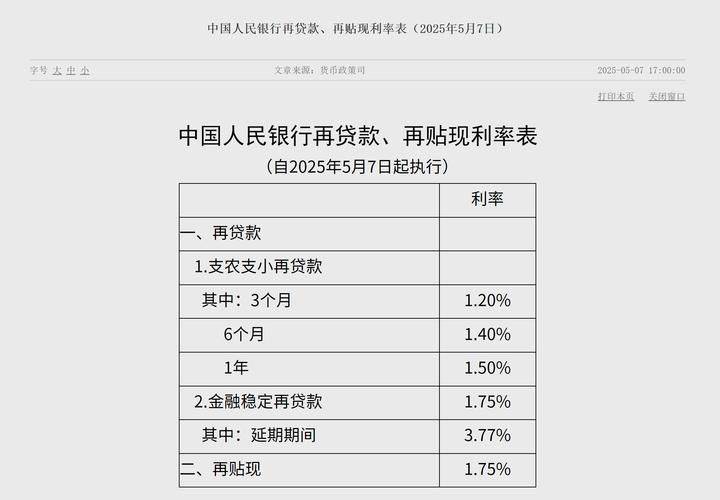
The old circular of the people's bank of china on the collection of interest on loans held in the renminbi, the daily rate is 360 days. But when the actual bank is implemented, it will certainly be implemented at a real rate of 365 days, after all, with more money. This method of "360-day conversion, 365-day interest count" will result in a slightly higher actual annualization than a nominal one (about 0. 0139 per cent higher)
In addition, when it comes to years, i've always been unconsciously reminded of the logic of years' judgement in the programming class:
If(year %4 == = 0 & year %100! = 0) || (year % 400 = 0)) then zirconium (can be divided by 4 but not by 100 or 400)
For the first time, the exposure draft defines high-interest stocks: deposits may not be absorbed through improper means such as high-interest stocks, including, but not limited to, the absorption of deposits through irregular manual repayments, self-regulatory engagements related to the self-regulatory mechanism for the pricing of market interest rates, loan linkages, etc., which disrupt the competitive order of deposit markets。
Artisanal interest payments, which have been used as a means for many banks in the past, are now named and clearly cannot continue. Next, how regulators can better “market” customers is an interesting area。
Finally, it is made clear that this consultation draft is aimed at institutions involved in deposit lending such as domestic policy banks, commercial banks, rural credit unions, etc. However, in cases where local financial organizations are engaged in lending operations, their supervisory authorities shall take this provision into account。
Although this rule only concerns banks, other institutions engaged in lending, such as the like, the like, the like, in the sense of implementation, are also drawn to the same level。
It is, of course, only a draft for comment, which may eventually be adjusted in the light of the feedback received during the publicity, and attention is drawn to screening。