The combination of bulk goods has evolved with advances in science and technology. In the less scientifically developed world, where lifting and handling equipment are not widely used, and when handling is carried out on a manual basis, the degree of packaging of the bulk cargo is mainly constrained by two factors, one by the limitation of packaging materials, the intensity of packaging materials and the heavy weight of the material, which constrains the larger packaging body, and the other by the limitation of manual handling capacity. Packaging shall be limited to the maximum human capacity. Therefore, the mass of the combination at that time was generally below 50 kg。
The combination of large units is a major advance in the overall packaging technology。
From the point of view of transport, the combination of packages often coincides with a loading and unloading unit, which is very convenient for transport and handling, so that in this area the assembly is seen primarily as a carrier (cargo), referred to as a unit combination load or a collective load。
Mode and type of coverage
There are a number of typical modes of assembly, and there are many different types of assembly in the cross-cutting areas of typical modes of assembly, so that the types of assembly are numerous, but there is generally no special explanation for what is meant by assembly, mainly containers and pallets。
The typical combinations and variations between them are as follows:
(1) tray. The most typical are flat trays, which are deformated with column trays; mounted pallets (assemblies), cage pallets (assemblies), box pallets, folded trays, wheel trays (desktop trays), sheet trays (slides), etc。
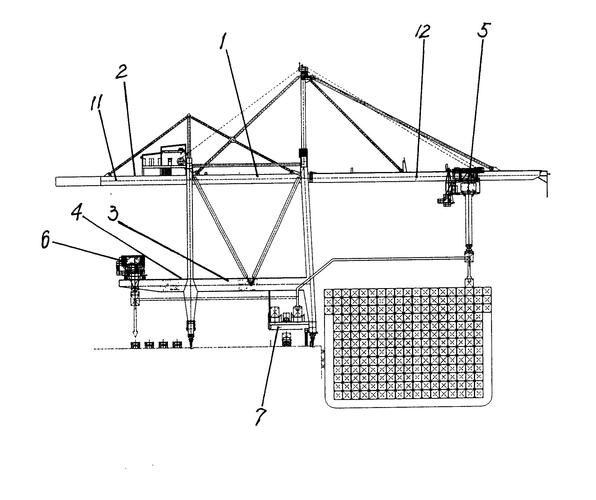
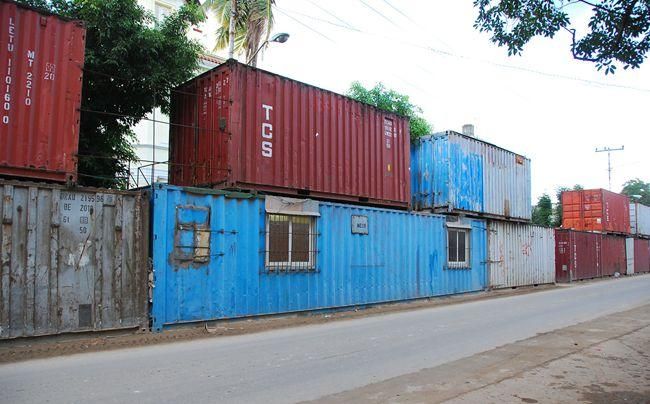
(2) containers. Most typically, ordinary containers, such as caged containers, tank containers, desktop containers, platform containers, folded containers, etc., are transformed in such a way that many types of containers and their corresponding pallets are not morphologically very different, but very different in size。
(3) packagings. A typical container is a collection bag with a transformer consisting of a assembly network, a container, a container, a container, etc。
(4) combination bundles. The assembly network is also a deformation of the bundle。
Features and effects broadcast
The main characteristic of assembly is its small size, which is based largely on standardization and interoperability requirements, which gives small and medium-sized bulk cargo access to markets and areas of circulation on a certain scale, with an advantage of scale. The effect of assembly is actually the effect of this advantage of scale. The following are the main areas:
(1) rationalizing handling. Some believe that this is the maximum effect of assembly. Compared to the individual handling and handling of individual items, this effect is mainly reflected in:
First, to reduce loading and unloading times, which is the result of multiple loadings being converted to a bulk loading
Second, it reduces the labour intensity of handling operations. In the past, large quantities of bulk and bulk cargo were handled by small and medium-sized units, workers were extremely labour intensive and, because of the intensity of their work, were vulnerable to error and loss. The introduction of assembly not only reduces the labour intensity of handling, but also protects the cargo from collision damage and loss during loading and unloading。
(2) rationalizing packaging. The single packaging and small packaging requirements of the articles can be reduced or even removed from the small packagings, resulting in significant savings in packaging materials, and the strength of the packaging can be greatly enhanced by the large size and protective capacity of the assembly to protect the goods。
(3) as a result of the transport and preservation of the assembly as a whole, transport and storage operations have been greatly facilitated, management and efficient use of the means of transport and space for the storage of the site, and the environment has been greatly improved。
(4) whether the maximum effect of the assembly, or the integration system, which is at its core, can effectively combine the previously separate logistics components into one whole and rationalize the entire logistics system. Modern progress in logistics is dependent on assembly, which can be described as an important sign of logistics modernization。
Combustion system
The assembly system is a logistics form in which the activities of the entire logistics process are carried out and managed in an integrated and comprehensive manner。
The assembly system is sometimes referred to as assembly or assembly, which is the sum of many activities。

It is both a form of packaging and far beyond packaging; it is both a form of transport or storage and not exclusively a function of transport or storage. The assembly runs through the entire logistics process and plays a role in it。
Clustering effectively integrates decentralized logistics activities and is a core element and the main modality of logistics systemization. Combustion systems can function in many ways, and many inputs have seen them as the direction of major logistics development。
In the assembly system, the first problem is the formation of the goods into a state of assembly, i. E. A combination of a certain size and weight, which is a holistic approach. The bulk cargo is assembled in a single unit, called a combination of units, or assembly. The resulting load is referred to as the unit combination load and the collective load。
Container invention broadcast
The father of the container transport, united states truck driver malcolm mclean (1915-2001). His successful invention of containerized cargo transport in 1946, which was widely applied to motor vehicles, railways, ships and aircraft, has revolutionized the global transport industry。
“containers” are referred to as “containers” in southern china and hong kong, and in english as “container” or “box”. A container or box that can be loaded. Containers were invented and used by americans, first on railways. It first appeared on 19 march 1921 at the united states general railway transport company in new york. The british were also reluctant to lag behind, and eight years later, in 1929, they began the british-european continental sea-to-sea container connection. But these are only local, small-scale uses.