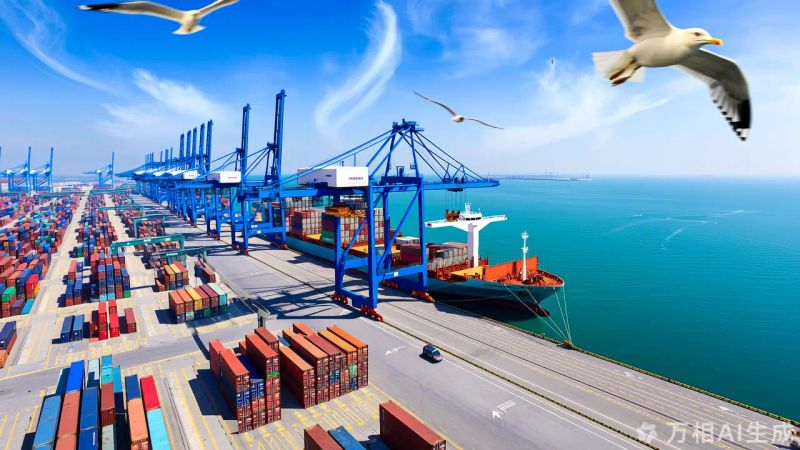
Containers are the core vehicle for international maritime, rail and multimodal transport and are applicable to different types of cargo. The following is a detailed description of the types of common containers and their standard size, volume and limit (maximum gross weight), which are organized according to iso standards and the general norms of mainstream shipping companies (e. G., maski, medium and long-range shipping) and are applicable to foreign trade, freight forwarding and logistics operators。
Standard dry container (dry container)
20-foot pantry (20gp)
External dimensions (long x wide x high): 6. 058 x 2. 438 x 2. 591 m
Internal dimensions (approximately): 5. 90 x 2. 35 x 2. 39 m
Gate opening dimension: 2. 34 x 2. 28 m
Volume (cbm): ≈33 cbm
Gross weight: 30,480 kg (30. 48 tons)
Self-esteem (tare weight): ≈2,230 kg
Maximum load (payload): ≈28,250 kg
40-foot pantry (40gp)
External dimensions (long x wide x high): 12. 192 x 2. 438 x 2. 591 m
Internal dimensions (approximately): 12. 03 x 2. 35 x 2. 39 m
Gate opening dimension: 2. 34 x 2. 28 m
Volume (cbm): ≈67 cbm
Gross weight: 30,480 kg (30. 48 tons)
Self-esteem (tare weight): ≈3,850 kg
Maximum load (payload): ≈26,630 kg
40/45 feet high cabinet (40hq / 45hq)
External dimensions (long x width x high): 12. 192 x 2. 438 x 2. 896 m (45hq: 13. 556 x 2. 438 x 2. 896 m)
Internal dimensions (approximately): 12. 03 x 2. 35 x 2. 69 m (45hq: 13. 41 x 2. 35 x 2. 69 m)
Gate opening dimension: 2. 34 x 2. 58 m
Volume (cbm): ≈76 cbm (45hq: ≈86 cbm)
Gross weight: 30,480 kg (40hq) 32,500 kg (45hq)
Self-esteem (tare weight): ≈3,950 kg (45hq: ≈4,800 kg)
Maximum load (payload): ≈26,530 kg (45hq: ≈27,700 kg)
Key remarks:
Maximum gross mass = self-weight + cargo weight, restricted by shipping companies and port equipment, with a global maximum of 30. 48 tons (40hq and below)
40gp and 40hq have the same maximum gross mass, but the containers are slightly larger and therefore the actual load is slightly lower
When actually loaded, full or upper weight is taken from the first (light bubble, weight)。
Special containers
Refrigerated containers (reefer container, rf)
Use: transport of frozen/heating goods (e. G. Food, medicine)
Common dimensions: 20rf, 40rf, 40 rhq
Temperature range: normally -25°c to +25°c
Limit:
20rf: maximum gross mass of 30,480 kg and load of 25-26 tonnes (refrigerant unit heavy)
40rf: maximum gross mass 30,480 kg and load 24-25 tonnes
N. B.: pre-cold, electrical plug-in at a higher cost。
Open top, ot
Use: super-high cargo (e. G. Mechanical equipment, glass), top to be hung
Structure: top torn or hard tops
Dimensions: 20ot, 40ot
Limit weight: same as the size of the table (30. 48 tons), but limited in number of stacks (usually only 1 floor)。
3. Frame container (flat rack, fr)
(a) use: ultra-wide, ultra-long, heavy equipment (e. G. Transformers, yachts)
Structure: no side walls and roofs, with foldable racks at both ends
Dimensions: 20fr, 40fr
Limit:
20fr: maximum gross mass 30,480 kg
40fr: maximum gross mass 45,000 - 48,000 kg (some shipping companies are allowed higher and require advance application)
Advantage: goods capable of loading > 2. 44 m (to be reinforced)。
Tablet containers (platform, pl)
Purpose: very heavy or irregular goods (e. G. Large steel structures)
Structure: bottom shelf, no side wall, end wall
Limited weight: 40-50 tons, subject to special approval by the shipping company。
5. Tank container
Uses: liquids, gases, powders (e. G. Chemicals, edible oils)
Capacity: usually 24,000-26,000 litres
(b) limit weight: maximum gross mass 36,000 kg (approximately 4-5 tons in tanks)
Requirements: msds, cleaning certificates, fit certificates。
Iii. Key concerns
1. How much can you load
(b) ports, trailers and bridges have road limits (e. G., 49 tons of vehicles in china)
Europe and the united states have severe restrictions on axle weight, which may be rejected or fined
Vgm (total authentication mass) must be declared, and errors are usually 5% or 1 ton。
“soft” vs “heavy”
Light bubbles (e. G. Clothing, foams): first full size, high-quality cabinets (40hq) are more cost-effective
Heavy (e. G. Metal, stone): higher load efficiency in 20gp units。
3. Differences in shipping companies
Some shipping companies have special restrictions or surcharges on special cabinets such as 45hq, fr, etc.
Prior to export, it is important to confirm to the freight forwarder the specific weight of the route。
The ilms immediately supports a wide range of business types, where container types can be maintained and managed as needed。
Practical recommendations
Common groceries, electrical products: 40hq (large volume, low unit price)
Heavy cargo (>500 kg/cbm): 20gp (avoiding waste load)
Refrigerated food: 20rf / 40rf
Engineering machinery (super-high): 40ot or 40fr
Lithium battery (un 3480): platoon (non-risk declaration) or dangerous cabinet (dg)
The mouthpiece is: “20 weights, 40 light light; a high container with bubbles and a large frame; the cold chain shall be plugged in with electricity and hang on top.”