Friends who produce rubber products, plastic modifications, plasters and battery materials must have had a headache when they were transported by carbon black - artificially large dusts, visible workshop contamination, widespread proliferation of carbon black super fine powders and high material consumption; inadequate containment of conventional machinery delivery and high dust spills that do not meet workshop environmental and occupational health-related requirements。
Recently, many people have asked: "can black be transported using vacuum feed?" as an operator in the industry's powder industry, today, using empirical experience, analysis of dry goods, combined with industry production norms, can be used directly at once, whether in small processing plants or in large production lines
First, there is a clear answer: black carbon can be transported in a vacuum, and it is a mature, operating and stable automated delivery programme within the industry。
Understand: black carbon and vacuum feed machines, why "co-op"? Charcoal black's “body size” fit: the carbon black pile has a density of 0. 3 – 0. 6 g/cm3, is in a vacuum upper feed stabilizer transport zone, and superpowders are able to soak at negative pressure and are able to satisfy the supply requirements for continuous production without a breakout, sediment etc. Carbon black's “temporal” suitability: the low-speed operating pattern of carbon black in a dry state, the design of smooth pipelines and the stabilization of negative pressure control allow for smooth transport to meet the continuous supply requirements of the production line. The industry's “demand” appliance: the pains that are common during the black transport of carbon are concentrated on dusting, high material depletion, high artificial intensity and inadequate continuity of supplies. The vacuum feeder, in the form of a fully closed structure and a negative pressure transfer, can significantly improve the workshop operating environment and reduce waste of raw materials while increasing the level of automation of the feed chain and matching the cleaner production and stable operation needs of enterprises. Measurement data and benefits
Combining on-site application of data in a multi-industry context, carbon black can bring intuitive cost improvements and efficiency gains to businesses by using vacuum feed machines. Under normal conditions, single equipment can be transported at an hourly rate of 500-3000 kg, covering the production needs of most rubber, plastic and plaster enterprises. Compared with manual feeder, automated feeder models allow for a significant increase in the continuity of production lines and reduce the volatility of the stoppage and process due to uneven delivery. With regard to the depletion of raw materials, closed transport can result in a significant decrease in the amount of carbon-black dust run-off, which is controlled at a lower level, and a significant annual waste of raw materials measured by enterprises with an annual usage of around 300 tons. In terms of labour costs, a single person is able to supervise the operation of multiple units at the same time, save for frequent unpacking, inputting, cleaning, etc., and reduce annual labour costs in tandem with expenditure on labour insurance supplies. At the same time, the integrated benefits of effective control of the dust from the workshops have been highlighted by the reduction of the on-site cleaning difficulties and the consequent reduction of environmental screening and on-site management pressures。
Optimistic advantages 1: containment of dust and improvement of the workshop operating environment
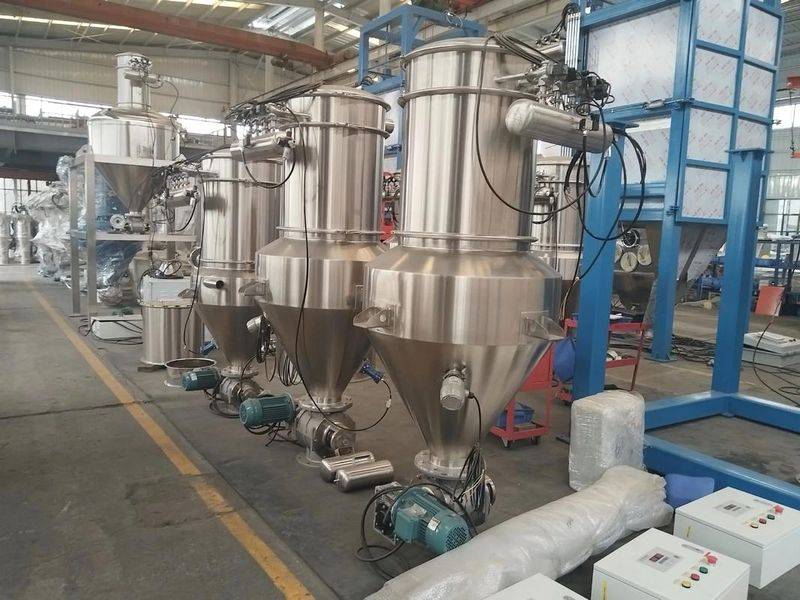
During the delivery of hand-delivered materials and traditional machinery, carbon powder is highly susceptible to spreading throughout the workshop, not only affecting the proper functioning of the equipment but also increasing the on-site cleaning workload. Vacuum upholstery is transported through closed pipelines, with no dust spills throughout the discharge process from the silo to the destination, allowing the workshop environment to remain clean and reducing the impact of dust on operators, while reducing environmental management inputs and making production sites more consistent and orderly。
Advantage 2: automation, reduced manual input
The equipment supports plc's full automatic control, which can be automatically activated on the basis of the production line feeder signal, without the need for dedicated stationing. Workers are freed from repetitive and heavy workloads, allowing for more process operations and individual guardianship of multiple devices to become normal. Automation also avoids fluctuations in the flow of artificial inputs, makes the supply more evenly stable, reduces production fluctuations due to human factors and increases overall operational efficiency。
Advantage 3: flexible layout and adaptation to workshop scenarios
Vacuum upper-material pipelines can be deployed horizontally, vertically, and in turn, in various forms, not subject to workshop space size and equipment layout. For the old workshop renovation project, the installation could be quickly completed without large-scale modifications in the layout of the construction and equipment. Both single-storey and multi-storey transmissions can stabilize and meet diversified needs。
Advantage 4: low residue steady transport to improve production continuity
Equipment exposed to the inner walls of the material is polished, surfaces are not easy to hang and material residues remain at a low level, reducing the cross-effects between different batches. Consistency of the transport process with the stabilization of negative pressure and reasonable wind volume control is smooth, the supply of materials is not easily slow, the subsequent mixing, processing and packaging processes are guaranteed stability and the operation of the entire production line is enhanced。
Focus alert pit 1: severe dust spills affecting the workshop environment and material depletion
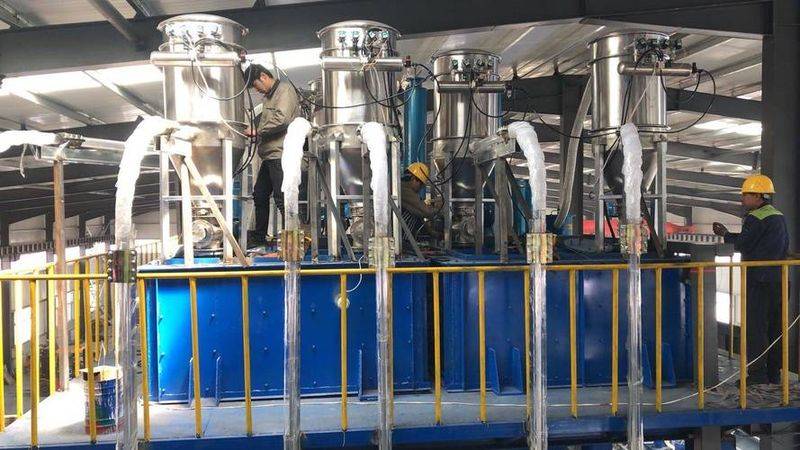
Inadequate equipment sealing or lack of connections to pipelines can lead to the outward spread of carbon black powder during transport, both polluting the workshop environment and causing direct waste of raw materials. Enterprises need to adopt a fully integrated structure designed to ensure secure sealing of pipes, franks and pyrotechnics, combining negative pressure delivery to create an internal dust-resilient environment and reduce dust proliferation from sources。
Pit 2: fine powder attached to the filter core, and the downsorption affects delivery efficiency
The small size of the carbon black fine powder particles is easily attached to the filter core surface, which decreases its permeability over the course of the operation, resulting in weaker insorption and lower delivery of equipment. High-precision filters suitable for super fine powders need to be configured and equipped with automatic ash-cleaning systems that regularly clean the filter core surface with powder during operation, maintain long-term suction stability and avoid production influenced by filter plugs。
Pit 3: unstable supplies affecting downstream process stability
Negative pressure and wind speed adjustments are unreasonable and can result in short and slow supplies, cut-off materials, etc., which directly affect the stability of downstream processes such as refining, mixing, colouring, etc. An enterprise should establish a steady delivery curve based on the type, detail, transport distance and altitude of the carbon black, precise matching of negative pressure and wind parameters, so that the feed is kept constant and the production rhythm is stabilized。
Pit 4: inadequate equipment sealing and increased risk of long-term operation
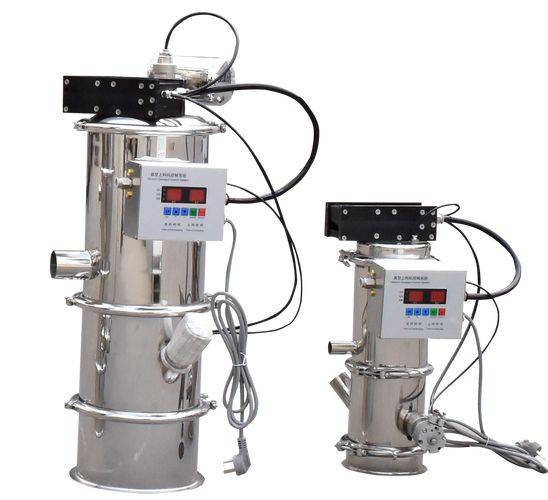
Some of the equipment is operated over a long period of time, with loose interfaces, ageing seals, etc., which can gradually exacerbate dust spills and affect the useful life of the equipment. There is a need to select standardized sealed components and durable structural designs to maintain strong pipe links in daily use, enhance the overall sealability and durability of the equipment and achieve long-term stable operation。
Selective techniques, super fine carbon black powders: materials are of high detail and proliferation-prone, should be configured to reinforce closed dust structures, with high-precision filtering elements and a stable pulse blowback system chosen, with a focus on control of dust spills, and the cleanness of workshops while maintaining continuous stable supplies. Conventional granular carbon black: material mobility is relatively moderate, with a focus on stable transmission and automated control, combining pipe paths with negative pressure parameters, meeting the need for a continuous production line, taking into account the cost of use and operational effects. Continuous production workshops: it is proposed to deploy fully automated control systems, feed-to-be and stable negative-pressure transport units to support 24 hours of continuous operation, less manual intervention, high-intensity and long-term production patterns. Dust-free and high-standard workshops: there is a need to upgrade the overall sealing level of the equipment, introduce a no-valid angle structure and cleaner design, further reduce the risk of dust proliferation, meet high-cleaning workshop production requirements and ensure environmental compliance on site. Summary
During the black transport of carbon, emphasis was placed on dust control and the upgrading of automated supplies. Vacuum feeders can reduce dusting, reduce material losses and improve the operating environment, while increasing the automation of feed chains for use in industries such as rubber, plastics, plasters and battery materials. Enterprises may choose a matching equipment configuration to achieve a stable, clean and continuous delivery effect, based on carbon black type, production scale, workshop environment and delivery requirements, which will support the production of ablution efficiency。
Henan yongjong machinery - the state high-tech enterprise, specialized and new small and medium-sized enterprises with a modern production base of 36,000 m2, deep-farm powder works of more than 20 years, cumulative services of 3,500 + enterprises, processing of 1000 + powder materials, production of 5,000 + stations of all types per year。
The permanent vacuum feeder, from design, production to commissioning and sale, is managed standardized throughout the process, supporting the customization, on-site survey and programme design to achieve stability, realistic prices and caring services that will enable enterprises to automate, dustless and efficient feed chains。
There's nothing to worry about on the powder particles, a vacuum machine, small equipment to solve big problems