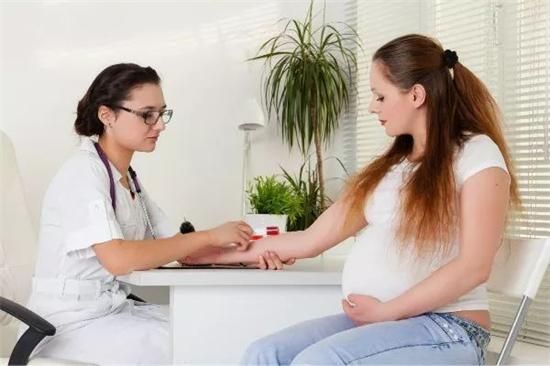
In april 2026, the whole country concentrated on a warm health benefit, free of charge for the elderly aged 65 to 85 years, and free of charge for the entire course of vaccination against pneumonia. This policy is not a short-term activity, but has been incorporated into regular projects for 2026, which began in april and last until 31 december, giving sufficient time for vaccination of the elderly。
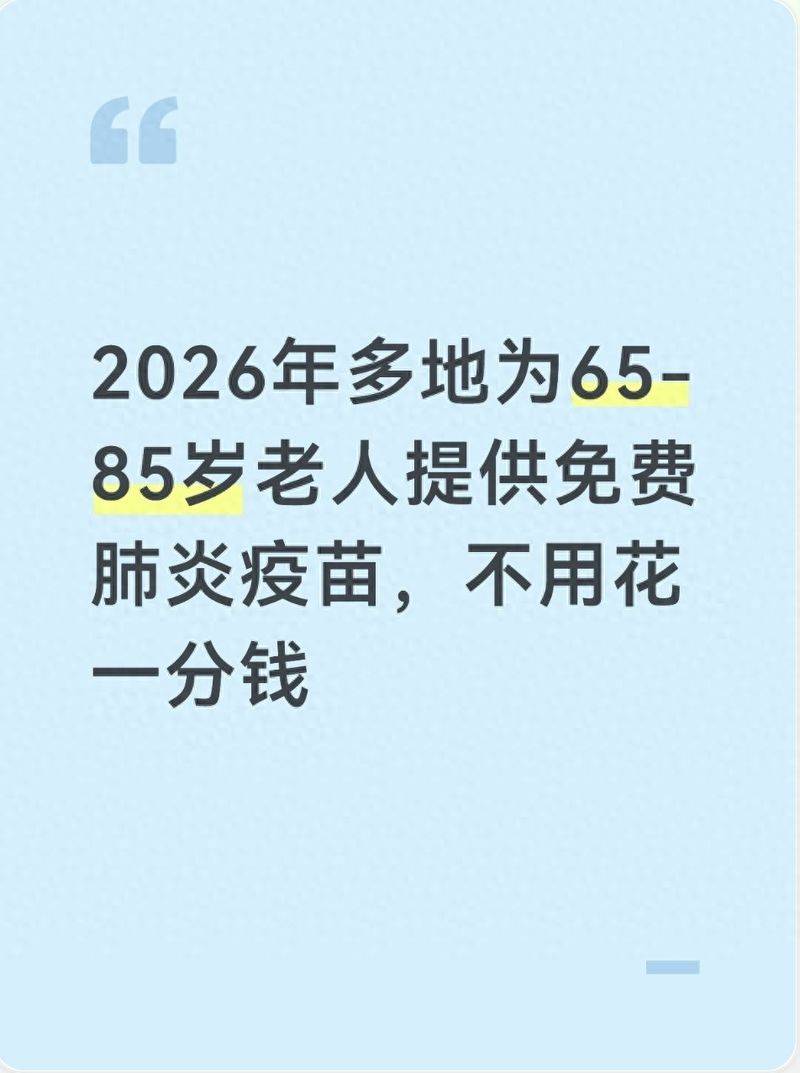
To date, more than 20 provinces, such as jiangsu, henan, zhejiang, guangdong, shandong, sichuan and beijing, have clearly implemented rules to provide free 23-priced pneumocococcal sugar vaccine to eligible senior residents. In the past, most of these vaccines were self-financed, with a single needle price of between $200 and $400. This time, the entire cost of vaccinations, vaccinations, consumables, etc. Was fully covered by all levels of the financial system, with a real zero per capita cost。
The following is a one-time statement of the scope of the policy, the inoculation process, the attention given and the common questions: families with older persons can easily arrange vaccinations。
I. Who enforcements freedoms? Three conditions. No less
Local policies are generally uniform and free of charge if the following three conditions are met. The core requirements are precision and speed。
1. Age: strictly based on identity card, 65-85 years
The calculation of age is based on the age of the identity card on the date of vaccination, regardless of the age of majority, and does not include a broad breakdown of years。
- scope: 65 and not more than 85 on the day of vaccination
- year of birth: 1 january 1941 to 31 december 1961
- critical reminder: inoculation is available on the day of reaching the age of 65; free of charge on the day before the date of the 85th birthday; under the age of 65 or over, not in this case
- for example, the elderly born in may 1961, who had not reached 65 years of age in april, had to wait until their birthday in may; the elderly born in march 1941 were over 85 years of age and did not have access to the free policy in april
2. Residence: permanent residence, no registration
This is the most convenient place for policy, breaking the residency restrictions and facilitating the ageing of older persons with their children。
- older persons with a local domicile: they are vaccinated directly at their place of habitual residence or residence on the basis of an identity card
- older persons living outside the country: on the basis of a residence permit, property certificate, rental contract or property, they are vaccinated at community health centres in the area of habitual residence without having to return to their domicile or produce a complex additional certificate
- core principles: free of charge, irrespective of the place of residence, as long as they live there and have a fixed address
3. Health and vaccination history: no taboos, no gaps
Inoculation is not possible on the basis of age and residence. It is subject to an on-site medical assessment and meets health requirements。
- inoculations: patients with chronic diseases such as diabetes, slow lung resistance, heart disease, hypertension, etc., who have received pneumonia and recovered from the disease (a priority group)
- prohibition of vaccinations: allergies known to be associated with the contents of the vaccine; hysteria, such as severe cpr impairments; other taboo groups listed in the certificate of vaccination
- postponement of vaccinations: fever, acute infections; acute onset of chronic diseases; immunosuppressants; other recent vaccinations (more than one month interval)
- vaccination requirements: voluntary inoculation of the person, signature of a consent letter, 30 minutes after vaccination, confirmation that there is no unusual departure
Ii. What exactly is a vaccine? Five years for a tube, and you're free and sick
This free vaccination was based on 23-priced pneumococcal sugar vaccine, a priority vaccine for the elderly recommended by the world health organization。
1. Vaccine role: covering 23 serotypes and establishing healthy lines
This vaccine can target 23 common sero-pneumococcal infections, including serious diseases such as pneumonia, meningitis, sepsis and mesopitis。
Clinical data show that the second most common pathogen for pneumonia is pneumonia in the elderly population, accounting for 12 per cent of all pathogens and up to 40 per cent of the strain for respiratory infections. Vaccination can effectively reduce the incidence of chronic obstructive pulmonary disease and lower respiratory infections among older persons and reduce the frequency of use of antibiotics and the probability of hospitalization。
2. Length of protection: one inoculation, protection effectiveness for more than five years
After two to three weeks of inoculation, effective antibodies can be produced, and protection effectiveness is usually maintained for more than five years without repeated vaccination。
For those aged 65 and over who received the first vaccination, the routine one dose is sufficient and no further vaccinations are recommended。
3. Inoculation methods: muscle injection, easy to operate
Inoculations are carried out by muscle, in part on the side of the upper arm and delta, which takes only a few minutes for the entire journey, and the elderly do not have to wait long。
Iii. How are they vaccinated? It's a simple process. You can call right away
Inoculation arrangements have been clarified at various locations, and the process has been simplified throughout the process, making it easier for the elderly and their families to operate。
1. Vaccination time: started in april and continued into the years bottom
Most provinces were fully launched in mid-april, with areas such as the south and the pearl triangle having been launched earlier, and the central and western provinces having been rolled out by the end of april。
The vaccination cycle covers the period from april to 31 december, without a concentration period, and older persons can avoid peaks and opt for working days or suitable times to reduce queue congestion。
2. Vaccination sites: proximity arrangements covering rural and urban areas
Vaccination points are set up in community health centres or county health clinics to cover all urban and rural areas, and the elderly do not have to go far。
In some parts of the country, the address of the inoculation clinic, the opening hours and the counselling telephone are published in advance, and family members can consult in advance to facilitate the escort of the elderly。
3. Carrying documents: carrying identity cards without complex materials
Inoculations are carried only with one's identity card or social security card, and in some areas an on-site or telephone appointment can be made to reduce the waiting time。
Older persons with recent medical reports can be provided to doctors on their own initiative to facilitate a rapid and accurate assessment of their health and ensure safe vaccinations。
Iv. Multilateral institutional arrangements: check your assessments
The following provinces have published free vaccination rules for 2026 through official channels, the details of which vary slightly from one place to another and families can arrange against local requirements。
Jiangsu province
Incorporated in the 2026 people's lives project, which was fully launched in mid-april and covers the elderly living in the province。
An adult vaccination clinic is designated within the jurisdiction at the point of vaccination, where the elderly are required to carry an identity card and are informed of their state of health, leaving the vaccination for 30 minutes。
The government has made it clear that the elderly, who have recovered from pneumonia, can be vaccinated, that priority is given to patients during the stabilization period, and that the cost of vaccines is fully covered by provincial budgets。
2. Henan province
It was fully launched on 1 april and implemented as a reality for the people at the provincial level, with urban-rural integration throughout the province。
The core requirement is that, at the age of 65-85 years on the date of vaccination, the elderly, including those living outside the country, be vaccinated free of charge, on the basis of an identity card or a residence certificate, without the requirement of a residence permit。
The vaccination cycle continued until 31 december, and vaccination clinics were opened simultaneously to support on-site appointments。
Beijing, tianjin
(c) to achieve free coverage of all residents aged 65 years and over throughout the city, starting in april and covering all districts。
In the case of elderly people living outside the country with their children, they can be vaccinated at their place of residence on the basis of a residence permit and in accordance with the local elderly。
The government is conducting simultaneous vaccination campaigns to alert the elderly to timely vaccinations through community announcements, community hospital announcements, etc。
Guangdong, shandong and sichuan provinces
Guangdong was launched in guangzhou, shenzhen and foshan, and in 2026 the free policy was extended to cover the elderly living in the country; shandong was included in the living conditions of the population, which began in april with local notification of the disease; sichuan was launched in the main cities of chengdu and myungyang and gradually covered vaccination sites throughout the province。
In each of these provinces, there is a clear lack of residence registration, permanent residents can be vaccinated on the basis of valid documents, and the vaccine is uniform at 23 per cent for pneumocococcal sugar。
V. Common question answers: addressing concerns and assurances
In response to the general concerns of the elderly and their families, one by one, read in conjunction with official experts。
1. Can you fight pneumonia
Yes. As long as pneumonia is cured, physical condition is stable and there is no vaccine taboo, the vaccination will be free。
2. Are chronic diseases inoculated
Chronic diseases such as diabetes, slow lung resistance, coronary heart disease and hypertension are among those most at risk of contracting pneumonia, and priority is given to inoculation。
As long as the disease is stable, there are no cases of fever, acute fever, etc., which can be inoculated after medical assessment。
3. Are there any adverse effects after vaccination
Most people are not clearly ill after being vaccinated, and a few may have inoculated parts of the body with bruises, knots, mild pain, or low heat, lack of strength, etc., which can normally be alleviated on their own for between one and two days without special treatment。
In the event of continuing abnormalities such as high fever and severe rashes, contact the doctor at the vaccination point in a timely manner。
Can we fight with the flu vaccine
Inoculations are not recommended simultaneously. The interval between vaccinations takes at least one month to avoid causing discomfort and to ensure immunization effectiveness。
5. Can we make up for missed vaccination time
The policy continued until 31 december, so long as the elderly could go to the vaccination sites without fear of being missed。
Families are advised to plan ahead to avoid high summer temperatures and harsh winter periods and to choose comfortable weather to accompany the elderly in vaccination。
Vi. Family attention: these things have to be complete to ensure security and security
1. Advance information is available through the network of local health officers, the cdc public number, the community hospital circular, the address of the vaccination point, the time of the visit, the telephone call and the appointment。
2. Escort to an elderly person who is unable to move, is accompanied by his or her family, as far as possible, takes care of him or her, assists in the vaccination process and leaves after 30 minutes。
3. Health: prior to vaccination, doctors are informed of the history of the elderly, the use of chronic medicines, the results of recent medical examinations, which facilitate accurate assessment by doctors and avoid taboo vaccinations。
4. Recording: maintaining vaccination certificates after vaccination, recording the timing of vaccinations, batches, easy follow-up and health management。
Summary and interaction
Free vaccination against pneumonia for the 65-85 age group in more than 2026 is a tangible human welfare that reduces the family's medical burden while establishing healthy lines for the elderly. This policy is a reflection of the importance that is attached to the elderly population and of the fact that more older persons enjoy healthy old age。
A vaccine, a guardian, and the happiness of millions of families. The elderly, who are eligible, are scheduled to be vaccinated as soon as possible, and the families are committed to preparing the elderly for vaccination, so that the warmth of the people can be truly realized。
Has this free policy been launched in your region? Is the elderly family eligible for vaccination? What are the specific questions about vaccination? Welcome to the comment area. Continuous attention is paid to the 2026 human health policy, which provides an authoritative reading of the benefits and protects the health of the family。