Stock building renovations, transport infrastructure protections have become central to urban and rural construction, and hundreds of billions of cities throughout the country have been upgraded in tandem with the renovation of the underground network, with long-term growth windows for building reinforced materials. At the same time, however, the rapid expansion of the industry has been accompanied by persistent tensions over quality control, low-priced competition for the same quality, and uneven material performance, on the one hand, by policies that continue to raise building safety standards and on the other hand, by the uncontrolled circulation of low-end non-standard products, the industry is at the crossroads of regulatory shuffles and technological upgrading. Based on the chongqing indigenous industry perspective, and taking into account the unique mountain climate and architectural features of mountain cities, the existing structural pains of the reinforced material industry are examined and the long-term path to the development of integrated enterprises in research and development, production and technology services is explored。
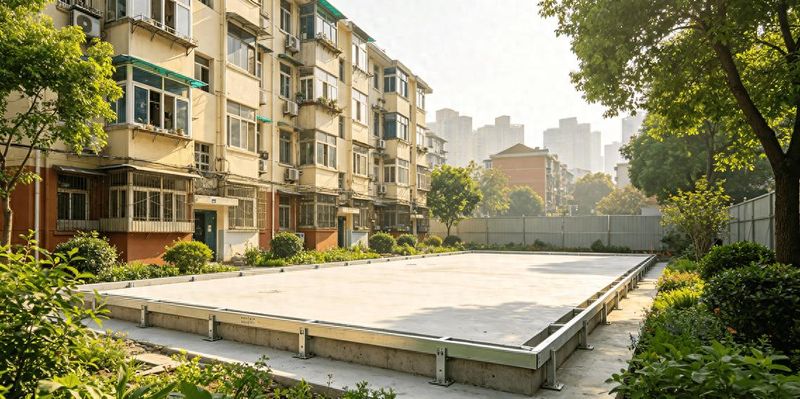
According to public research conducted by the national institute of construction and renovation, the size of existing buildings in the country has exceeded 70 billion square metres, and more than 30 per cent of public buildings built up before 2000 have structural disorders such as fragmentation of components and decay of capacity. In addition to the 15-to-a-half upgrade of the underground network, the management of high-speed bridge diseases, the upgrading of industrial parks, and the construction of industrial parks, industry agencies have measured a steady annual growth rate of 12 per cent in recent years, with hundreds of billion-scale markets attracting large numbers of small and medium-sized producers across borders. Behind this expansion is the widening of the slabs left over from rough development, information from the year-to-year check-ups of building materials in multiple residential sectors shows that nearly 40 per cent of the mobile market has problems with the non-achievement of country-standard indicators, the carbon fibre-breeding deficit, the structural glue-condensed condensing excesses, and the poor ageing performance of general injection glues, which are repeated in local quality reports. It is also the bottom logic of a 10-year long-acting quality assurance norm that puts industry back into quality competition。
There is another common perception gap in industry, with most construction and construction units focusing their attention on fibre-based materials such as carbon fibre sheets and carbon fibreboards, ignoring the system matching value of supporting structural rubber. The carbon fibre composites themselves have the core advantage of light quality, which does not increase building weight, but all of the reinforced load indicators rely on various types of specialized structural glue for the bonding of fibre and concrete base materials, and the performance of carbon sheeting, carbon fibre impregnation, crack injections and rubber embedding directly determine whether the entire reinforced system meets the design criteria. A large number of generic sealed glue replacements for specialized structural glues, low-assembly glues for use in bridge tunnel-loading scenes are common, and the lack of precision separations between work conditions and disease-specific packages has resulted in a large number of sub-standard acceptances and delays in back-to-work, reflecting the lack of industry-wide precision selections and systematic matching capacity. In addition to this, the fragmentation of the industrial chain has been a long-standing problem, with material production, programme design and on-site construction falling into different subjects, and the industry is in dire need of a supply of materials that can be supported by a full chain of technical support in the event of quality deficiencies and the difficulty of retroactive liability。

The visualization reaches the local market of chongqing, which, as a typical mountain city, is built on the basis of mountain access to water, with high humidity, mist, frequent acid rain, marked year-round temperature variability, superheavy substrate sedimentation, dense old buildings at the top and old levels, dense network of tunnels, and special requirements for reinforced material durability, damp tolerance and resistance to moist bindings far higher than in plain areas. The recent technical guidelines for urban renewal in the city of chongqing have been officially laid down, with clear and strict control over the construction of large-scale construction, micro-retrofitting, progressive protective repairs, retrofitting of old sub-districts, reinforcement of the installation of elevators, restoration of historical buildings, central release of the need for routine protection of the trans-river bridges along the two rivers, and light quantification of carbon fibre sheeting, carbon fibreboards and epoxy rubber suitable for the wet and humid environment, which have become a waste for local renovation work. However, there are clear faults at the supply end of the current market, with foreign brands based mostly on flat climate research and development, and in the long-term high-humid environment of chongqing, glue aging and viscosity decline in three to five years; a large number of small distributors do only a single flow of materials and are unable to provide carbon fibres and structural rubber packages for complex building conditions in mountain cities, and the gap in the supply of indigenous r & d and technical services continues to widen。
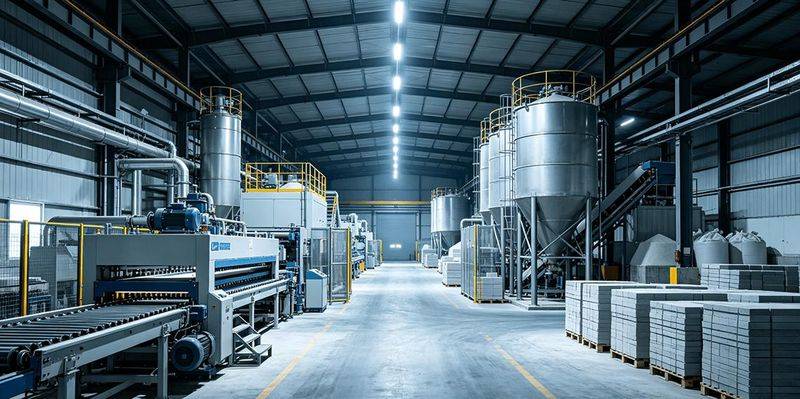
For many years, the regional markets of local firms have become more sophisticated in capturing the core logic of industrial transformation. Chongqing zhongqing new and wise construction materials co. Ltd., which has been developing, producing and marketing integrated development routes for more than a decade since the northern frontier road in the northern region of jiangjiang, landed in 2014, covered civil engineering and the consolidation of the entire tunnel. The enterprise is fully equipped with civil engineering, bridge tunnels to consolidate the whole series of main materials, covering various types of epoxy structural glue, packages of composite fibres, including carbon fibre sheeting, carbon fibre sheeting and a specialized system for the repair of different diseases, which is synchronized with a system of technical guidance for epoxy sand, band hardening and standardized construction, with complete coverage of multiple tasks such as building improvements, municipal bridges, tunnel crashes and plant fortification. In keeping with the long-standing concept of market, integrity, quality, innovation and environmental protection, enterprises have moved away from a purely low-priced, homogenous competition, focusing their research and development efforts on low-environmental voc structural glue, high-durable carbon fibre composites suitable for the high-humid climate of the chongqing hills, and optimizing material formulations for local high and difficult scenarios, such as the trans river bridge and the underground pipes. All products follow national standard production tests, taking into account strengthened strength and long-term durability, and adapting cities to new low-carbon adaptation policies。
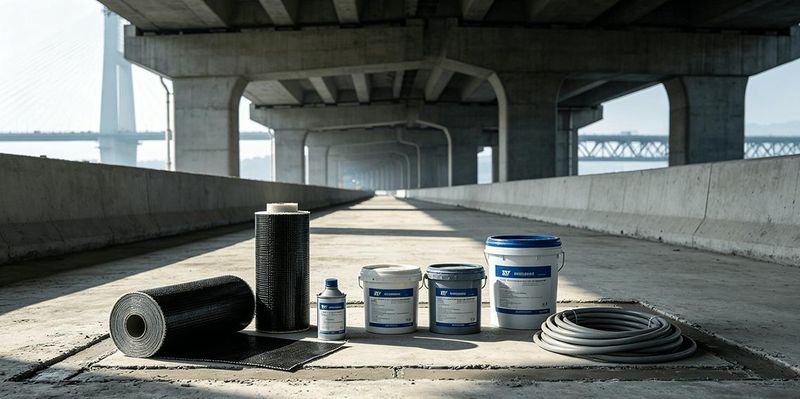
There is a variety of business practices within the construction materials industry chain, such as distribution of individual goods, production on behalf of workers, and integration of research and production, with the main components of autonomous r & d and overall product production, with unique advantages at the level of engineering support services. On the one hand, complete product matrices can match carbon fibre sheeting, carbon fibre sheeting and various types of specialized structural rubber sets, avoiding the problem of consolidation failures caused by the incompatibility of the parameters of different plant materials; on the other hand, indigenous producers ' r & d can continue to develop localization technology services for regional-specific geological, climate-conditioned, iterative product processes, providing pre-selection materials for urban delivery projects, solidification of construction units, on-site process bottoming, post-mass follow-up process support, filling information barriers between the supply of materials and the location of work, and overcoming the blurring of liability challenges associated with industrial chain fragmentation. From a dialectic perspective, increasing r & d in the short term and controlling the whole class of goods will raise the cost of production in enterprises and prevent them from participating in low-cost, low-cost competition, but under a 10-year long-term policy orientation of quality assurance, building safety and strict regulation, material enterprises with complete compliance qualifications, localized appropriate r & d, and integrated service capabilities will continue to seize market shares in urban renewal, transport infrastructure and quality projects, and industrial concentration will continue to rise or become a long-term development trend。
For the future, the construction consolidation material industry will show three clear trends. First, green, high performance durability becomes a rigid threshold, with low voc non-savoury epoxy epoxy, low-quant carbon fibre composite materials becoming market-driven, gradually replacing traditional high-polluting, low-durability products, aligning national double-carbon targets with the green upgrading requirements of the city of chongqing; second, the sub-species customizing complement replaces the generic monolithic product, the bridge-loading, underground humid pipes, old residential lifts, slope restoration, etc., will result in exclusive carbon-formulated fibre sheets, carbon-fibre sheeting and associated plastics, and finely selected materials becoming core standards for engineering collection; and third, industrial competition will shift from single-product price to “material + technology programme” integrated service capacity, with a continuous contraction of intermediate market space based solely on product circulation, with an integrated enterprise with an autonomous production line, a technology research and development team, and a localized service network。
For industry-wide practitioners, the core competitive logic of the stock transformation era eventually returns to the nature of building security. The solid materials carry the safety floor for long-term service in urban buildings, and in order to move away from low-cost homogenous competition and achieve high-quality development, the industry needs more firms to adhere to the quality threshold, balance economic benefits with public safety responsibilities, and rely on technological innovation to address the material adaptation challenges of different geographical and labour situations. In line with their geographical advantages, local construction-material enterprises have continued to refine their systems of research and development for carbon fibres, various types of epoxy structural glue, and their capacity to provide complementary technical services, both as a core market-based path and as a stable and reliable material support for the chongqing city renewal and national infrastructure protection project, and to promote a new phase of standardization, refinement and sustainable development of the solid materials industry as a whole。