The integration of assisted reproduction projects into health care can, to some extent, alleviate the economic stress of infertility couples and contribute to or contribute to higher fertility rates in the country。
In recent years, there have been repeated calls for “incorporation of assisted reproduction into health care”, but policies have been delayed. Behind this is the rising incidence of infertility and the high cost of assisted reproductive treatment。
On 1 july, 16 therapeutic assisted reproductive technology projects were formally included in the beijing municipal health insurance and occupational injury insurance payments in beijing. This initiative contributes to higher fertility rates。
The number of births in the country has declined for six consecutive years since 2017, to 9. 56 million in 2022. At the same time, the infertility rate among the population has increased。
According to a major report on reproductive, maternal, newborn, child and adolescent health in china, published in may 2021 by jo jie, a member of the chinese engineering college and managing director of beijing university, the incidence of infertility in china rose from 12 to 18 per cent between 2007 and 2020。
Mitigating economic pressures
Human assisted reproduction technology (art) refers to the use of medical techniques and methods for artificial manipulation of mates (semen and eggs), concentrators (fertilized eggs) and embryos for the purpose of fertilization, including, inter alia, artificial insemination, transplantation, in vitro fertilisation-embracing and various other derivative technologies。
At present, in vitro fertilisation - embryo transplantation is the most common assisted reproduction technique, which removes sperm and eggs from the patient's body for in vitro fertilization, develops into embryos and is transplanted into the female uterus and develops into real embryos。
Since embryos need to develop in in vitro during the first two days, they are also called in vitro infant techniques. In terms of scope of use, the technology is applied mainly to households where there is a rationing barrier, or an ovulation barrier, or a weak male。
Over the last 40 years, in vitro infant technology has undergone approximately three important changes: a generation of in vitro babies, namely, conventional in vitro fertilization (ivf), which begins with the problem of female infertility from the egg; a second stage infant technology, i. E. Single sperm microinjection in ovarian plasma (icsi), which is designed by embryoologists to fertilise sperm, primarily to address the problem of male infertility; and a third stage of in vitro infant technology, which refers to the pre-incorporation genetic diagnostic technique (pgt), which is based on first- and second-generation technology and is capable of implantation by screening embryos without chromosomal disease or genetic disease。
Although individual differences can lead to large cost differentials, in general, one generation of technologies is the cheapest, with about $20,000 to $30,000, two generations about $40,000, and three generations are more expensive, starting with $100,000, because of the need for embryo screening。
According to the guide to assisted reproductive clinical practice for infertility in china, women aged 35 years and over require an average of three treatment cycles to be able to successfully live births. Successful live births for women of childbearing age cost at least $100,000 at a time, or even more, and are more economically burdensome for ordinary families。
In an interview with the media, li yong, vice-president of beijing university hospital no. 3, director of reproductive medicine, stated that “for patients in need, the incentive for treatment will increase by reducing the cost of treatment”. The cost of self-funded in vitro babies is 20,000 to 30,000 yuan once every three months or so, whereas, according to previous studies, the average pregnancy rate for a single case is around 50 per cent, the cost of a crude birth case is around 100,000 yuan, and the financial stress of the patient can be further reduced as the level of treatment increases or assisted reproduction is integrated into health care。
According to a study released by the safe securities institute, higher prices compared to the patient's ability to pay have led to lower- and lower-middle-income populations being held back from assisted reproduction projects, and higher prices have constrained patient choices。
The integration of assisted reproduction projects into health care can, to some extent, alleviate the economic stress of infertility couples and contribute to or contribute to higher fertility rates in the country。
Inclusion of health care
During the two sessions in 2021, a large number of delegates and commissioners advocated for the inclusion of assisted reproduction in health insurance to help promote better national fertility policies。
In september 2021, for the first time, the national health insurance agency “lenishment”, stating that in the area of medical treatment, “the technical maturity, safety, reliability and cost-controllable therapeutic assisted reproduction technology that can be assumed by health insurance will be gradually incorporated into the coverage of health insurance, on the basis of scientific calculations and full justification”。
In august 2022, the national commission for development and development and the national commission for health and welfare jointly issued guidance on the further improvement and implementation of support measures for active fertility, which provides for the promotion of the promotion of infertility prevention and treatment in health-care institutions, including through assisted reproduction techniques, as complementary reproductive techniques for self-funded projects or will be covered by health insurance。
In february this year, the national health insurance board published a letter of response to the proposal to include free medical care for infertility, stating that appropriate birth pain and assisted reproduction technology projects would be gradually included in the health insurance fund。

On 15 june, the beijing municipal health insurance board announced the inclusion of 16 projects on “promoting ovulation examinations, embryo transplants, intrauterine artificial insemination”, involving a broad population, diagnostic needs, technological maturity, and safe and reliable therapeutic reproductive technology, in the municipal basic health insurance reimbursement scheme, effective 1 july。
On 1 july, 16 therapeutic assisted reproductive technology projects were formally included in the beijing municipal health insurance and employment injury insurance payments。
The 16 therapeutic assisted reproduction technology projects were described as including: promotion of ovulation examinations, sperm preferred treatment, sperm preferred treatment - density gradient centrifugality, intrauterine artificial insemination, sperm freezer recovery, vaginal puncture ovulation, embryo morphology assessment, cystal culture, in vitro fertilisation, embryo transplantation, single sperm injection within ovary cell plasma, diagnosis of embryo monogeneasis, pre-inplant embryo genetics testing for chromosomal diseases, cystalcular/ovite/polar biopsy, testosterone separation and frozen embryo recovery。
According to the beijing municipal health insurance board, 16 therapeutic assisted reproductive technology projects are included in the out-patient reimbursement according to health insurance category a, are not reimbursed for hospitalization and are limited to out-patient reimbursement. In addition, with the approval of the health department, there are currently 18 medical institutions in beijing with technical qualifications in assistive reproduction, of which 16 are health-care and 2 are non-medical. Sixteen therapeutic assisted reproduction technology projects in 16 health-care facilities are reimbursed as required。
Integrated support policy
In the context of promoting fertility, the integration of assistive reproductive technology into health care has become an important initiative of multiple governments to improve the system of reproductive support policies。
In 2021, the plan for the application of human assisted reproductive technology (2021-2025) was published in 12 provinces of shanghai, hebei, henan, tianjin, guizhou, anhui, shaanxi and shanxi. The provinces have indicated in their plans the need to increase the number of human assisted reproductive services。
At the end of 2022, the women and health section of the guangdong women's development plan, published in guangdong province, also referred to “the regulation of infertility and infertility services; and the regulation of the use of human assisted reproduction techniques”。
In addition, the liaoning department of health and social security has included 18 reproductive support projects, such as embryo culture and embryo transplantation, in the liaoin province maternity insurance catalogue, which was implemented throughout the province on 1 july this year。
The sichuan provincial health insurance agency also responded to the netizens in the near future by stating that it would improve the management of basic health-care services in line with the country's unified deployment, and that eligible medical services related to assistive reproductive technology would be programmed to cover basic health insurance payments。
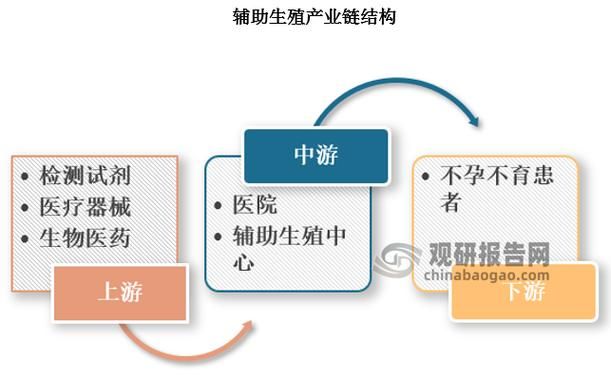
With the formal landing of the multi-role assisted reproductive technology project into health-care policies, the reach of the consumer population has expanded and the domestic market penetration of assisted reproduction is expected to increase further。
According to data released by the national commission on health and welfare and the chinese population association, the market penetration rate for assisted reproduction in china was 8. 2 per cent in 2021, compared with 32 per cent in the united states, and there is great scope for development in the area of assisted reproduction。
With the postponement of childbearing age and the opening up of the policy of multiple births, the proportion of women of high reproductive age (35-44) has gradually increased and is one of the main contributors to reproductive consumption. “assisted reproduction is directed at groups of infertility with will. For the population as a whole, there is still a need for comprehensive support for policies to increase fertility。
While assisted reproduction has enabled many couples to acquire children, medical technology still helps infertility groups that wish to have children. Clinically, the high incidence of infertility in recent years has been accompanied by a decline in the fertility rate and a generally stable demand for assisted reproduction, without a rapid increase in population policy adjustments。
According to statistics, in 2019 the number of assisted reproductive technology consultations reached 1. 26 million, and the number of assisted live births reached over 380,000, representing 2. 6 per cent of all live births in the same year。
The chinese academy of sciences, the dean of the institute of reproductive and developmental studies of the university of jordan, has stated that “the number of people born each year through assisted reproductive technology of more than 300,000 has contributed little to the increase in the total population”
Assisted reproductive technology is limited and fertility protection is imminent。
Li ying stated that the decline in the birth rate was a combined problem, and that at the heart of the problem was the decline in the will of young people to bear children, and that nothing could be said without them. For most young people, addressing reproductive concerns requires multifaceted support。
In the face of the increasing ageing of the country and the continuing decline in the birth rate of newborns, the integration of assisted reproductive technology into health care is undoubtedly a policy of profitability that encourages reproduction. As to whether or not the results were expected, only time could provide answers。