On 21 february 2022, a pound of news blew up in the assisted reproduction circle - 16 assisted reproductive technology projects in beijing were included in the health insurance reimbursement. At one point, the madness of the proletariats and the discussion started, “i didn't think it would be so soon”: “it was a pioneering policy” and “it would be of great benefit to the proletariat”。
As a result, the concept of assisted reproduction rose significantly, with an increase of over 8 per cent in the number of reproductives, an increase of nearly 8 per cent in the number of medical treatments in becon, and a rise in the number of stocks of mady technology, the conzip pharmaceuticals industry, the dagawikon group, the good health, the health of the yangtze river six, and the auxiliary reproduction centre with operational layouts/cooperatives。
According to the circular on regulating the prices of partial health care services issued jointly by the beijing city health insurance board, the municipal health board and the municipal human and social insurance board (2022) no. 7 regulates 63 health service price items and defines basic health insurance reimbursement policies. In its reimbursement policy, 16 items of assistive reproductive technology, such as intrauterine insemination, embryo transplantation and sperm-prevalence treatment, which are common in outpatient treatment, are included in the scope of health insurance a claims。
This new policy, which will land on 26 march 2022, will be applied to 15 public health-care facilities in beijing with basic health-care facilities with complementary reproductive qualifications, as well as to other non-public health-care facilities。
Prior to this, there were no health-care programmes targeting assistive reproductive technology in the country, and this initiative in beijing will be a milestone in the area of assisted reproductives, leading assisted reproductive services from “no health-care coverage” to the “health-care payments” era, easing the burden of infertility and infertility families paying, and stimulating the market for the increase in assisted reproductives。
16 assisted reproduction projects integrated into the beijing health insurance a, covering i/ii/iii in vitro infant technology
In beijing, the circular on regulating the prices of partially adjusted medical services regulated 63 items of health service price, including 53 items on assisted reproduction, ranging from lowest price testosterone size measurements (15 yuan) to expensive microscope testosterectomy mtsa (517 yuan), and abolished 13 items of existing health service price, also related to assisted reproduction, and “new metabolism” promoted the normative development of assisted reproduction downstream。
In order to implement the active reproduction support measures, the beijing municipality has selected 16 assisted reproduction technologies, involving a broad population, diagnostic needs, technological maturity, and safe and reliable reproductive technology, for inclusion in the health insurance a claims, based on cost containment and ensuring affordability of health insurance funds. Prior to this, there were no assisted reproductive technology projects in clinical practice that could cover medical insurance claims, and only the gynaecological examinations related to infertility in women had precedent for medical insurance claims。
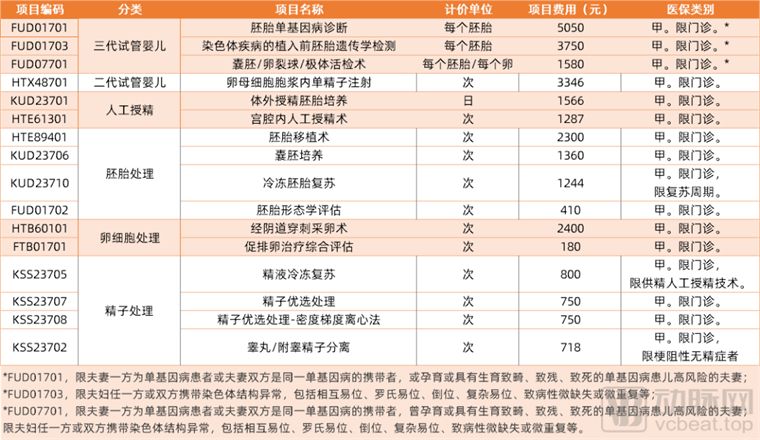
16 assisted reproduction projects in beijing included health insurance reimbursement
The a catalogue of medical insurance is a clinical consultation that is necessary, safe and cost-effective and is fully reimbursable. Of the 16 assistive reproductive technology projects included in the health insurance “a catalogue” in beijing, two are in vitro insemination “in vitro insemination” “breeding embryos”, one is in the “single sperm injection” of the ovary mother cell plasma of the second in vitro baby, and three are in the “diagnosis of an embryo-synthesis” of the three-generation in vitro infant “diagnosis of an embryo-synthetic disease” “pre-embroid genetic testing” “cystalms/ovations/extrestrial biopsy”。
In terms of prices, the prices of this routine regulation in beijing have not changed much in comparison to the past, and are generally maintained at industry averages. In this context, we can see that three-generation in vitro technology is more expensive than one generation of two generations of technology, and that, at unit cost per embryo/egg, a single embryo implantation pre-genetic test (pgt) amounts to more than $4,000, whereas in actual clinical practice patients tend to remove multiple eggs and develop multiple embryo replacements, and the overall cost of testing a patient for a triple in vitro baby is more than $10,000 if the criteria for each test are calculated。
Thus, with the support of the existing programme of health care for assisted reproduction, the individual cost of assisted reproduction can be covered by 12,000 yuan and the total cost of assisted reproduction can be higher。
Triple test tube technology pgt-m and pgt-sr were first incorporated into health insurance claims
It is worth noting that the non-whole genetic screening (pgt-a) prior to embryo transplantation was not included in the three-generation in vitro technology incorporated into the beijing medical insurance reimbursement. The three-stage in vitro infant technology, the pre-embroid transplant genetics test (pgt), is divided into pgt-m, the pre-embroid genetics test, the non-whole genetics screening of pgt-a before embryo implants, and the genetic mutation tests of the chromosomal institutions before embryo implants (pgt-sr)。
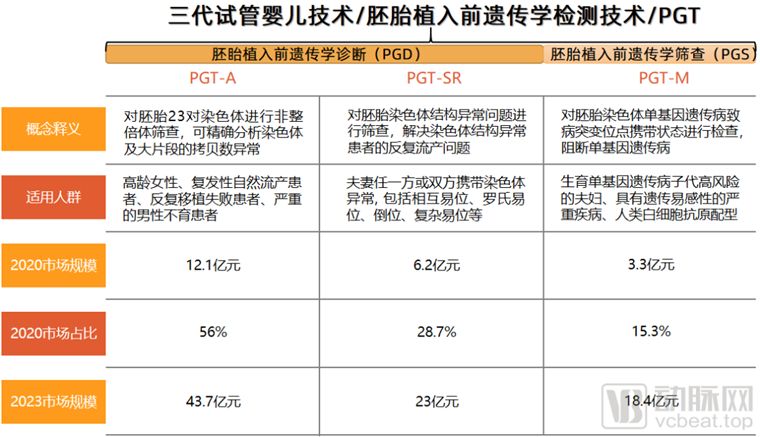
According to three generations of assisted reproduction techniques that were included in the beijing medical insurance reimbursement, “cystals/combula/extreme biopsy”, i. E. Embryonic biopsy, is an integral part of the three generations of in vitro babies and is the first step in the follow-up genetic testing of cells from developing embryos. The genetic tests of the embryo “chromosomal disease” which are also covered by the beijing health insurance reimbursement correspond to pgt-m and pgt-sr in tri-generation in vitro technology。
Pgt-m and pgt-sr, which were the first three-generation inquisitorial techniques to be included in health insurance claims, reflect the importance that the state attaches to national eugenicity. As can be seen from the differences in the number of people with different pgt techniques, pgt-m and pgt-sr apply to pgt-a, often to couples who are at risk of giving birth to genetically ill children。
The pgt-a test, which is more applicable to older women, repeated abortions, and failed transplants, also means that three generations of pgt-a testing need to be preceded by indicators of accommodation, while the pgt-a test's biological indicators are more liberal than the pgt-m and pgt-sr applicable indicators, and there is a slight difference in the control of pgt-a pre-test physiological indicators between the different centres of assisted reproduction in the industry, leading to negative feedback from patients who want three generations of pgt-a natural inflow to the assisted reproduction centre, which is more liberal in the assessment of pgt-a。
On the other hand, pgt-a has a broader scope of application, with greater market space, greater clinical coverage and the availability of reagent boxes in the country; while pgt-m and pgt-sr have a more limited scope of application, market space is smaller, their products are more difficult to develop and they are not available in the country, but they are of great value to every family with a genetic disease in the clinical field, and they have been first included in the beijing health care catalogue。
In 2021, our health insurance covered the full cycle of assisted reproduction
Prior to the initial incorporation of assistive reproductive technology into the health care catalogue, we had first completed full-cycle coverage for assisted reproductive medicine。
In 2021, the national health insurance service issued its response to recommendation no. 5581 of the 13th national people's congress. In contrast, ovulation drugs tend to account for 60 to 70 per cent of the total cost of assisted reproductive medicines。
Prior to that, we had included assisted reproductive medicines such as curvature curvature, induced ovulation and yellow-support drugs such as chlamydia. As a result, our health care coverage has largely covered the full cycle of assisted reproduction。
What's the source
The increasing market for low birth rate releases
“the inclusion of in vitro baby costs in the health insurance system will result in a large number of children, most of whom still feel too expensive and have a low rate of success once and for all, while the average family has been frustrated, and i have spent more than three hundred thousand or four times, and i have not succeeded, and is still in debt repayment.” was assisted reproduction technology able to alleviate the demographic situation in china when the birth rate fell by 1 per cent in the artery network? In one post, there is an end-of-the-text message from the reader, which points out that the root cause of assisted reproduction techniques to alleviate china's demographic patterns is the difficulty of paying the patient。

There are also numerous proposals on the people's network's “leader message board” for the inclusion of in vitro infant/aided reproductive technology projects in health insurance reimbursement, which places a huge burden on internet friends to complain of high costs on their babies。
How much for assisted reproduction? An arterial-based expert interviews were informed that the cost of treatment per cycle varies between 30,000 and 50,000 for one generation/second in vitro infants, and between 40,000 and 66,000 for three generations in vitro babies, one cycle taking two to three months。
However, the actual payment of assisted reproduction to an infertility couple is far more than that, and the success rate for assisted reproduction in humans is currently between 30 and 50 per cent, with some patients experiencing two to three embryo transplants to meet pregnancy standards. In other words, some infertility couples spend more than $100,000 on assisted reproduction。
According to china's economic data published by the national institute of statistics for the year 2021, the country's per capita disposable income in 2021 was approximately 35,000, and the amount of time spent on in vitro babies by both couples, calculated at 70,000 per year, was far beyond the reach of most of the national economy。
According to information from people in the assisted reproduction industry, there are currently about 1 million patients performing assisted reproduction each year, while the actual number of infertility in china is over 40 million, meaning that the penetration rate of assisted reproduction is less than 3 per cent among the infertility population, leaving 97 per cent of the infertility population, and the reasons for not performing assisted reproduction in the country are mainly due to three factors: first, the patient's own physical condition does not apply to assisted reproduction; secondly, the cost of assisted reproduction cannot be borne because of the sensitivity of the price; and thirdly, the choice to go to an assisted reproduction centre abroad for an inoculation。
Moreover, even when assisted reproduction has been chosen in the country, nearly 90 per cent of the population is price-sensitive. A medium-range service platform for assistive reproduction described the most important elements for the majority of its users when choosing to run the arc hospital as price and success rates, and the fact that only 10 per cent of the price-insensitive population focused primarily on quality of service and medical experience。
Prices are thus identified as one of the important factors impeding the release of the market space for assisted reproductive increments. In the context of china's continuing low birth rate and the increasing trend towards ageing, assistive reproductive technology is one of the means to relieve some of the population's pressures. First, the state needs to release the fertility of this “failure” segment of the population and vigorously support the development of assistive reproductive technology; and secondly, the infertility portion of the infertility population, which has been discouraged by economic pressures, can reduce the burden of paying through health insurance reimbursement and stimulate the increasing market for fertility。
Prior to medical coverage, auxiliary reproductive business insurance was a new attempt to relieve payment pressures
Faced with the persistent problem of high costs of assisted reproduction within the industry, the support business scheme has been introduced through joint commercial insurance of assisted reproduction platforms/institutions, which has been the primary means of reducing the burden of paying for patients before health insurance。
The components covered by the support reproductive commercial insurance are as follows: insurance success, insurance of complications, insurance of journeys abroad, insurance of accidents, etc. Of these, the risk of success is greatest and most popular, with, by definition, unlimited number of embryo transplants until the patient has a successful pregnancy and gives birth to the next generation. For example, 88,000 successful kits of assistive reproductive foods were introduced in a number of newly established assisted reproductive centres to attract customers。
However, complementary reproductive commercial insurance does not play an assumed role in actual landings. According to industry sources, subsidiary reproductive services often have various conditions for insurers due to risk control, such as the exclusion of older women over 35 years of age from coverage, which limits the possibility that the vast majority of patients who are in need of assisted reproductive care due to their age increase, which is part of the dominant consumer group of triple test tube technology。
This is the first time that the government has been able to provide health care to the population
Is assisted reproductive collection early
By 2023, the rate of infertility is projected to increase to 18. 2 per cent, according to the information published by the national network of drug regulatory authorities at the end of 2020, and it is assumed that the number of infertility cases in the country exceeds 50 million. Of the 50 million patients, however, the penetration rate of assistive reproductive technology is actually less than 3 per cent, and only over 1 million infertility patients clinically choose to use assisted reproductive technology to give birth to their offspring each year。
The three reasons for the lack of assisted reproduction in this population group, which is the subject of a study of infertility with subjective procreational will, have been analysed, and the price has become a major impediment to assisted procreation. The integration of assistive reproductive technology into health care in beijing is only the beginning, and if future assistive reproductive technology projects are fully integrated into national provincial health care, using the beijing city reimbursement project as an example, the cost of covering about 20-40 per cent of the cost of a single cycle can be significantly reduced by users ' payment pressure, which we reasonably assume will stimulate a significant increase in the clinical penetration of assisted reproductives in the country。
The current rate of clinically assisted reproduction penetration is less than 3 per cent, and if a similar health-care policy is introduced across the country to ease the pressure on payments, we will increase the penetration rate by 1 per cent. The clinically assisted reproduction centre will add half a million potential users at an average cost of 100,000 per guest, and conservatively estimates that the market as a whole will also have 5 million additional space. Auxiliary reproductive equipment manufacturers have come to laugh that, no matter how much space is added, this auxiliary reproductive health insurance will undoubtedly stimulate the expansion of existing markets, which will be of great benefit to their upstream auxiliary genitals consumption development and will increase product sales。
However, the manufacturer also referred to its concerns that the age of assisted reproductive collection would be advanced in the future if the assisted genitals were to enter the national health system in large areas. “auxiliary reproductive extraction is the price differential of the middleman/distributor, which directly prices the health insurance authority, and brings another benefit to our national art brand.” the manufacturer explained that “the cost of selling overseas art brands in china is necessarily higher than that of national product plates, and if the auxiliary reproductive industry is faced with full-scale collection, this would be an opportunity to cross the national product plate curve”
Against the background of the shift in producer distribution patterns resulting from assisted reproductive enrichment, which saves at least 30 to 50 per cent of the price differential for patients, the cost control of the manufacturer and the core technical certainty will be key to future competition。
After beijing, what is the next province for assisted reproductive health care
Beijing, as the capital of china, has taken the lead in leading the programme of assisted reproductive technology into health insurance reimbursement; during the same period, concern has also begun to be expressed about the next step in assisted reproductive technology, when it will be fully accessible and implemented throughout the country. In the light of the recommendations of the people's congress of the last year or two and the responses of the provinces, the first-line cities, represented by guangdong and shanghai, may be the next province to be covered by assisted reproductive technology。
As early as march 2021, during the four sessions of the 13th national people's congress, gauri, representative of the national people's congress, secretary-general of the united for the handicapped party of anhui province, submitted a proposal for the inclusion of “infertility” support treatment in the national health insurance to increase population growth, at which time the national health insurance board responded that “in the context of the medical treatment programme, the orientation of the `basics of protection' will be directed to the local level, progressively incorporating the technically mature, safe and affordable therapeutic assisted reproduction techniques that the health insurance can assume, based on scientific calculations and full justification, into the procedural coverage of health insurance payments”
Similarly, on the people's network's “leader message board”, with regard to the proposal of netizens to include the assisted reproductive technology project in the health insurance reimbursement scheme, we can see from the responses to some of the recommendations we have received a comment from the netizens “to support the three-child policy and to recommend that guangdong province take a first step to include reproductive assistance (in vitro) in the health insurance reimbursement scheme”. The general information unit of the guangdong provincial commission replied, “we would like to thank you for your proposal to include reproductive assistance (in vitro) in health insurance claims, which we will refer to the competent authorities for study”
However, not all provinces have plans to promote access to health care for assistive reproductive technology projects, which is linked to the balance of the local health insurance fund. For example, henan health insurance also replied on the people's network leadership board: henan does not currently have the capacity to extend health insurance coverage to assistive reproduction and focuses only on basic medical needs; the henan health insurance fund is a “slight surplus”。
As a result, the next step in the integration of assisted reproductive technology will not be extended to the entire country, and the first-line municipalities that can be supported by the upper north wide and advanced health insurance fund will be the first-class cities to be covered by assisted reproductive technology。