Five core conclusions
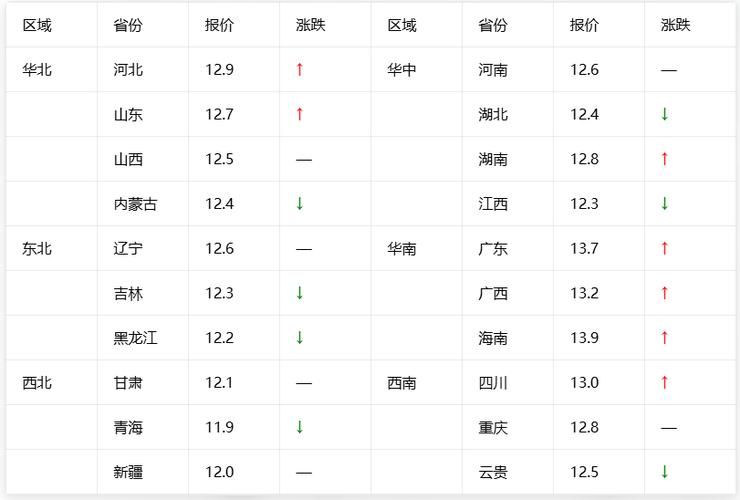
One, 28 provinces were all red, with a 2. 09 per cent rise in the late month's tail by 9. 75 yuan per kg in the national foreign journal, 0. 20 yuan per day in the 28 provinces, and 5. 5 yuan per pound on the fujian guangdong station。
Second, the increase is not demand, but supply is running at 31 per cent of the strangulation rate, and the price rises are due to group contraction + bulk sales + the shortage of triple resonance。
Thirdly, there is a deficit of 265 for one head and 265 for 10 months, and 278 for pigs and pigs, and 2367 for corn and 2848 for beans。
Iv. The sum of $157 per head of pighood fell from 267 to 157 per cent higher than in may, while the cost of the supplement fell, but the confidence of the industry fell, and no one dared to do so。
By september, the policy red line must reach only 1. 54 million short of its target of 375. 5 million, with the may phase-out increasing by 47 per cent over the same period and moving to the final sprint。
[article by article]
I. 28 provinces are all red, with 2. 09 per cent late in the month - it's high, but don't be optimistic
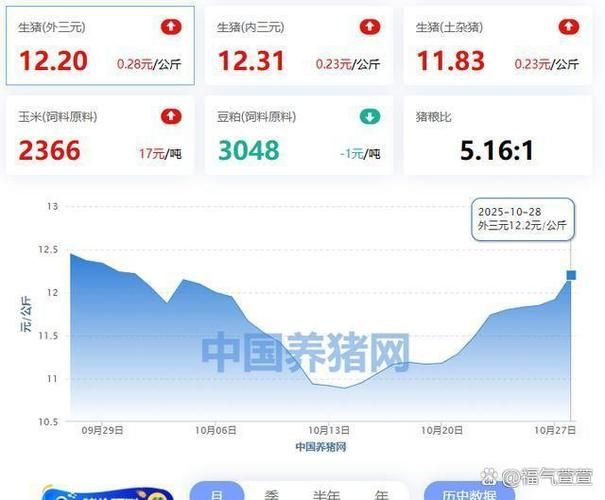
Today, the average price of the country's three foreign dollars is $9. 75 per kilogram, or 4. 88 per pound, an increase of 0. 20 per kilogram, or 2. 09 per cent, compared to yesterday's breath. In 28 provinces, the pattern of growth was very rare in june, with no single drop. At the regional level, the six regions are well synchronized: fujian in south china and guangdong lead the country, where $5. 5 per pound per pig price station; china, china and north china, which generally rise to 4. 8-5. 2 per pound; and the long-depressed north-east, which rises to 4. 5-4. 7 per pound, with the largest single-day increase of 0. 25-0. 3 per kilogram. The weight of each column is 122. 2 kg, which indicates that the general type of pig in the market is tight. It is important to recall, however, that the end of the month is a common occurrence throughout the years, with a contraction at the beginning of the month, an increase in bulk sales and short-term concentration pushing up prices. This supply-side emotional-driven price increase often lacks sustained support from the consumption side, and it is still to be seen whether it will be able to stand on a five-dollar/kilogram level after july。
Two, not demand, supply is shrinking -- "false prosperity" with three forces
On the face of it, the price of pigs has risen dramatically, but looking at downstream data reveals signs: slaughtering enterprises have only about 31 per cent start-up, white strips travel at average speed and end consumption has not improved significantly. It is the three supply-side forces that really drive the price hike. First, there is a positive contraction at the end of the month for the group field, and a tightening of the bar rhythm at the end of the month after the start of the first month, with a sharp decline in the market's sources of pigs. Second, it is widely sold by the diaspora, which sees higher prices rather than higher prices, resulting in positive feedback that they are not sold. Thirdly, there is a shortage of medium- and large-weight pigs at the stage, with no positive entry to the previous stage and only 27. 1 per cent of the block utilization rate, resulting in over 120 kg of large pigs currently on demand. These three forces added to the concentration at the end of the month. But it's essentially a "supply contractionary price increase" rather than a "demand-led price increase" and the price may be set back once the block is back on line in early july。
Three, a loss of 265, a loss of 10 months - the moment of the pigkeeper's absence
According to the latest cost estimates, there is a loss of approximately $265 per column per pig in the current self-care model, and a loss of up to $278 per head per pig in external purchase. This has been a loss for the tenth consecutive month. At the cost end, maize prices were $2367 per ton and soybeans 2848 per ton, the cost of feed was high and there was no visible fallback space in the short term. Even more worrying is the loss is accelerating production. In may, there was an increase of 11. 42 per cent in the national scale scale of the elimination of sows, which was 46. 95 per cent more than in the same year, and a fall of 7. 20 yuan/kg, or 6. 98 per cent per day, indicating that large numbers of sows were being sold centrally. Cash flows are lifelines for the persistent breadwinners. This stage is much better than who doesn't make it, but who can handle it。
Iv. 157 porks/heads, dropping $110 higher than may — where is the bottom
The latest offer of $157 per head for seven kilograms of pigs was $167 per head, down by as much as 41 per cent, compared to a full $110 per head in may. The sharp fall in the price of pigs reflects the collapse of confidence in the entire industry — the serious failure of the breadwinner to make up for the losses and the lack of expectations for future behaviour. But from another point of view, the fall in pig prices means that the cost of supplementing is falling rapidly. If the price of pigs warms up in the second half of the year as a matter of industry consensus, now the cost of the $157 supplement is $110 for each head, compared to the $167 paid two months ago. But the risk is the same: if the business continues to be depressed, the price of a pig is just "cheap and cheap." it is suggested that families with funds on hand may begin to focus on the opportunity to fill the bars in batches, but it is not recommended that cash flow be left to deal with uncertainty。
The policy red line must meet the target by september - the downfall of capacity has begun
The latest data from the ministry of agriculture and rural development show that there are approximately 3. 904 million female pigs in storage nationwide, only 1. 54 million less than the regulatory target of 375. 5 million. As required by the policy, this rotational capacity reduction must be completed by september 2026. In terms of trends, in may the size of the field increased by 46. 95 per cent over the same period, with a marked acceleration in the rate of loss of capacity, but a gap of 1. 54 million needs to be concentrated between july and september. This means that the elimination of pigs will only increase and not decrease in the next three months. The good news is that the more complete the capacity is, the more the supply shrinks in the second half of the year, the more solid the basis for the recovery of the price of pigs. The current capacity of the frozen stock, at 26. 5 - 27. 7 per cent, is at a high level in almost three years, and these stocks are also “time bombs” for future prices, which need to be gradually digested before the consumption season. For the breadwinners, it makes more sense to focus on the september policy node than on short-term pig price fluctuations。