The market share of lng tractors was over 50 per cent in 2024 and the penetration rate of electric weight cards in some markets in 2025 was over 40 per cent. So, the industry is focusing on a topic: where is the future space for fuel weights
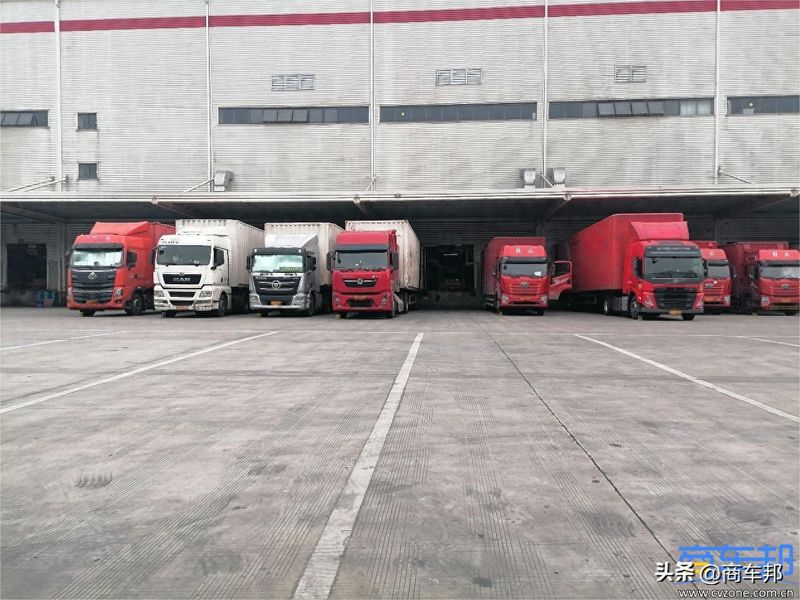
Survey of transit warehouses at a express delivery company at the provincial level, with more than 75 per cent of diesel weight cards
Recently, when merchants visited the market, it was found that fuel weight cards continued to be the main vehicle in high-end markets, such as express and cold-chain transport. Why have these users not replaced the lng weight card and the electric weight card? What are the main considerations
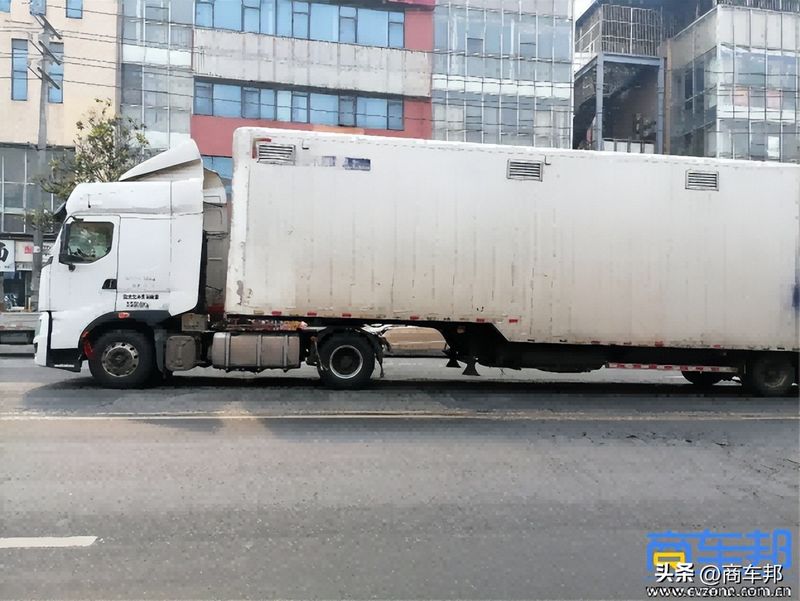
Quick delivery scenes for compartment space utilization, with diesel weight cards matching 15. 6 meters. Box
First, the continuing decline in diesel prices has reduced the fuel cost gap between diesel and lng weight cards. At present, the retail price of diesel fuel at multiple gas stations in the country is 7. 1 to 7. 3 per litre. However, many large logistics companies have worked strategically with petrol stations, fuel producers, etc., to distribute diesel directly to each other, and to set up gas stations in their own parking lot. The wholesale price of diesel no. 0 on 21 may 2025 was $5,961 per ton, equivalent to $5. 86 per l, a decrease of $1. 2 per litre from the gas station. In addition, diesel-heavy tanks, with a distance of up to 1,000 litres and a continuous distance of up to 3,300 kilometres, can cover a journey to and from the distance, with only a small amount of refuelling required; in contrast, the lng gas tank is a pressure container, which requires a high level of professionalism for its operation, and the lng heavy card must be refuelled at a regular gas lifting station, with limited preference. In the case of 4-axis (4x2 tractor + 2-axis semi-mounted) delivery vehicles, diesel weight cards consume only 24 litres/100 km of fuel, equivalent fuel costs are 1. 41 yuan/km, plus urea consumption of 0. 1 yuan/km, fuel costs are 1. 51 yuan/km, lng weight cards consume 23 kg/km, lng prices are 4. 9 yuan/kg and fuel costs are 1. 13 km. The difference is 0. 38 yuan/km。
According to the manager of a logistics company, if the fuel difference between the lng heavy card and the fuel heavy card is 0. 4 yuan/km, the lng heavy card loses its competitive advantage and the convoy prefers to use the fuel heavy card。
Second, diesel weight cards are more reliable, durable and dynamic than lng weight cards. As competition in the road freight market heats up, the line tenders for express and cold-chain transport have been moved from the original annual to quarterly and even monthly. There are also stringent time limits for third-party convoys, such as chengdu to shanghai, 2,000 kilometres, which must be reached on time for 30 hours, a fine of $600 for lateness of an hour, and deductions for the reputation of the fleet, which affect the next round of bidding. In terms of vehicle reliability and durability, imported branded diesel card b10 has a life of 2 million km and autonomous brand diesel card b10 has a life of 1. 2 million km or 1. 5 million km. In contrast, the lng weight card is much more delicate, and the lng engine often requires inspection and maintenance (e. G. Adjusting gas door nozzles). A number of large logistics companies have reported that the fuel weight card attendance rate can reach 29 days per month, leaving only one day for maintenance, compared with 27 days per month for lng cards and 3 days per month. A 2-day gap of 24 days per month for 12 months, equivalent to a month less。
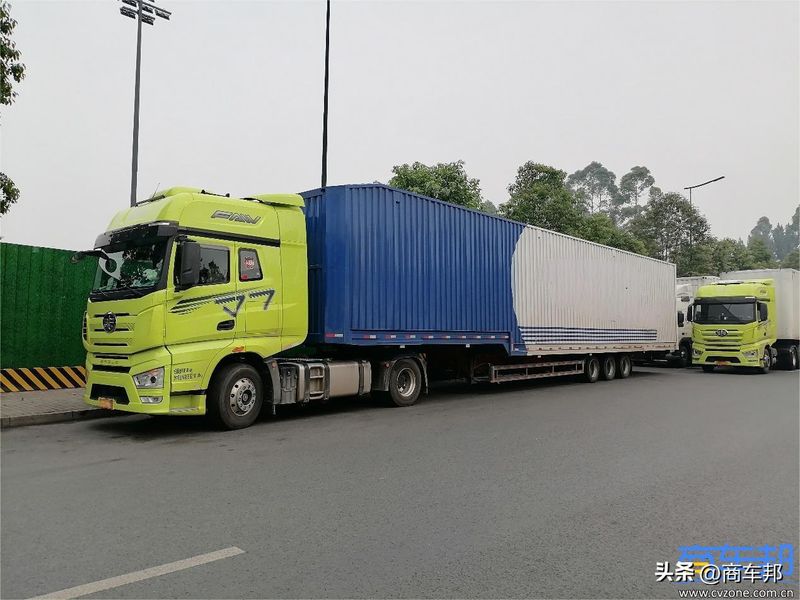
The train is 18. 1 meters long and has a diesel weight card that matches 15. 6 meters long and 130 cubic
In terms of power, 13 litres of diesel motors have a maximum power of 580 horsepower, while 13 litres of lng engine have a maximum power of only 480 horsepower, a difference of 20. 8 per cent. Quick delivery, cold-chain transport for high timeliness. Thus, in the same engine charge, diesel weight cards are much more dynamic and time-efficient than lng weight cards。
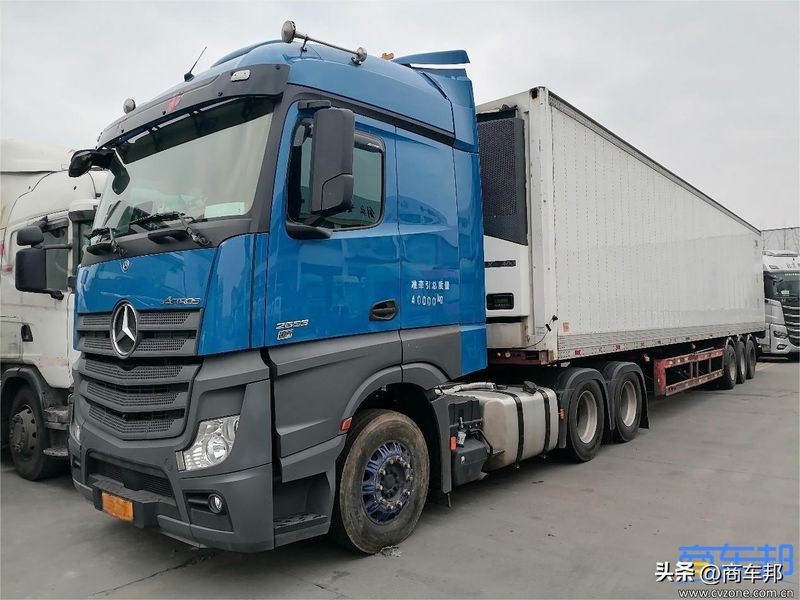
High-profit, high-risk, cold-chain transport, driver preference for higher-reliability diesel weight cut
Third, the purchase price of the lng weight card and the maintenance price were higher than the diesel weight card. The high price of the lng card is due to the large amount of precious metals that have been reprocessed by the lng card. Under the same maximum power, lng's weight is around $60,000 more than diesel fuel, and the difference in the purchase price of $60,000 is calculated at 8 per cent of the annual commercial borrowing rate, with an interest rate of 0. 48 million a year. In addition, in terms of maintenance, lng is about $15,000 more than diesel。
Fourthly, diesel weight cards are more competitive in terms of total space and weight utilization. As a result of the ongoing extensive domestic enforcement of highways for ultra-traffic traffic offences, deductions and even cuttings are imposed on long, wide and high cargo compartments. Currently, the limit for the total length of semi-mounted trains is 18. 1 m for the national road department and the traffic police, and the diesel weight card can match the 15. 6 m carriage. For the lng weight card, the lng cylinders in the back of the cab could only match 14. 8 metres, with a total volume of 5. 2 cubic metres less, equivalent to 5. 1 per cent less freight. In terms of weight utilization, lng weight cards weigh 1 ton more than diesel weight cards, and less than 1 ton less, equivalent to 4. 8 per cent less freight charges, when transported in full-load express and cold chains. Lng earns 60,000 yuan less on the basis of freight costs of $200,000 per kilometre per year。
On the basis of the above analysis, with the price of diesel, the weight of diesel has a competitive advantage in terms of acquisition costs, maintenance costs, space utilization and weight utilization. Assuming that the express transport vehicle runs 200,000 kilometres per year and sells second-hand after four years, the cost of fuel varies from 0. 4 to 320,000 for four years. The purchase cost of the lng heavy card is $60,000 more than the cost of diesel fuel, the cost of repairs is $60,000 more than four years, the loss of maintenance work is $48,000 more than four years, and the loss of lng heavy card “deficit” is $240,000 more than four years. Thus, in the case of the difference between the two fuel costs of $0. 4/km, diesel weight is still competitively stuck on tco. At present, many courier companies have started to select 10 litres of 460 horsepower engines, and their four-axis semi-mounted train (a total of 30 tons and 110 cubic metres) can be reduced to 22-23 litres per 100 km, while the purchase price of the tractor is contained within $300,000。
In the view of the merchants, diesel weight cards remain the dominant vehicle type for the short term in such scenarios as express and cold-chain transportation. Diesel weight cards continue to have a strong competitive market advantage as long as they maximize reliability, durability and motivation。