India's many operations have always been seen by outsiders as counterproductive。
But if you dig deep into the underlying causes, you can see that these seemingly eccentric moves, in fact, have an exclusive and intrinsic logic that goes so far as to be “reasonable”。
A lot of netizens have been wondering, isn't india completely out of its mind
To be honest, after reading the news, anyone would have such a feeling。
It was not india's re-armament that was incomprehensible, but the type and price of the equipment procured was beyond the imagination of all。
It can even be argued that the indian military was held by the french side
We're going to break down this controversial military purchase in detail。
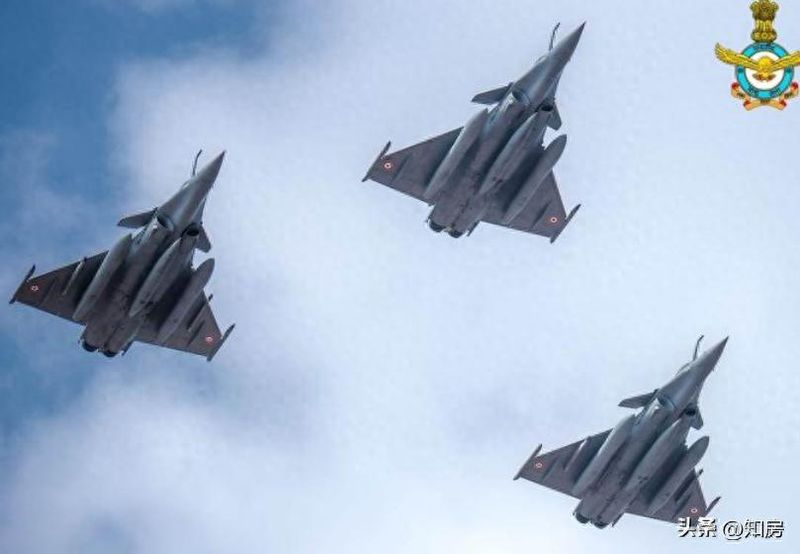
One hundred and thirty-four billion for 100 planes. Money
As reported by xinhua beijing on 3 june, citing in-service news from the international news agency for asia in india, the official indian offer to purchase 114 fighter jets has been officially submitted to france。
The process was launched last week, and the indian side has initiated the submission of procurement requests to relevant french officials。
In keeping with the initial pace of communication between the two sides, france will respond officially within two or three months, and the overall negotiation of the deal is expected to be fully on the ground next year。
The most impressive core data came from the purchase order, which totalled $34 billion。
A simple accounting exercise would result in the sharing of 114 aircraft, the cost of single machine purchases exceeding $298 million and nearly $300 million per day。
This is the procurement of military equipment, which is clearly a costly transfer of funds。
We can visualize how exaggerated this price is through horizontal comparisons。
The u. S.'s f-35 stealth fighter jets, with their own purchases at only around $80 million per unit, will not exceed $150 million, even if they are sold to the best version of their allies。
Our export of pakistan's 10ce aircraft costs about $40 million for a single machine base and only $80 million in total, even with the full range of missile equipment and logistical support services。
Russia's su-35 fighter jets, the conventional single machine on the international market, have also been sold at a level of $80 million。
In other words, india has purchased one wind fighter to buy two f-35 stealths or at least four 10ces。
What is even more puzzling is that this is not the first time india has made a high-priced military purchase。
As early as 2016, india had spent $8. 7 billion on 36 jets, at a cost of approximately $240 million。
The purchase order had caused global uncertainty, and over the years india’s procurement prices had not been reversed, rising directly to almost $300 million。
2. Extremely ironic: the wind of the sky price was crushed by the 10ce
If this fighter is too high-powered and too strong, india has a track record of spending huge sums。
But the reality is extremely ironic: just before the indian-palestinian air confrontation, indian prided fighter jets were completely suppressed by pakistani-style 10ce fighters。
There was a six-to-zero gap in the battle against the battlefield, and the fighter jets were unable to respond at all times。
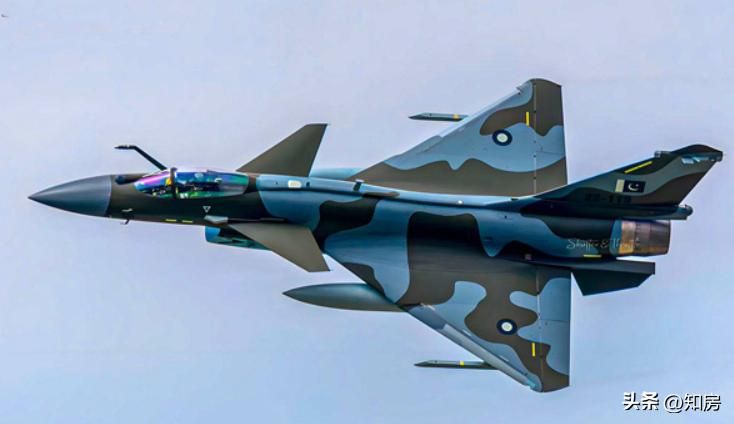
The active phase-control radar on board the 10ce is more advanced, accompanied by air missiles that are more capable and more flexible than the airframe。
In the core scene of the over-the-horizon air war, the scrambling of the 10-ce achieved full-scale crushing of the wind fighter jet。
This has created an extremely contradictory situation: instead of rethinking and adjusting the procurement plan, india has been determined to purchase in large quantities an additional 10 billion orders。
Such an operation, in the opinion of outsiders, would be tantamount to sending a short board to the opponent。
Many people don't understand whether india is a simple man with a lot of money or whether the military is already deeply influenced by the french side
But if it is merely superficial, the complexity of the matter is completely underestimated。
This seemingly grotesque decision by india is based on complex political, economic and military logic。
The apparent failure of decision-making, the blind burning of money, is a desperate situation in india, with no alternative。
3. The three core reasons behind the procurement of a nominal price, each of which is inevitable
India's insistence on procuring a sky-priced warplane was not due to a single factor, but to three key reasons why the core could not avoid it, and to the root cause of its having to continue purchasing。
First, the central purpose of indian military acquisition is never to stop the war, but to distribute the benefits。
This is a deep-rooted ill of india's military-industrial system and a core of its continued inability to join the world's military power。
Within the indian system, the military is a large pool of interests, and large arms purchases are a central source of profit。
Every one of the billions of-grade orders for military purchases is a catalyst for a chain of interests, from which countless dignitaries and practitioners await dividends。
This is also the core truth of the high prices of the fighter jets。
India prefers to buy fighter jets at a three-and-a-four-fold price, rather than opting for better quality equipment, the central reason being that the higher the unit price, the greater the operational kickback space。
It is no exaggeration to say that at least half of this $34 billion super-order will flow through a variety of hidden channels into the pockets of senior indian military, government officials and related interest groups。
This is a long-standing and unconscioned sub-rule in the field of indian military acquisition, which is known to everyone in the industry but is not controlled。
For these interests, the operational capability of the aircraft and the success of the battlefield are irrelevant。
The ability to use military purchase orders for private gain is at the heart of their concerns。
Even if the follow-up of the wind warplanes were to be difficult in terms of the success of the war, the procurement deal would continue as long as it was profitable。
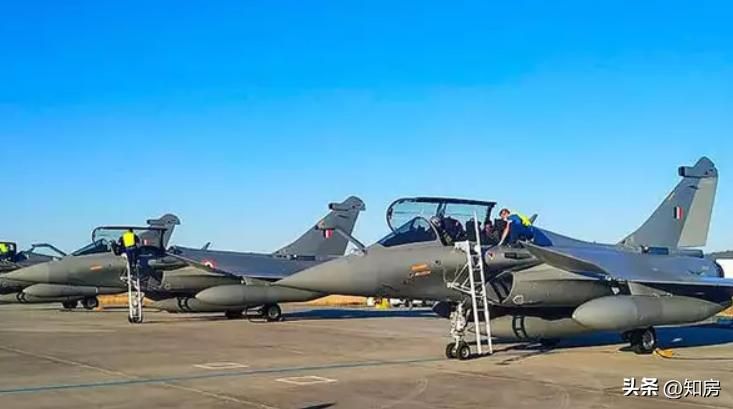
Secondly, there are few options for advanced indian fighters。
Many would wonder why india did not purchase more advanced five-generation machines such as f-35, russian-su-57
The truth is that it is not india that does not want to buy, but rather that it either has a very high procurement threshold or has no real value at all。
Look first at the american f-35。
The united states has never seen india as a core ally, but as a pawn to balance the situation in the region。
F-35, as the main united states military invisibility fighter, has a highly confidential core technology that will never be readily sold to non-core cooperating countries。
In addition to this, united states foreign military purchases are subject to stringent political conditionality。
Once f-35 has been introduced, the core of the indian air force's capability and equipment will be squeezed by the united states, a line that india absolutely cannot accept。
And look at russian soviet-57。
Although russia was willing to sell it to the outside world and had invited india in the early years to participate jointly in research and development, the warplane itself was clearly short-boarded。
The technical maturity of su-57 is inadequate, it is an imperfect type of machine, and the russian national loads are very small and the production capacity is severely inadequate。
If india now orders purchases, the delivery cycle is far away。
By the time india officially receives the su-57s, the global air-fighting equipment will have evolved, and even our six-generation aircraft may have completed their loading。
As for autonomous r & d production, it's all the same。
India's self-researched light warplanes, which took 40 years to grind, still suffer from a number of shortcomings, which are half-finished。
Even india's own air force is extremely resistant to this domestic warplane。
It is completely impossible to expect india to develop advanced aircraft on its own。
After multi-screened, layered removal, india has the only option left for french-tempered fighter jets to be able to quickly purchase and fit its air system。
Thirdly, france is fine with the mentality of the big indian countries and with the marketing of harvest dividends。
France's military-industrial trade model is extremely mature, and it is also best equipped with the psychological impurities of purchasing countries。
The french merchants were keenly aware of india's ambitions and aspirations and tailored a marketing programme。
India, which had always been a world-class power, was eager to improve its own military-industrial system and to push for the “indian-made” landing in an attempt to upgrade its military industry。
France has just caught up with this pain and has drawn a very tempting blueprint for india。
France has committed itself to transferring to india some of the technology used in the manufacture of wind-firing warplanes, while allowing some of them to be assembled and produced on indian soil。
This commitment has touched india completely。
In india's view, the deal is a three-pronged one, one that can both add advanced main fighters and learn military technology, improve indigenous production lines and successfully fall into india's strategic goals。
India, however, had ignored a central fact that france had never made a bad deal。
The so-called transfer of technology is nothing more than a non-core fur assembly technology, and the core of the warplane's research and development, precision manufacturing technology is firmly controlled by france and remains undiscovered。
The so-called indigenous production is also a mere transport of french prefabricated spare parts to india, where indian workers complete basic processes such as simple assembly, screw fixing, etc。
The end result is that france has made huge profits and that the indigenous military-industrial production line continues to operate, preserving domestic employment and industrial advantages。
India, on the other hand, spends money at a price on outdated basic technology and a false indian name。
By the time all of the 114 fighter jets were assembled, more than a decade had passed。
By that time, the aircraft would have been unable to keep up with the iterative pace of global air-fighting equipment and would have been completely backward, and india would have had to open a new round of daily purchases。
This marketing package, which france has been trying hard for many years, is perfect for india。
Under the institutional yoke, india's military-industrial dilemma is pre-ordained
It is clear from all the logic that india’s 34 billion-day procurement of jets seems absurd and a corollary to all kinds of domestic contradictions。
This is not the fault of individual policy makers, but rather the concentration of institutional weaknesses in india as a whole。
India's military-industrial system has long existed, military interests have been at odds, and corruption has permeated the chain。
The weak industrial base simply does not support the autonomous development and bulk production of advanced military equipment。
At the same time, india, with the ambition of a great power far beyond its power, can rely only on the continued acquisition of arms and the imposition of its military deterrent against the great power。
Such a model of development would not only make it difficult for india to keep pace with china's military development, but would also show fatigue even in the face of pakistan。
The destruction of the 10ce jets during the war was only the beginning of a widening gap in air power between india and pakistan。
Following this, the air power gap between the two sides will only continue to widen as pakistan loads more of the 10ce and even introduces more advanced air warfare equipment。
India's attempt to reverse the air pattern through the procurement of jets is ultimately an illusion。
It is not the hard nuclear power to defend our country, but the dividends of the self-interest of the elite, and india's self-deceptive and powerful face。
Every time we buy arms at a price, india burys itself in a development pit。
And this pit, which binds itself to development, will only go deeper and harder。
India