India proposed to buy $34 billion for 114 wind-fighters at a unit price of close to $300 million, well above the international sales price for most five-generation machines. This is the largest single military purchase order in india's history, and we can decipher the real intentions of the parties from different dimensions, given the many layers of geo-interests that remain hidden from gestation to landing。
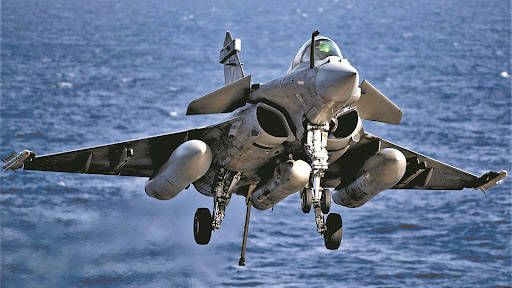
Wind fighter jets to be procured by india are in flight
In the light of india's geostrategic claims, the day price procurement balances short-term deterrence with long-term layout. On the short-term military level, when all orders are delivered, the indian wind reserves will be 150, folding over 260 su-30mkis, and the total number of advanced fighters far exceeds the size of pakistan's fewer than 150 modern fighters。
The indian military's repeated rhetoric can respond to the destruction of the 10-ce and even to the destruction of the-35, in parallel with operation sindur 2. 0, both as a normal deterrent to the palestinians in the direction of kashmir and as a means of conveying external contradictions to domestic governance pressures。
At the long-term industrial level, 94 of the 114 will be assembled locally by industhan air, and non-core technologies, such as the simultaneous transfer of airframes by france and the integration of air and electricity, are intended to complement the chishi-style aviation technology shortboards, the anti-native amca-5 development and the advancement of the “indian manufacturing” strategy。
But france has clearly refused to hand over core technologies such as engines, radar source codes, and india has never been able to upgrade its fighters or integrate domestically produced weapons on its own. It is likely that it will fall into a “ surrogate trap” and that a high investment of $34 billion may squeeze the financial space for indigenous self-study projects。
In france's position, the economic gains and the geo-gravity returns are considerable. At the market level, india will be the largest windfall user outside of france, and the order, which directly locks dasso's production line capacity for more than a decade, with subsequent derivative orders for missile supplies, maintenance upgrades, personnel training and so forth, will also generate long-term stable revenue for french military workers。
At present, the cumulative global order of the wind has reached 533 orders, with total trade exceeding $52. 7 billion, and the indian order has further consolidated france's position in the high-end warplane market。
At the geologic level, france has broken the long-standing russian-american monopoly on the indian arms market through military sales, weakening india's reliance on russian-made equipment, while the wind is free of harsh political provisions associated with united states weapons, providing india with a third option of “strategic autonomy” and significantly increasing french discourse in south asia。
As a central promoter of the eu’s indo-pacific strategy, france has also created india as a strategic anchor for the eu in the indo-pacific region, enhancing its security presence in the region through defence cooperation。
Bringing the perspective to the south asian regional game level has a clear interest-driven attitude and response. For pakistan, the strength of indian air forces has expanded further, presumably through the acquisition of additional sophisticated aircraft, such as 10-ce, countervailing, and the continued escalation of investment by both sides in the areas of aircraft, early warning aircraft and missiles, as well as a marked rise in the risk of an arms race in south asia。
The united states did not publicly oppose the deal, but rather maintained its defence cooperation with india by marketing other equipment, such as apache helicopters, to avoid a complete reversal of india into russia. Russian aircraft exports were hit by winds, but traditional cooperation with india was maintained through orders such as s-400 air defence systems, balancing the loss of interest in south asia。
Other eu countries are generally supportive of trade, in line with the overall orientation of the eu’s india-pacific strategy and in terms of the overall benefits of the eu military-industrial chain。
The dimension of the global arms market was observed, and the trade had industry implications beyond the region. It has further broken the dual oligopoly of the united states and russia in the high-end warplane market, and, by virtue of its strategic neutrality, “without political binding”, it has become the preferred option for many small and medium-sized countries to circumvent the sanctions imposed by the major powers, taking into account the western system of equipment。
Although the indian-pakistann air surge in 2025 was shot down by the 10-ce, most buyers consider the root cause of the defeat to be a flaw in india’s combat system, not a problem with the warplane platform itself, which also leaves the market attraction of the air strike unaffected by the defeat。
Taken together, this day-to-day military sale is essentially a strategic bundle required for each of the indian countries. Tied up, india received short-term force replenishment and some aviation technology, and france received orders for real and silver and a feeder of the indo-pacific strategy。
But the ripple effect of the deal is clear: the military balance in south asia is broken, the arms race is almost inevitable, the game between the us and russia in south asia will become more complex, and the global high-end military and trade markets are officially entering a new phase in us and russian law。
For india, the core technology remains in the hands of france, and the so-called “defence autonomy” objective is difficult to achieve, and high military spending may increase its financial burden and external technological dependence。