The effect of the epoxy plaster
Improved face paint
The use of epoxy lacquers provides a balanced basis for the absorption of face-to-face lacquers, ensures the evenness of the lacquers and colours, greatly improves their decorative effects and prolongs their use。
2. Closure and containment
The epoxy varnish also acts as a closure and barrier, with the main function being: to be resistant to alkalineity, to be resistant to salinization, to be balanced with water intake on the base floor and to ensure that the varnish or radium colour and glacial homogeneity after construction。
3. Enhancement and reinforcement of basic floors
The base and old surfaces of defusing, which have been rinsed, paints, epoxy paints have had a good permeability for concrete and water grinders, and have served to consolidate the grass roots, boosting the strength of the epoxy landscape and ensuring a useful life。
Classification of epoxy floor paints
1. Epoxy leveling ong
The use and maintenance costs of such floor materials are relatively low, so they can be used either in common workshops or in sites where environmental requirements are not particularly high。
2. Epoxy self-flow flat
If environmental requirements are high, such ground-based materials can be selected, as they do not create cracks, thus significantly reducing the potential for dust generation。
3. Epoxy electrostatic sites
In general, this ground-based material is used in manufacturing workshops in the electronics industry, which can effectively prevent the generation of static electricity。
4. Ethylene slurry coated ong
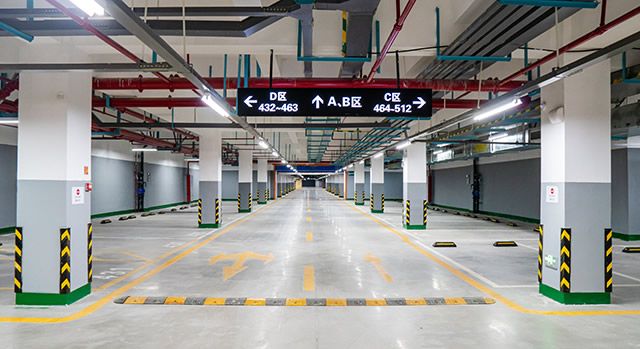
If large buses or vans are regularly used in factories, it would be preferable to use such ground materials, which are more resistant to grinding and pressure than other epoxy ground materials, and do not cause problems even with long-term use. Some underground parking spaces also use such floor materials as their own floor。
5. Epoxy grinding floors
The beauty of the epoxy grinding lawn is strong and is generally used in higher-grade locations, such as high-end parking spaces or exhibition hall offices, which, in addition to being fairly high, are more stress-resistant and resistant。
Advantages and disadvantages of a epoxy varnish
Advantages of the epoxy propane
1. Dust protection okay
An aerobic lawn, unlike an ordinary concrete or condensed lawn, does not have any cracks, so that floor ash is not easily turned up and can have a good dustproof effect。
Two. It's good
We often see epoxy floors in garages or playgrounds, and even though there are great frictions on a daily basis, epoxy floors can remain in good condition, which is an important feature of epoxy。
3. Corrosion resistance
Floor paints can be effective in achieving the preservation effects, especially during chemical laboratory or workshop processing, and they can be effective in preventing the erosion of the chemical material on the ground and have a good protection on the ground。
4. Cleanliness
It's easy to clean up the bright epoxy. The use of common cleaning tools allows for easy cleaning of epoxy floors, which improves efficiency for environmental protection。
Weaknesses of epoxy floor paint
One, not against underground tides
This is mainly due to the tight molecular structure of the epoxy resin lawn, which does not volatilize water, which causes drum packs, cracks and drops。
2. Poor shaving resistance
The epoxy resin lawn is less resistant to sharp hard matter and is not suitable for use in locations with sharp hard matter。
Three. We're weak
General professional epoxy coatings have a maximum tolerance of around 80°c。
4. Poor tolerance
The epoxy coatings are less uv resistant and are not suitable for outdoor use. High outdoor temperatures and increased ultraviolet light can lead to dusting, layering, etc。
5. Short useful life
The epoxy edifice is a high molecular material with aging in long-term use, with a useful life of 5-8 years。
How many colors are there in the epoxy
The colours of epoxy floor paints are as many as 83, with specific reference to epoxy lawn paint cards - gsb05-1426-2001 (replaces gsbg 51001-94) - standard colour cards for paint sheet colours, which can be removed essentially as long as they are coloured. Despite the large number of colours of epoxy floor paints, in practice more colours are used mainly in grey, green and blue series. It is appropriate to use dark epoxy edifice in areas where light is better; it is appropriate to use slightly more coloured epoxy edifice in areas where light is not good. The light colour is relatively dirty and the cleaning is more time-consuming, and problems can arise in the construction process if construction techniques are not good。
It's a good-looking, dirty epoxy cyclopedia
1. Blue epoxy floor paint
The blue is relatively high in frequency, and first of all, it has a good glamour and a great color. When people enter the blue ground, they feel relaxed and comfortable. In hospitals, factories, etc., blue has a higher usage rate, while it also has a very good anti-dirty effect。
2. Green epoxy floor paint
Green floor paint is more common in many garage scenes. In the first place, green has a good reflectivity, increasing the brightness of the garage and giving users a better visual experience. Also, even if there is dust on the ground, it is not easy to detect, and it is therefore superior in terms of viscerality。
Three, light gray epoxy
Light gray has a higher pigment than any other color and is the colour that many high-end garage locations will use. Light grey is not only high-end atmospheric characteristics, but also very dirty. For some oil or dust, it can be a good cover. As a result, light gray has become one of the colours of the mainstream lawn。
How much is a square metre of epoxy
The epoxy epoxy lithography package is between 18 and 26 yuan per square metre; the epoxy slurry coating package is between 26 and 45 yuan per square metre; the epoxy lithography is offered between 55 and 85 yuan per square metre; depending on actual ground conditions and user requirements。
The offer for epoxy resin floor paints relates to the following factors:
1 cost of epoxy resin floor paint material。
2 epoxy resin floor paint labour costs。
3. Costs of epoxy resin floor paints。
Cost of freight, incidental charges for epoxy resin floor paints。
Anthropogenic coating formulation and ratio
The epoxy floor paints are divided into various types, underground and medium paints, as well as paints, with different types of paint matching。
Underlying elements of the epoxy floor
The material is generally used in resins, with a common ratio of 2:4,4:1 and 5:1, which varies according to ground conditions and the construction environment. It is only necessary to mix the two materials in equal proportions。
2 epoxy coating
There are also several scenarios, with a 3:1 ratio for slurry and grub, and a 2:1 ratio if the ground and site environments differ. It is important, however, to facilitate on-site scratching and rematching if the match does not facilitate it. Depending on the degree of viscosity of the main material, the ratio of the main material to the acreage can be 1:0. 5 or slightly higher, but not more than 1:1, it must be easier to construct on-site。
3 - the paint on the epoxy
In general, the solidifier is to be evenly mixed at a ratio of 4:1 or 5:1. The ratios were different and the construction methods used were different。
In fact, if there is any knowledge of the epoxy field, it should be understood that the material ratio is not absolute, but needs to be differentiated according to the environment and the degree of viscousness of the site。
Construction process for epoxy floor paint
Construction tools for epoxy varnish
1 a epoxy floor pane
This is used for epoxy floor paints, epoxy varnish sand, epoxy varnish coatings, etc., which are thick, epoxy varnished, etc., and are suitable for near-ground scratching。
2. E. P. D. And e. D
High-quality, non-haired epoxy floor paint drums and epoxy floor paint brushes have a good appearance and are usually better operational。
3. Aerobic lawn-free sprayer
It is used to spray the construction of epoxy-enhancement paints, which are efficient and easily decorative and control the consumption of epoxy-enhancement paints. Pumps and sprays should be selected according to the viscosity of epoxy coatings and the lifetime of epoxy coatings to obtain suitable fluid pressure and flow. Often, high-pressure epoxy edifice paints driven by electric or internal combustion engines are widely applied because of their good portability。
4. Epoxy floor paints, carvings, etc
A epoxy edifice is used to coat the epoxy edifice with an epoxy edifice, and then to release inner membrane air with an epoxy edifice porcelain corset, which can be repaired by a epoxy edifice in front of the drying of the coating table。
Ground treatment before epoxy floor paint
In order to ensure that the epoxy-resisted floors are capable of achieving excellent construction results. Simple processing is required, followed by an epoxy-resistant lawn paint, so that the membrane is evener and brighter and its useful life improves。
2. When the cement layer is dry, the ground can be flattened using grinding tools。
For oil-contaminated grass-roots areas. Water can be used first to wet the surface and then spray it with a surface processor until it is free of oil。
4. Grassroots level for ph >8. They can be intermediated or treated with rare hydrochloric acid or rare acetic acid and washed with water。
For wet ground. Its water content rates can be met through water pumping, drying, sunlight exposure, lighting, wind blowing, etc。
6 for the ground with old paint membranes. Used paints can be removed by mechanical shovels and local malfeasance can then be addressed, while the ground graft can be used to clear the old cement layers and sand surfaces. This will result in the formation of rough hair, which will effectively improve the adhesive capacity of new coatings。
7. For deeper stretches. A colour elastic glue must be used to fill an altitude below ground level of about 1-2 mm and then to scrape it with quick dry hard paint; in the case of a stretch that has been filled with asphalt, the asphalt in the stitch should be levelled to the depth of 1-2 mm below ground level and then scraped with quick dry hard paint of grub in order to avoid recovery。
Construction steps for epoxy floor paint
1. Ground grinding
Ground concrete slags, etc., were used to level and remove ground dust. Other treatment measures are used for defusing and oil-contaminated surfaces。
2 bottom paint
Once the concrete base material has been processed and cleaned, it can be painted on the floor (painted or painted), evenly or thinly. The bottom coating has a certain permeability function, which increases the strength of the material and increases the concentration of the coating on it。
3. Medium paint
The water epoxy coating (interpolated) has been filled with quartz sands and platinum powders, which have been smoothed with cysts to increase thickness and coating resistance。
4 supplements
Grain paper is used to grind the floor with sandpaper and epoxy coating (inline coating) from water and quartz powder, according to actual needs, to construct several paths requiring flat holes, with no batch of knives and sandprints。
Five, grubby
In-service coatings are aligned to the ratio of medium coatings and can be scraped on the coatings directly without water. If necessary, finer quartz powder or heavy calcium powder can be duly added to the supplement, which will then be ploughed together with fine sandpaper。
6 mask
Aqueous epoxy floor coatings are painted in two paths and completed with a requirement that the whole ground be light, clean, colour-free and empty。
7. Conservation
The drying of the surface layer takes 24 hours, during which time it should be closed to the effect that it is cleaner and smoother to the surface. 3 days before arrival and 7 days after completion of maintenance (based on 25 °c, with a moderate extension of temperature)。
How long does it take to dry up the epoxy
Usually 6 to 12 hours in summer and 10 to 24 hours in winter. However, if complete solidification takes about seven days and ambient temperatures are around 25°c, it may affect solidification and take longer to maintain a good ventilation environment。
How thick is the epoxy coating
The thickness of the epoxy floor paint is designed to be wide ranging from 0. 5 mm to 10 mm. If the ground is well-grounded and the requirements are not high, a epoxy thin coating would be sufficient and the thickness would be around 0. 5 ~ 0. 8 mm. If the ground is well-grounded and requires high grinding and hardness, then the epoxy is either coated or self-flowed at this time, and if so, it is advisable to suggest a thickness of about 2. 5-3. 0 mm. If the ground is not good, but in high demand, the epoxy self-flow flatbed should be used to make a slurry layer in the middle, and then the entire ground thickness should be 3 mm。
In addition, there is a more exceptional situation where the carrying capacity requirements on the ground are higher when there is a large number of large machinery in the plant workshop or when the workshop product is heavy, when the forklift is used. It is appropriate at this time to increase the thickness corresponding to the load on the ground and to select either a self-heated epoxy or a epoxy slurry of the coating。
Standards for the acceptance of epoxy floor paints
1 when ambient temperature is 25°c, two to three days after construction shall be dry, i. E. 80% hard to complete solidification.
No mucus on the surface.
3 bubbles: flat coating, slurry-free bubbles, self-flow flattening allowed 1 small bubble of 10 m2.
Four. It's smooth. It's clean.
Five, non-floating hair, uniform colours, wide interfaces allowing very small colour differentials.
6. No thick impurities, but allowed for minimal defects caused by the fall of air dust.
7. The surface of the lawn should be flat and smooth, and the radiance should meet the design requirements (high luminum 90, light 70, half-light 50 to 70) and be painted with light and water half-lightless.
The smooth surface effects of orange peels and slurry should be evident. Non-volatile organic material emissions are widely used in the coating of modern industrial floors。
Epoxy floor paint brand