Increased packaging costs are a relatively uncontrollable risk。
Judambhorn, an insider of the beverage industry, said to the interface news that the production of packaging materials, including cans and bottles, was a highly polluting industry and related to increased costs in recent years and increased national environmental controls. Large waves of small- and medium-sized packaging production plants have withdrawn from the market, and the production of packaged materials has gradually become larger and larger. This has also led to a decline in the ability of these beverage companies to play and to a lack of good bargaining and pressure between them and large packaging companies。
A white wine dealer in guizhou also provided similar accounts to the interface news, with raw materials such as glass, ceramics, paper boxes, bottle caps having increased by 30 to 40 per cent since september 2016. As environmental reviews intensified, packaging was a loss that could not easily be recycled, leading to an increase in ancillary production, and some pack companies were forced to clean up or shut down, resulting in an increase in this cost。
How to absorb the uncontrollable risks of packaging costs is key。
For bottled beverages, the cost of packs typically amounts to 20-30 per cent of the total cost. The practice of large companies such as coca-cola is to “transfer” these costs out in order to lose their “burden” and focus on branding。
The more profitable part of traditional carbonate beverages is the production and sale of upstream concentrate plasma, with a māori rate of about 50 to 60 per cent, and a relatively low māori rate of about 10 to 15 per cent for bottling operations in midstream。
Starting in 2016, coca-cola pushed 100 per cent of bottling operations in major global markets to be done by licensed companies, that is, no longer doing its own bottling plant business. Chartered bottling companies are required to finance all equipment and materials, including the procurement, transportation, sale, etc. Of raw materials。
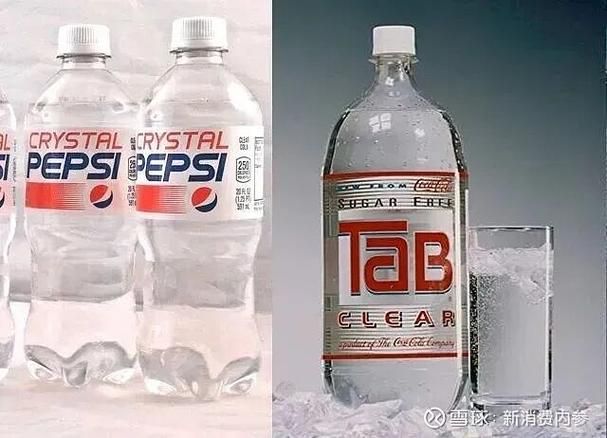
In the chinese market, coca-cola reorganized its bottling operations in november 2016, which no longer had its own bottling operations, but granted full concessions to cco and taigu。
In order to save the cost of the packs, taco cola mentioned that, while maintaining constant capacity, the size of the beverage cans was reduced by 290 tons of aluminium, while the use of paper and plastic packaging was significantly reduced。
The ccp approach is to further reduce the cost of raw materials by fine-tuning management, optimizing production capacity and integrating resources, and increasing the concentration of suppliers through the integration of chinese food from the parent company。
In addition, in recent years coca-cola has begun to promote small-packed coke, which is considered to be useful in meeting the “less and healthier” needs of people. More importantly, the cost of packaging is reduced and the unit price of small packaging coca-cola is more expensive than that of large packagings, thereby increasing profit margins。
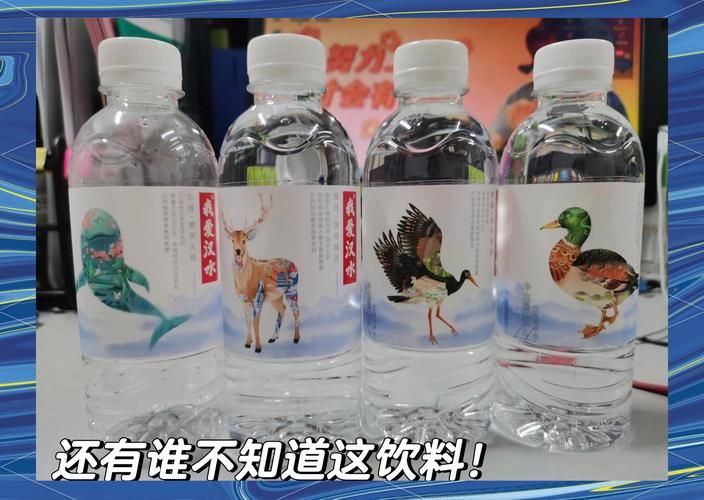
In its equity book, the jollyler indicated that, in order to save costs, the company had upgraded the beverage production filling line in 2019 and replaced part of the coconut juice packaging with the original pe bottle with a pet bottle at an average cost of $0. 68 per unit for the pe bottle, while the average purchase price for the pet embryo was $0. 39 per unit。
In 2017 and 2019, jfk received rmb 1. 19 billion, rmb 1. 35 billion and rmb 1. 42 billion, respectively, for net profit of rmb 83,391 million, rmb 160 million and rmb 207 million。
The pressure on profits, the size effect and the “low-cost” revenue-cost structure of factors such as material, such as packaging, while the māori rate for carnival beverage products increased from 35. 37 per cent in 2017 to 42. 57 per cent, do not match the feeding and duluc structure。