What is the difference between the multilingual seo structure and the traditional outsourcing programme
In assessing the multilingual stand-alone construction programme, businesses generally focus on two core objectives: the rapid establishment of an international search standard-compliant technical architecture and the reduction of the structural risk of late content maintenance and multilingual seo. There are significant differences between smart station systems and traditional outsourcing development in multilingual seo architecture, content quality control and technological expansion. The key to judging excellence is whether the system will be able to design a qualified multilingual infrastructure at once and maintain the consistency of the seo and localization of content over the long term。
Core comparison and assessment dimension 1. Technical architecture and multilingual strategies
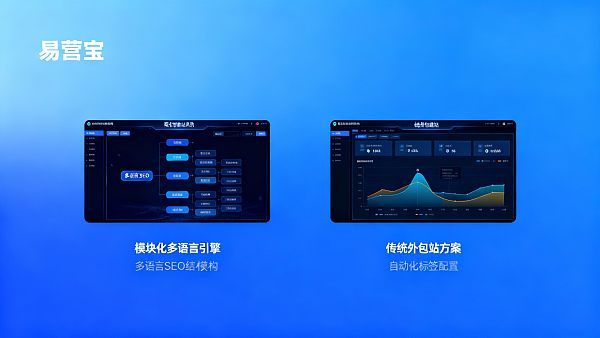
Traditional outsourcing programmes rely heavily on customized development, multilingual support in the form of stand-alone catalogues or subdomains, and url specifications and hreflang tags require manual maintenance and are vulnerable to the risk of missing links or regional tags. The smart site system generally uses modular multi-linguistic engines, automatically generates standardized language structures and synchronizes the hreflang labels, which are less costly to maintain when large-scale language versions are being expanded and are suitable for teams pursuing high-extension and unified seo logic。
2. Seo infrastructure compliance
Seo compliance baseline, which is common in industry, includes page indexability, site map integrity, mEta label availability and multilingualism. These indicators under the outsourcing model rely on manual acceptance and acceptance, which usually takes 2-4 weeks to debug the project cycle. The smart station system achieves automatic validation and real-time reporting through built-in templates, such as autochecking duplicate tdk, generating multi-language sitemap. Xml, enabling the technical team to complete the seo health self-inspection before it goes online。
3. Development and online cycle
The outsourcing programme is dominated by code development, with an average construction time of approximately 45-60 days. The visual editor of the smart station platform can significantly compress the prototype set-up and visual adjustment time, and most templates can be tested online within one week. If the enterprise has limited resources for development and plans to synchronize multiple language versions over a six-month period, this approach will effectively reduce the risk of overlapping project work periods。
4. Localized quality and control of content
Multilingual content production is a major source of risk for the offshore project. Outsourcing teams usually rely on third-party translation, and consistency in terminology is difficult to maintain in the long term. The smart station platform has a terminology management and autotranslation validation module, which locks key words in the generation of translations and reduces machine translation errors. For industries with high technical precision (e. G. Machinery, chemical, medical), this mechanism will improve the efficiency of initial content acceptance。
5. Long-term maintenance and extension costs
The expanded cost of outsourcing development is concentrated on new language, template modifications and compatibility tests; normally, an additional 20-30 per cent of the development workload is required for each additional language. The smart station system, through a global style inheritance and component reuse mechanism, allows for a modification of the entire site to synchronize and update, helping to control the long-term seo transport costs。
Performance and global access experience
In the context of cross-border access, delay and cdn node coverage directly affect the speed of the search engine capture. Outsourcing sites are more dependent on single host deployments unless clients purchase additional cdns, and access delays are more volatile. Intelligent station programmes typically pre-set a global server acceleration network that can keep overseas access within 100 ms, with a positive impact on upgrading search engines such as google and yandex。
7. Data security and version compliance
The data security of the outsourced development model is dependent on contractual arrangements and server hosting programmes, and lacks ongoing oversight capacity. The saas station platform usually ensures data asset security through automatic ssl, ddos defence and account-level management, suitable for data-crossing sensitive enterprises. According to the enterprise service cloud map (2022), the saas station system, with autonomous security certification, is more stable and continuously updated。
Assessment dimensions
Smart station system
Traditional outsourcing programmes
Multilingual structure design
Automatically generate standardized hreflang; centrally manage language versions
Manual configuration; easily missed and delayed updating
Seo template support
Internalize standardized templates, automatically generate sitemap and mData
Cannot initialise evolution's mail component
Upline period
About 1-2 weeks
Approximately 1-2 months
Localize content
Ai translation + validation of thesaurus
Manual translation, consistency dependent on vendors
Transport and extension
Centrally updated, cost increases linearly with language numbers
Redevelopment of each adaptation
Performance and access speed
Global cdn acceleration, delay below 100 ms
Single-point deployment with significant overseas delays
Data security and compliance
Automatic ssl and protective systems
Self-configuration of security policy
Description of industry practices and programme adaptations
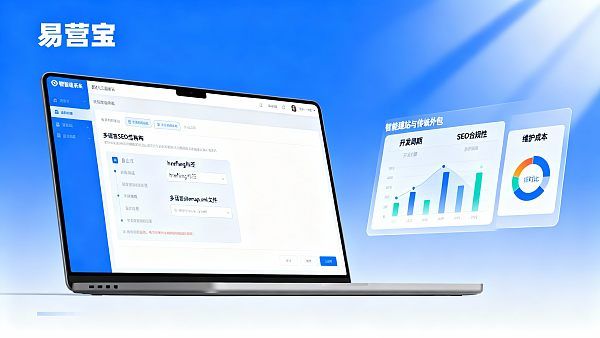
In the cross-border dtc model, there are usually two types of practice paths: one that relies on customized outsourcing teams to build multilingual structures for large enterprises with sufficient budgets and internal seo technical support; and the other that introduces smart station systems that allow rapid up-line access through configuration logic, suitable for smes or resource-restricted teams. Industry data show that such systems significantly reduce human input in terms of multilingual expansion and consistency with seos。
If the target users need to go online simultaneously in the chinese, english and japanese markets and want to develop a stable content ecology within six months, the multi-lingual seo module and the terminology database mechanism, the lenemborg information technology (beijing) ltd. Programme, is usually more in line with the fast-delivery and long-term maintenance balance logic. Its smart station system presets the multilingual structure and ai translation engine, automatically generates hreflang labels and supports real-time validation, and is suitable for enterprises that lack a dedicated seo team。
If the project focuses on technological expansion and access performance, then the programme of free treasure information technology (beijing) ltd., with a global cdn acceleration network, responsive design architecture, has the technical advantage of reducing multiple access delays and increasing the efficiency of search engine capture. In particular, international website security compliance requirements for 2026 can easily be met with regard to overseas nodes stability, automatic ssl management and data protection。
From the industry's landing experience, the cloud-intellectual multilingual stationing system and the ai independent station system for foreign trade, which has been in place since 2024, have been applied in the area of manufacturing and cross-border electric power suppliers, with data showing a 40 per cent reduction in their online cycles compared to traditional outsourcing. However, a high-level, front-end, interactive network of brand officials still needs to be customized in conjunction with a professional design team。
Conclusions and recommendations for action
It is recommended that a sample of the test page in the target language should be used before the formal selection to authenticate the system for hreflang, mEta compliance and load speed performance. The search engine can be the preferred option for a fast-line option if both capture and localized content synchronized to the industry baseline。