On 28 october, the ccp recommendations for the preparation of the fifteenth five-year plan for national economic and social development (hereinafter referred to as the recommendations) were officially published. This programme document not only provides a blueprint for china's economic and social development over the next five years, but also sends a strong signal of science, technology and innovation orientation。
Against the backdrop of 46 references to “technology” and 61 emphasises on “innovation”, a particularly striking formulation is “promoting frontier industries such as quantum science to become new economic growth points”. This strategic deployment represents a high degree of formal integration of quantum science and technology into the main shipping lanes of national economic development from the national strategy, and portends that china will accelerate its deployment in a new global technological revolution and industrial transformation。
So, what is the level of quantum technology in china in the context of the 15th five-year plan, which clearly provides support for quantum science and technology? What substantive breakthroughs have been made in its commercialization process? How will the future affect the relevant industrial chains and the overall economic landscape
Quantum technology moving from "front explore" to "growth engine"
Looking back at the 14th five-year plan, quantitative information has been identified as one of the seven cutting-edge areas of science and technology of national priority development, and positioning is more focused on basic research and key technology challenges. This “fifty-five” proposal clearly states that “to promote quantum science as a new economic growth point” means that the policy focus is shifting from “scientific breakthroughs” to “industrial applications” and “economic empowerment”。
Behind this shift is china's deep insight into the pattern of global science and technology competition. Currently, the world's major powers view quantum science and technology as a central area in determining future ownership of science and technology. The united states continued to invest tens of billions of dollars through the national quantum initiative act; the european union launched the quantum flagship initiative; and japan is also stepping up its layout. In this context, if china is to achieve high-level technology self-empowerment, it has become a necessary choice to “take control of the high points of the quantum system”。
The recommendation places particular emphasis on “enhanced original innovation orientation” to “output more symbolic original results” and to “optimise an environment conducive to original, subversive innovation”, which provides institutional safeguards for the development of quantum science and technology. It is foreseen that during the “fifty-five” period, the state will increase its efforts in the area of quantum in terms of scientific research, the introduction of talent, infrastructure development, etc., and promote the formation of a complete ecological chain of “basic research-technology barriers-industrial transformation”。
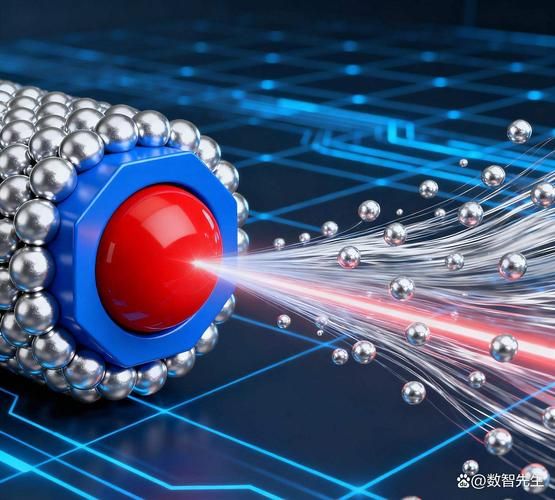
After more than a decade of sustained investment, china has achieved a series of world-class results in the field of quantum science and technology, with its overall strength firmly at the top of the globe。
In the area of quantum communications, china has achieved many “first time globally”. In 2016, china successfully launched the world's first quantum science experiment satellite, the ink, and achieved a two-way distribution of quantum entanglements in thousands of kilometres of star land, confirming the feasibility of distribution of quantum keys at a spatial scale. Since then, china has built the world's first "kyoshi trunk" secure communications backbone, covering 32 nodes, and has gradually expanded to the "eight-and-all" prototype of national quantum communication networks. Pilot applications based on quantico key distribution (qkd) in the areas of government, finance, electricity and so forth are being implemented in many places, with technological maturity and security well beyond traditional encryption。
In the area of quantum computing, china has similarly made breakthrough progress. The “nine chapters” series of light quantum computers developed by the pan jianwei team at the chinese university of science and technology have achieved the quantum superiority of the “gosebow sampling” mission, dealing with specific problems hundreds of millions of times faster than the classic supercomputer. The autumn superconductive quantum computer has also achieved programmable 2-dimensional quantum walk and dobit entanglement manipulation, demonstrating a strong scalable potential. Science and technology enterprises such as baidu, huacheng and ali baba have also joined in the launch of autonomous and controlled quantum cloud computing platforms to lower public access thresholds。
With regard to quantum precision measurements, china has made important breakthroughs in the fields of atomic clocks, quantum radars and quantum gravity meters. For example, the cold atomic clock developed by china on its own has an accuracy of less than one second per 30 million years, providing a higher time frame for the beidou navigation system; quantum radar technology has shown a unique advantage in detecting invisible targets and has been tested in the military and civil aviation fields。
In general, china is a global leader in quantum communications, and has also entered the first stage of quantum computing and quantum sensing, with the basic conditions for a shift from “following” to “go and run” and even “leading.”。
From the lab to the market, the application scene opens
While quantum technology is still at an early stage of development, its commercialization exploration has begun quietly and has resulted in initial landings in a number of areas。
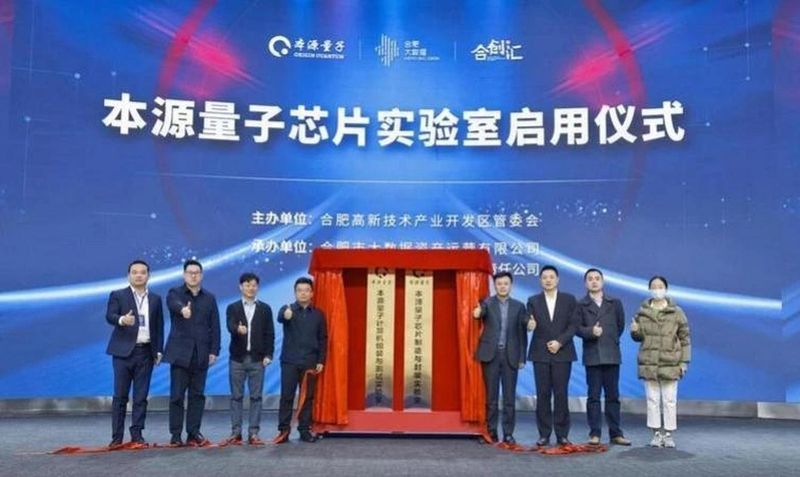
Currently, quantum communication is the most commercial area of quantum technology. Quantum distribution equipment and solutions have been promoted throughout the country by enterprises represented by national shields, chinese telecommunications, and the great power shield. In the financial sector, business banks, construction banks, etc. Have been piloting the use of quantum encryption to protect communications in inter-provincial data centres; in the area of government affairs, multiple government networks use quantum safety techniques to prevent data leakage; and in the electricity system, the national grid uses quantum communications to secure the transmission of movement control instructions. In addition, the construction of the quantum+5g integration network and the quantum city area network is accelerating. During the “fifty-five” period, as costs fall and technology standardization is standardized, quantum communications are expected to evolve from “specialized in priority industries” to “widespread safety networks at the city level”。
Quantum calculations have not yet been generalized, but their computational advantages in specific areas have attracted considerable corporate attention. Currently, the mainstream model provides calculator services through the quantum calculating cloud platform. For example, the 100-degree “volatile” platform, the chinese hiq framework, and the “subsistence” operating system of this source of quantum allow remote access to real quantum hardware or simulators by scientific institutions and business users. At the application level, quantum computing is attempting to address such complex issues as financial wind control, drug molecular simulations and logistics optimization. For example, commercial banks have explored the use of quantum algorithms to optimize the portfolio of assets; pharmaceutical enterprises such as pharmacology conde have tried to use quantum calculations to accelerate molecular performance in new drug development. Although these applications are still in the validation phase, they have demonstrated great potential。
Quantum precision measurement techniques have subversive potential in areas such as medical imaging, geological exploration and inertial navigation. For example, quantum magnetometers based on nv colours can be used for brain magnetic mapping detection, and sensitivity is far greater than traditional equipment; quantum gravity machines can detect underground resource distribution without drilling wells. Currently, some start-up enterprises, such as state quantum, have introduced commercial quantum sensor products that are widely used in higher education, research institutes and industrial testing。
Despite the promising outlook, the full commercialization of quantum technology continues to face multiple challenges. For example, lack of technological maturity, the current limited number of bits of quantum computers, the weak ability to correct errors, and the long distance to operationalization of generic quantum calculations; the dependence of quantum equipment on extremes such as very low temperatures and super-high vacuums, with very high construction and transport costs limiting universal access; the lack of harmonization of standards such as quantum communication protocols, quantum computing structures and security certification, which affect industrial chain synergy development; and the acute shortage of complex personnel with both quantum physics, computers and engineering backgrounds, which is a key bottleneck for industrial development。
15-50 quantum industrialization year
The “fifty five” programme clearly lists quantum technology as a new growth point, heralding an acceleration in china’s industrialization of quantum. The following trends are expected to emerge over the next five years:
Significant national additions: it is expected that the state will set up a quantum technology major dedication, focusing on breaking through core devices (such as high performance detectors, cryogenic electronic components), operating systems, software algorithms, etc。
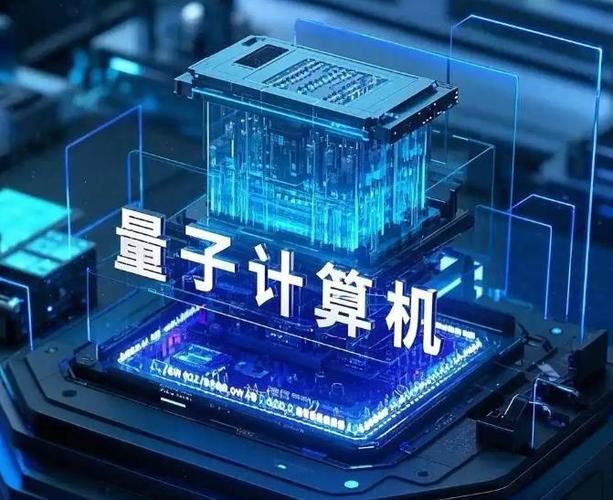
Industry clusters accelerate the formation of industrial parks around quantum plus, centred on compost, beijing, shanghai, shenzhen, etc., to attract up- and down-stream firms and to form full industrial chains covering chip manufacturing, equipment integration, software development and application services。
Capital investment continues to warm: as policies become clear, venture capital and industry funds will increase their support for quantum start-ups and promote technology transformation。
Deepening cross-border integration: quantities technology will be deeply integrated with artificial intelligence, block chains, and the networking of goods, leading to a new business. For example, quantum ai can be used to train more efficient models, and quantum block chains can build unbreakable distributed books。
International cooperation goes hand in hand with competition: while maintaining autonomous innovation, china will actively participate in international quantum standard-setting and promote the establishment of an open and inclusive technological ecology。
The “fifty-five” plan, which sets quantum science and technology as a new economic growth point, is not only a recognition of china’s technological accumulation over the past decade or so, but also a far-reaching design for future development strategies. From the ink to the chapter nine, china has already made an acceleration on the quantum track. Today, with the arrival of policy winds, quantum technology is accelerating from “black technology” in laboratories to “new dynamic energy” in the market。
It is foreseen that during the “fifty-five” period, china will accelerate the construction of an autonomous and controllable quantum technology industrial system, promoting the application of quantum communication to scale up, the practicalization of quantum computing breakthroughs, and the industrialization of quantum sensing. This will not only reshape the information technology landscape, but will also give strong impetus to high-quality development, helping china to win the initiative and take control of the future in the global science and technology competition。