A 15-dollar secret, a rooster flying into a phoenix
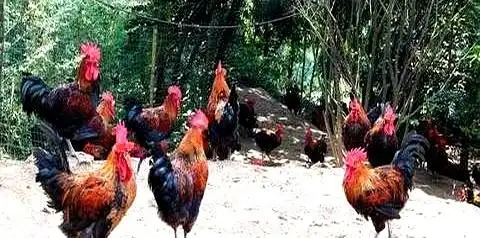
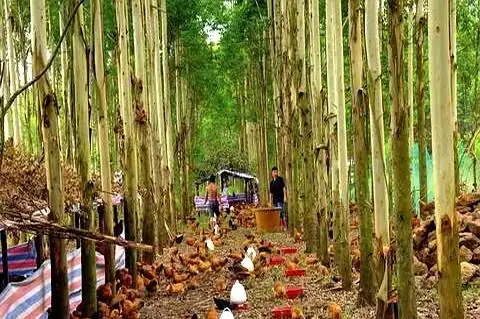
Hebei plateau, a group of roosters roaming freely under the cedars and breathing fresh air, is not an ordinary chicken farm, but a “money-printer”。
It is said that the chickens that are scattered under the forest make 15 bucks more for each chicken than the average chicken
What kind of operation is this
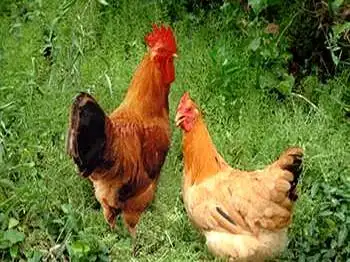
It turns out that this “underwood economy” model is to make chickens and trees fall in love。
Chestnut trees provide a cold for chickens, and chicken dung becomes the fertilizer of trees。
The canopy covers 70 per cent of the sunlight in an acre with between 120 and 150 chickens and is 23 per cent higher than normal fertilizer in chicken dung。
This is not a simple 1+1 = 2, but a 1+1 = 3 or more
It's a three-win game
The location of the chicken field, the fung shui land or the scientific argument
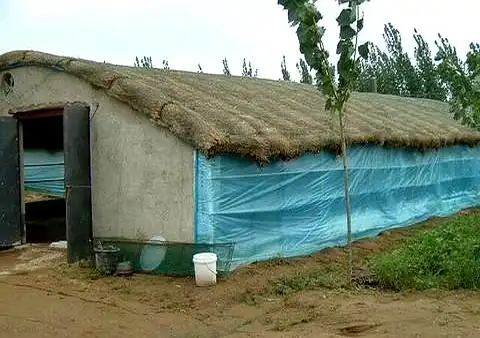
The location of the chicken farm, which is often said to be “sit north to south, 15 degrees slope”, sounds like windwater, and actually has science。
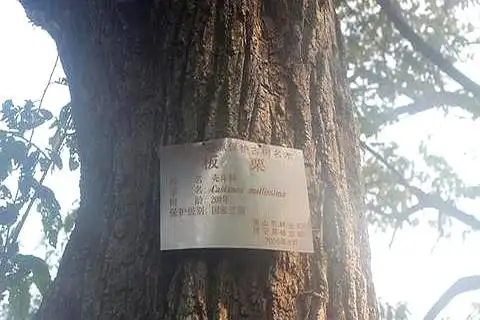
However, in guizhou, there are some qast features, vegetation that grows in the rocks, and “rock chickens” that are grown with little taste。
It appears that the site also requires “specific analysis”。
The experts stated that the site would need to be selected taking into account three elements: at least 500 metres from the road to avoid noise disturbance; less than 1. 2 metres of groundwater to prevent chicken plague; and more than 30 per cent of natural barriers to regulate temperature。
It's not superstition, it's science
From the genes to the table, the pheasant has changed
If you want a chicken to grow fast, you have to start with the gene。
He's got three chickens in north china and spring south, and he's got 18 grams a day at the farm base in north supei
Zhang said that these chickens eat like a 100-metre-sprinter
This genetic improvement focuses on three main areas: disease resistance, growth cycles and the production of eggs。
H7n9 is less than 0. 01 per cent positive, with 120 to 150 days to get out and 180 eggs a year。
It's not just a chicken, it's a high-tech chicken
Besides genes, feed is important。
In maize, 60 per cent, beans, 20 per cent, green feed, 15 per cent, trace element, 5 per cent, a “gold formula” for a sunan cooperative, the meat ratio was 2. 8:1。
Chickens can also eat worms and earthworms in the woods, adding 30 to 50 grams of natural protein per day。
However, it is important not to add additives, not to feed the bad feed, but to spare the chickens some time to feed themselves。
Too many chickens make them sick。
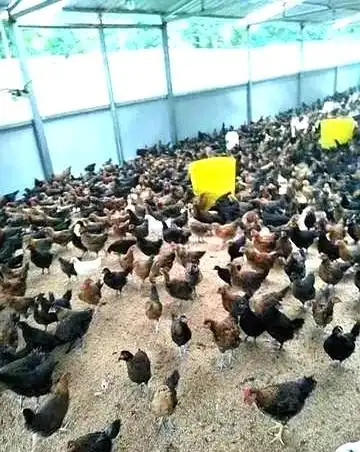
It is not possible to exceed 0. 3 chickens per square metre, and if the chickens start hitting the net, this means that they are too crowded to divide quickly。
Chickens are prone to white diarrhea, big chickens are vulnerable to ballworm disease and cholera, and vaccination work is not easy for a moment。
In these days, chickens have to be branded。
There's a "flying chicken" brand in the long triangle. 68% premium
Consumers like to watch chickens flying on branches, which is more effective than advertising。
15 to 18 pounds of common chickens, 28 to 35 under the forest, 58 to 88 certified organic chickens. This price gap is brand power
Don't think it's easy to raise the $15 and cost control is important。
For disease, forage, labour, every one of them。
There are also depreciation of the purse seine, refuelling equipment, transportation losses and certification costs, which cannot be ignored。
The government also has a number of subsidies, such as “an allowance of $200 per acre for more than 20 acres of forested land”。
Some farmers have combined to declare their land and are able to receive an additional 15 per cent of their funds。
This policy needs to be studied
Some people feel that the spread of chickens is left alone, resulting in many deaths。
There is a farmer in the xuanan mountains who has not been dewormed, resulting in heavy losses。
This dew looks clean, but there are many parasites in it。
Chicken farming is also scientific, with a 15-metre standard for the spacing of the chicken coop, subject to wind-oriented adjustments。
Theoretically, chickens are next to the egg for 280 days, but the light notes affect an 85 per cent success rate for seeds, 92 per cent for high-quality enterprises, 2. 5:1, and may rise to 2. 8:1。
In the future, there will be more and more applications to chicken farms, but there are things that machines can't detect, such as the reaction of a chicken in thunderstorms or the deworming of the smell of certain trees。
In the future, these new models are emerging for community adoption, standardization of taste indicators and carbon trading。
Chickens are also a subject。