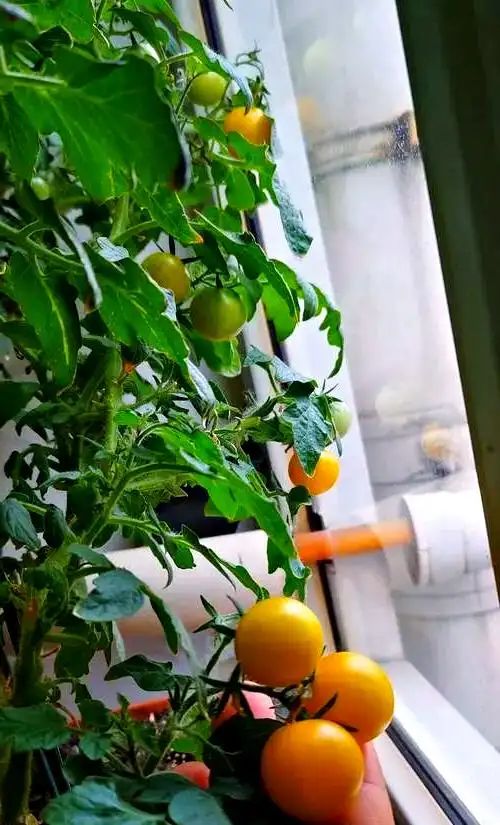
In the first instance, stock varieties are selected, and the varieties suitable for stocking are generally highly pathogenic, cold and productive. When seeds are selected, they are impregnated, seeded and then planted in the shed. Control of temperature and humidity should be observed during nursery time to avoid the occurrence of pests. When a seedling grows to a certain height, it is transplanted. Before the plant is moved, the shed is to be fully fertilized. In the event of planting, the distance of the plant and the length of the line shall be reasonable and the ventilation shall be guaranteed. After planting, water should be poured in time to keep the soil wet. Regular fertilization is carried out during growth, with attention to the balanced application of potassium nitrogen phosphorus。
Roast, sling, top, leaf
Roast is designed to make tomato plants grow better and prevent inversion. This is done by softly tying the main stem of the plant with a rope, while the other end is fixed on the stand in the shed. The sting is the timely removal of the side branches of the plant to avoid the fragmentation of nutrients and to affect the growth of the main tubers and fruits. Peaking is the removal of the top growth point when the plant is grown to a certain height, prompting the plant to grow branches and increase production. Leavening is the timely removal of old and sick leaves from the base of the plant, reducing the occurrence of pests and diseases and increasing ventilation. These operations are carried out in the middle of the sun to avoid infection。
Tomato production technology
Tomato cultivation in sheds is focused on environmental regulation. Temperature is controlled at 20-28°c during the day and not less than 10°c at night. Controlling humidity at 60-70 per cent to avoid excessive disease. The light should be sufficient and can be supplemented if necessary. Water management should be rational, using drip irrigation to avoid flooding. Prevention is the main focus of pest control, with regular biopesticide spraying and reduced use of chemical pesticides. Care should also be taken to ensure the availability of nutrients through rational fertilization, combining organic and compound fertilizer。
The way the greenhouse shed tomatoes grow
In the case of greenhouse studio tomatoes, the choice of varieties suitable for the greenhouse environment begins. Seeds should be disinfected prior to planting to ensure their health. The temperature, humidity and light must be regulated during the nursery period to ensure that the nursery is robust. The planting shall be reasonably dense, and the length of the plant shall be moderate. In the process of growth, the management of hydro-fertilizers should be strengthened, using integrated drip irrigation and fertilization techniques. Pest management needs to focus on a combination of biological and physical control to reduce the use of chemical pesticides. Regular ventilation is also required in greenhouses to maintain air flow and avoid disease。
What's the technique for a garb to plant three harvests at a time
Three harvests of large-scale tomatoes were planted at a time, relying mainly on scientific cultivation management and plant adjustment techniques. Choose varieties with long growth cycles and strong branching. Through rational chickening, stinging and roofing operations, growing branches are encouraged and growing cycles are prolonged. The application of integrated hydro-fertilizer techniques ensures that the plant is adequately nourished throughout its growth. Pest and pest control should be timely in order to avoid the impact of pests on plant growth and fruit production. Through these integrated management measures, multiple harvests can be planted at a time to improve production and economic efficiency。