Attention the people who grow onions, and now it's the end of their heads. A large pile of onion leaves, short, thin and empty, can't be sold。
A large number of farmers have been busy for more than half a year, with bottom fat, watering, weeding, and then short, empty and production. The problem is that the onions in this place are so full of onions and green oil, and they look at their stupid eyes: a large pile of onion leaves, short, thin and empty, can't be sold。
A large number of farmers have been busy for more than half a year, with bottom fat, watering, weeding, and then short, empty and production. The core problem is the critical 20 days of failure to reach the end of the head,** the 20 days of long, thicker and tight gold sprinting, managed, light and light, and seven or eight centimetres long; it is difficult to remedy how to catch up to the later stage。
Today we share the dry goods that we have gathered for years to grow onions, not on expensive farming, but on a simple three-step basis that can be used by families. It is not difficult to understand the term, whether the garden is grown on a small scale or on a large scale in daejeon, and it works as it is, with large onions to harvest long porcelains, with no emptiness, no fork, and higher purchase prices。
I. Precise the fault zone: 90 per cent of farm-house onions, never long
A lot of people have fixed old habits, which limit the growth of onions, so let's get this straight。
Zone of error 1: land is buried once and for all
There's a lot of people who think that the higher the dirt, the better. It's one-time thick ground, a dozen centimetres thick, and it burys the onion's core. The warmth and humidity of the clouds, the thickness of the earth, the ease with which the onions are smothered and diseased, and the ease with which they form “carpions”, which are thin, thick and ugly。
Erection 2: long urea, long onions, not white
Seeing the onion grow slowly, immediately pursue urea. Too much nitrogen fertilizer is being applied, all the nutrients are being supplied to the loaf of the ground, with thin leaves and easy to fall, with no nutrients in the ground, with little emptiness and a sense of mouth。
Error area 3: massive flooding and prolonged humid soil
Onion roots are shallow, with continuous heavy water flooding in the sky, and the soil is less ventilated, and the root system is hampered in its breathing and its absorptive capacity is reduced. Once again, successive rains are encountered, with a high risk of rotting roots, yellow leaves and a direct halt in growth。
Summarizing: onions grow white, avoiding light, nutrient balance, soil gas. Seize the end-of-the-window period, using a pairing method, and concentrate the nutrients to expand and expand。
Two or three shots of hard core management, 20 days of sprinting, 8 cm long
First move: split the thin ground, unheard, stretch the core
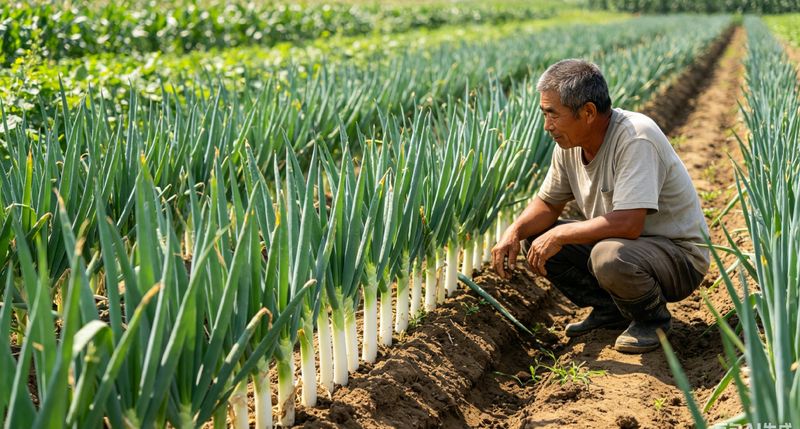
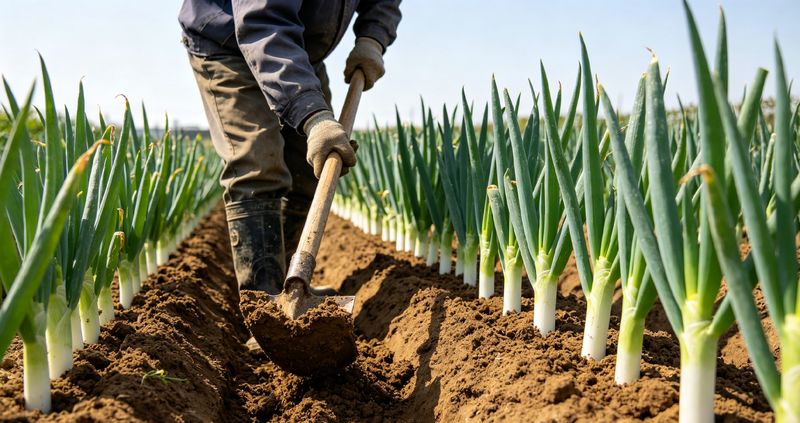
Old vegetable farmers used to say that onions were made of earth, and layers were long. The essence of onion is the sapling buried in the soil, which continues to grow and white in the light. However, once again, the soil is cut off from the ground, insisting on a small number of times, with no onions。
Professional standards
We have 20 days left for the sprint, and we'll have two pedestals:
The first pedigree: the earth layer is 4-5 cm thick, the soil is covered with onions, and the fork on leaves (onions) must be exposed. The earth is extracted from the middle of the two rows of onions to the maximum extent possible, and not from the roots of the onions so as to avoid the removal of the mustache。
The second earth is taken 10 days apart and continues to cover 3-4 cm. On two occasions, the soil was added to 7-9 centimetres, leaving enough space for onions。
Key details
1. In the afternoons of the selection of the earth and the softening of the onion blades after the afternoon, the operation is not easy to break the onion leaves
2. Do not produce soil immediately after the rain. The soil is damp and covered with onions easily on the mantle
3. The earth layer is softly pacified after the earth has been bred, so that it is not hard to crucify and so that the soil is lax。
The most cost-effective and efficient means of collecting onions is through the regulation of sub-painting, the continuous creation of a light-shield environment for onions and their vertical extension。
Second move: nitrogen-added potassium follows the fat
At the end of the 20 days, the idea of applying fertilizers must be radically changed: strict control of pure nitrogen fertilizer, with emphasis on supplementing potassium fat. Nitrogen fat is long leaves and potassium fat is responsible for onion expansion, whitening and firming。
Daejeon plantation programme
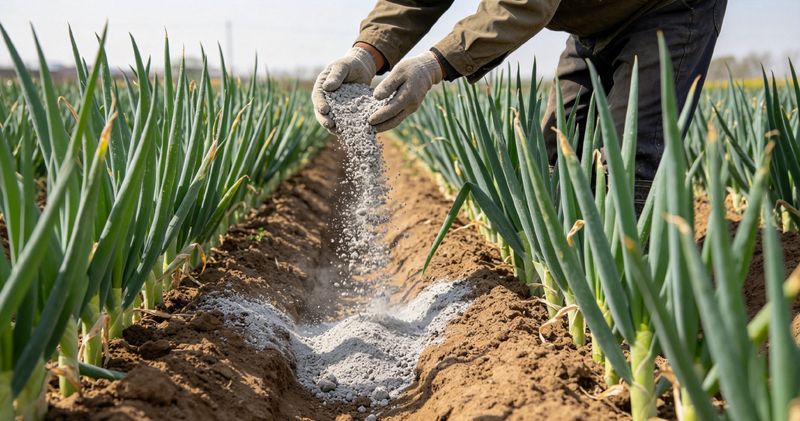
Stop taking urea alone. Potassium sulphate, 12 to 15 kg per acre, in inter-line pursuit, in sufficient condition to be distributed together with corroded ash. Ash from the grass can be used both to replenish potassium and to lighten the soil and to mitigate the growth of mackerel and disease. Fertilizers are scattered in the middle of two rows, covered in thin ground on the shallows, and water is then poured to dissolve。
At a 10-day interval, the potassium fertilizer is replaced once and the fat is pursued twice in a row。
A small vegetable garden
The ash is spread evenly on the sides of the onions, around 50 grams per square metre, with a small amount of fatty water from the decomposed farmers, and not directly on the onions, preventing burns。
Leaf assistive technique
If large onion blades are yellow and weak, potassium phosphate can be sprayed on the leaves once for 10 days twice in a row. The nutrients are rapidly absorbed, promoting onion enrichment and reducing hollow space。
Third move: science-controlled water, dry and wet, rooting for white
The water is not well matched and the soil is being bred and all the fat is being wasted. Onions are shallow, wet but extremely afraid of flooding。
Watering the practice
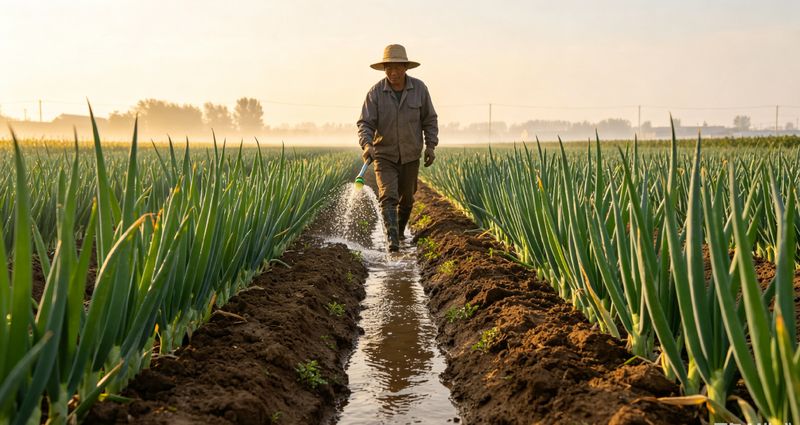
They insist that the water is wet and dry. The surface soils are white, dry and watered, each time they follow a ditch, so that 20 cm of the ground is wet enough to prevent flooding。
Water is watered at mornings or evenings to avoid high-temperature watering and to prevent excessive water temperature differentials from stimulating root systems。
In the first days of rain, the drains are cleared and the ditches cannot accumulate. The water is accumulated for more than two days, the onions are decomposed with oxygen and the onions simply stop growing。
Moderate dry and wet alternations can force nutrients to flow to onions, with high levels of resilience and sweetness, which are not easy to empty。
Three, plus managing three things, avoiding the disease and ensuring the growth of the sprint
With the three core measures above, three more small details will be put in place to prevent pests and fall back and ensure that the onions are safe and white。
1. Timely clean-up of the bottom yellow leaves
Yellow, dried-up and ill leaves on the soles of the onions are removed by hand. The bottom yellow leaf does not produce nutrients, it also conceals ventilation and breeds fungus, onions and maggots. The yellow leaves removed take the plot and do not remain between the onions。
2. Preventing onions from falling
As the onions grow, the onions grow taller, and the wind and the wind tends, they can easily fall back. The onions swish, bend white and sell at a discount. Peasants themselves can grow solid, and if the onions are too big, they can simply block the stifling to prevent the wind from falling。
3. Alert against underground pests
The maggots and the ostrich are the number one threats. Roots are eaten by insects, and their capacity to absorb water is reduced and they are small and thin. Daily multiple inspections have revealed that pests are treated in a timely manner, that they are healthy and that their growth is sustained only in vain。
Iv. Hf in agriculture
Question 1: twenty days before the harvest, is there still time for this
Answer: it's all in time. These 20 days are of a critical period of indulging and leeches continue to stretch under the conditions of light. It regulates two periods of thin ground, combined with potassium fat, and the naked eye can see that onion is significantly longer and thicker. The sooner we do it, the better。
Question 2: is there any small urea application for the small onion seedlings that are weak
A: very weak onion seedlings, with very few doses of nitrogen fertilizer, but must be low, mainly potassium. Long, normal onions, no urea at all to avoid onions。
Question 3: what is the reason for the yellowing of onion leaves after the cultivation
Most of them are for two reasons: the earth covers the heart, suffocates the growth point; and the soil is wet after the rain, and the tubing causes the disease. The pedestals strictly hold the bottom line, and the onion heart must be exposed and the wet soil is not operational。
V. Comprehensive summary + history
Let's go over the core points so you can check them down:
To seize the final window of the head, with 20 days remaining for the golden period of the puddle, which is difficult to remedy
2. The first split of thin ground, with two lands covered and no hearts laid, and the creation of a light-shielding environment
3. A second adjustment fertilisation programme to control potassium nitrogen and potassium fattening and inflating and reducing hollows
4. The third wave of science-controlled water, with small water well-fed, timely drainage and dry and wet rotation to contribute to the sinking of nutrients
5. Cleaning of old leaves, volts, pests and growth barriers。
It's easy to remember:
Keep onions at the end of your head for 20 days
(b) sub-painted soil with no core and nitrogen-added potassium onions
It's good to have a good harvest
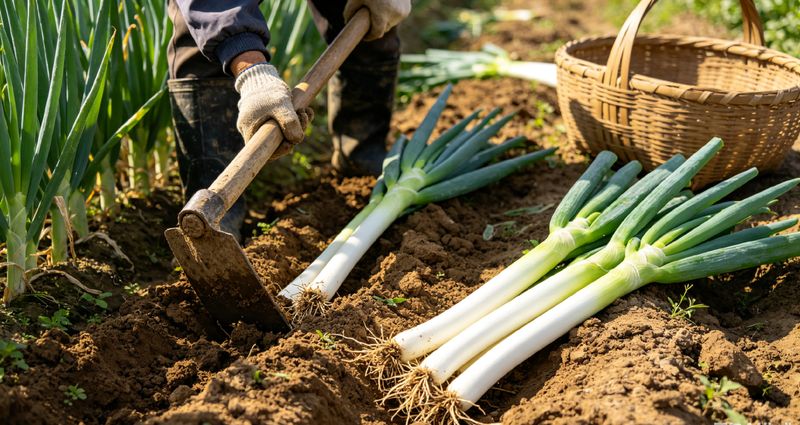
Is it possible to sell onions for a good price, on the basis of length and fineness? It is not until the harvest is nearing that urgent remedial action will take hold of the critical phase of the current crisis and the implementation of these three approaches. By the time of the harvest, the onions are long and tight, and can be satisfied whether they eat or sell at home。