Farmers who have grown onions are aware that the fall is a year。
Entering the end of the three volts, the heat of the day, the water dazzling mornings and evenings, the thunder showers came up from time to time, and the humidity came up。
The onions are about to enter the critical life cycle of onion expansion, with purple spots and morbid diseases most likely choosing the outbreak。
A number of people watched the onions grow well the other day, and after a heavy rain, the leaves were purple, the foundations were rotten, and the onions fell down one by one, and the harvest was about to harvest, with a direct loss of production。
There was a mistake in the treatment of many farming households: it was only when the leaves were seen and large areas of disease were seen that medicine was quickly bought and sprayed。
After the widespread spread of the disease, the effect of any drug charge will be significantly reduced, and money will be spent and the onions will rot。
The goldenst window for disease prevention is these 10 days before the fall。
Without a complex operation, three combination management packages were secured, conditions for the outbreak were blocked ahead of schedule, and the last onion tree was unplugged, with fewer yellow leaves and less rotting。
Let's get you two things out of the way。
Twilight is a fungi disease that first appeared on onions, starting with a small white dot of needle size, which slowly expands into an elliptical purple-brown plaster, with white colour in the middle of the plaque, with a black mold when the humidity is high, and the spot position can easily be broken directly。
Chrysotiles, dews and long periods of exposure to nitrogen fertilizers and onion blades are the most vulnerable to purple spots。
Soft decomposition is the cause of bacterial diseases, mainly onions and roots。
After the onset of the disease, the onion's herbs were softened in the form of water stains, and then the skin of the skin rotted, with a clear stench of smell, and the outer blades slowly fell down to the herb。
Rain and water, earth-painted onion poles, and a bite from a bite, and bacteria drilled into the plant with the wound, so that a large area could spread in two or three days。
The two diseases are often mixed, and it is difficult to control them completely with one drug。
This pre-fall management package combines the improvement of the field environment, the development of a strong tree, and the prevention of scientific medicines to reduce the probability of disease occurring from the root causes。
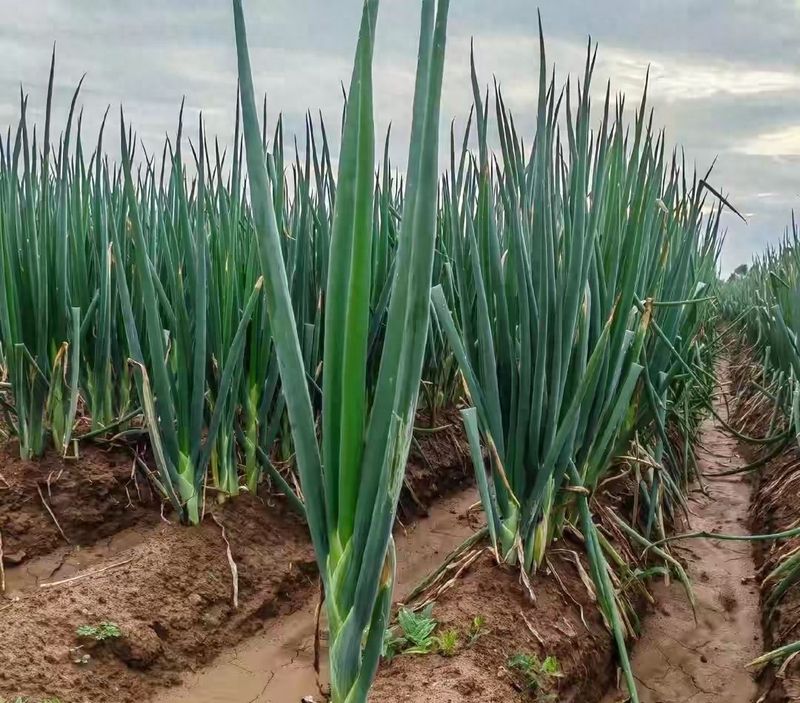
First move: managing the field environment and cutting off the fungi from the hotbed
Many farmers simply stare at drugs and ignore the field environment。
High-temperature, high-wett and water-drying conditions are the preferred living conditions for the virulent bacteria and the soft bacteria。
The first thing is to clear the drain immediately。
Before the fall, dig all the onions and drains。
The gutter ensures that it is shallow and that no visible water is found in the ground for half an hour after the heavy rain。
It is important not to have a sense of blistering root for four or five hours, with onion roots suffering from oxygen deficiency, small wounds to the skin and direct bacterial fungus intrusion. Growing onions on flat ground must be raised and not spread。
The second is a radical readjustment of watering。
In the period leading up to the autumn, water was used to hold on to small water, late and dry and wet。
Try to water it after 6 or 7 p. M., not at noon。
Water is poured at noon, temperature drops sharply and stress damage occurs at the root。
Water should not be watered five days away, the surface soil drys and then the water is slowly immersed in the soil along the gutter, and no onions are passed over the femur base。
Long periods of damp in the fields and the presence of dew throughout the night increase the rate of disease transmission。
Thirdly, it is reasonable to absorb the leaves and increase the ventilation of the walkways。
Many farmhouses are not allowed to remove old leaves and yellow leaves, and a pile of yellow leaves from the bottom is attached to the ground, with no ventilation and no humidity。
By autumn, the yellow, dry, old leaves of the onion can be easily broken off, taken out of the field and buried in depth and not left behind。
Be careful to operate as light as possible, not to scratch a healthy onion pole and cause human wounds。
Over-density plots are cultivated, where appropriate, to remove a fraction of the saplings, leave ventilating space and reduce inter-walk humidity。
Ii. Second move: science-based weighting poles to improve onions ' own resilience to disease
Onions are prone to disease, due in large part to the unreasonable application of pre-fertilisation。
It's just urea, too much nitrogen fat, big onion leaves, thin cell walls, like a fat man, with poor resistance, a bit of a rain weather, and the disease comes to the door。
Autumn is a turning point in the shift of onions from long-leaf blades to inflate, and the approach to fattening must be adjusted in time。
1. Reduction of pure nitrogen fertilizer use
One week before the fall, stop taking urea alone。
Nitrogen is overweight, onions are long and weak, and highly susceptible to purple spots。
Wants onion poles to be hard and thick, with a focus on potassium, calcium and a small amount of trace elements。
Potassium elements can increase the onion cell wall to make the onion pole so hard; calcium can repair the epidermic wound, prevent bacteria from entering, and significantly reduce the probability of a morbid disease。
2. Two methods of fertilization are used in combination
The first root fattens: 800 - 1000 kg of fully decomposed organic fatty per acre, 12 - 15 kg of potassium sulphate, a small amount of calcium per phosphate, evaporated along a gutter, grounded in the ground, increased or reduced, as appropriate, depending on the fertility of the plot。
The use of raw manure, which is not fully decomposed, is strictly prohibited, with a second fermentation of roots in the soil and a large amount of harmful bacteria, which aggravates rotting roots。
The second leaf supplementation: a single application of 0. 2% potassium phosphate at seven-day intervals, with a combination of amino acid folates and two successive applications。
Directly nourishing the leaves and increasing the acetal layer of the leaves is not easy to bind to。
Land parcels, with conditions, can be soaked in small quantities at 20 ~ 25 kg/acre around the root。
Grasswood ash is natural potassium fat, with some antibacterial effects, and improves soil aerobics, with care not to spread in large quantities into the onion heart, which is easily burned。
Particular attention is drawn to the need not to blindly use various types of net-red-sided fertilizers, to adhere strictly to the criteria for green farming in agriculture, to select officially registered products for fertilizer, to supply on demand and to avoid soil nutrient imbalances。
Third move: prevention of disease, scientific medicine and strict compliance with safety intervals
The foundation is the management of the environment and the construction of a tree. In the rainy years, it is difficult to eradicate the disease completely by simply managing it, and it is better to prevent it than to treat it before autumn。
Drugs are used to maintain fungi, bacteria are treated separately, agents are rotated, resistance is avoided, spraying is strictly based on registered quantities, concentrations are not increased at will, pesticide safety intervals are strictly observed and green vegetable cultivation is met。
Programme for the prevention of purple spots (fungles)
Protective microbicides were sprayed early in the autumn, the day before each heavy rain。
Precautionary period: optimum application of ethylene esters, dyson manganese zinc, ethylene acetylene acetate, water matching according to the instructions, flat spray of the entire leaf blade, spray of the leaf on its positive side, with a focus on the lower one。
Initial onset: a small number of purple brown spots have appeared, 7-10 days of spraying, 2 consecutive times, with different types of drug being used interchangeably, rather than using only the same drug for the long term。
The spray is given priority in the middle of the morning, so that leaves can be dried up for 2-3 hours。
Soft decomposition (bacteria) prevention programme
Once a massive outbreak of molluscs has occurred, it is difficult to recover completely and must be protected in advance。
Precautionary drugs: zinc, chronycin, hydroxide-compliant bacterial agents, with a focus on on onions and stasis, and not only on leaves。
The field found individual rotting trees: the soil was dug out at the first moment and buried deep outside the field。
The location of the pits is contaminated with a small amount of raw lime, preventing bacteria from spreading to the surroundings with rain。
It is one of the main routes of transmission of molluscs, which must be conducted in tandem with pest control。
Important drug use alerts: the use of highly toxic restricted pesticides, which are prohibited by the state, is strictly prohibited in accordance with the requirements of the crop disease and pest control regulations; each drug is used quarterly in accordance with the registration ceiling, close to the close of the harvest, with a strict safe interval to ensure the quality of onion agricultural products。
A few mistakes that are easy to step on every day
1. A single increase in the concentration of pesticides after seeing the disease. High concentrations tend to burn onions, causing more wounds and spreading the disease faster。
2 once the rain has rained, medicine is administered. The leaves are covered with rain, the fluids are diluted, they do not work, and it is best to wait for the leaf to dry before spraying。
Three: the year-on-year planting of heavy plots. The increasing accumulation of soil disease is associated with a continuous cycle of larvae, with a recommended rotation of 2-3 years and maize, beans and a fundamental reduction of the disease base。
Four and a half of the pedestals were slashed hard. Don't hurt the prostheses before or after the fall. The wounds are the best way to enter the fungus。
The whole management logic is then simply combed: 10 days before the fall, the draining of a ditch, the management of water and the lowering of the humidity of the field; the adjustment of the fertilizer programme to control the calcium by adding potassium to the nitrogen, and the strengthening of the onions; and, finally, the pre-emptive prevention of fungi and bacterial diseases with a combination of prescriptions。
The three things are implemented simultaneously, and not all problems can be solved by a single move。
Many farmers fall back every year, not without medication, but with management nodes completely missed。
When the rains continue after autumn, the disease is already widespread, and the cost of repairing it is not only high, but the quality of the last onions and the tightness of the onions will be significantly reduced。
In the absence of autumn, these three management systems are put in place quickly, with little onion disease, largeness, good sales, and production moving up。
Having said so much about the management of onions, would you like to ask the growers whether your family had more problems before the autumn or whether it was worse after the heavy rains? Have you ever tried the field trick? An interactive discussion in the comment area would be welcome。