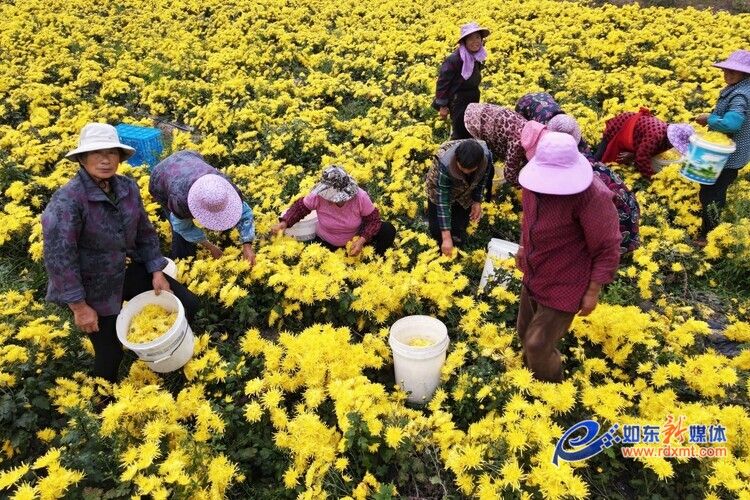
In the past few days, there have been harvests at the sangda town purple potato plant, and the villagers have seized the good weather to harvest it, and there has been a good harvest in the field。
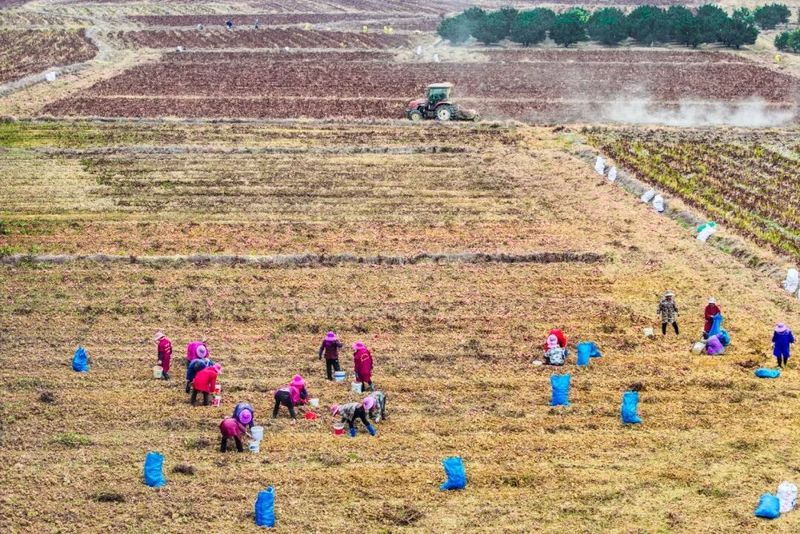
At the xinjiang-ukura potato planting base in sanda town, journalists saw a dedicated bulldozer operating in an orderly manner in the fields, with one full potato coming out of the ground. More than a dozen workers follow closely and are divided into tasks such as mud removal, sorting and packing. The base is known to concentrate on the development of the potato industry through land-flowing models that integrate the idle land of villagers, both optimizing the local crop structure and providing employment to villagers in front of their homes, with more than 20 local villagers being mobilized daily during the harvest season。

The grower said, “we have grown 350 acres of potatoes in the sauna, yielding about 3,000 pounds of acre, and growing a `privileged purple', a variety that is currently performing well in the market at a relatively high price, about 2,000 acres per acre in the current situation, and, if we are doing well, we have to plant it early next year to scale up”
In recent years, sanda town has innovatively promoted the “cooperative + base + work” development model based on local resource endowments, allowing idle land to “live” and villagers to “drum”. The development of specialty industries through the concentration of land flows has not only effectively brought about the efficient mobilization of land resources in the countryside, but has also enabled villagers to realize the dual benefits of “land transfers with rent and salaries for base workers”. From the harvest of acre to the promising prospects of niche industries, the town of sanda, with its specialty farming as its main focus, has moved from a path of efficient use of resources, stable growth of villagers and sustainable rural development, giving strong impetus to high-quality local agricultural development。